
How Automotive Plants Use Modular Workstations to Reduce Downtime
How Modular Workstations Reduce Automotive Plant Downtime
Improve workflow, reduce downtime, support operators, and adapt quickly to changing production needs.
1. Downtime is not a Machine-Only Problem
Far too often, automotive manufacturers assume all downtime originates from damaged equipment and machinery. However, workstation design, layout, and limited flexibility also play a critical role. That’s why today’s automotive manufacturers are embracing automotive modular workstations.
Heavy, fixed steel-welded workstations and workbenches are common bottlenecks. They are cumbersome, difficult to move, and don’t allow for quick changes. These structures lead to poor workflows, uneven material flows, and blocked access to critical areas, all of which cause downtime.
Modular workstations give automotive plants a more scalable and flexible solution to support changing assembly requirements, in-line inspection and testing, and improved material flow.
With T-Slot aluminum, automotive manufacturers have a flexible building solution for material handling that supports production as vehicle programs evolve and plant layouts quickly change.
FIXED VS MODULAR WORKSTATIONS: IMPACT ON DOWNTIME |
||
|
Factor |
Fixed Steel Workstations |
Modular T-Slot Workstations |
| Changeovers | Slow and Extremely Expensive $$$ | Fast Adjustments with Repositionable Components |
| Layout Flexibility | Incredibly Limited | Easily Reconfigured as Needs Change |
| Material Flow | Inefficiency Leads to Delays | Optimized for Efficiency |
| Maintenance Access | Often Blocked or Restricted | Open Designs Improve Access |
| Ergonomics | Fixed Position are not Ergonomic | Adjustable to Operator=Excellent Ergonomics |
| Continuous Improvement | Not Possible | Easy and Fast - Change as Needed |
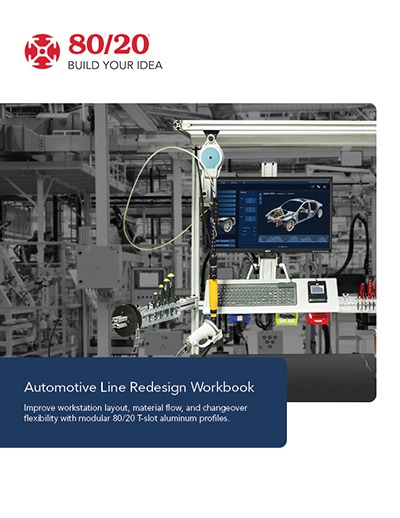
Read More in the Automotive Line Redesign Field Guide
This step-by-step workbook helps automotive manufacturers identify bottlenecks, and redesign assembly lines for maximum flexibility. Discover how modular 80/20 T-slot aluminum solutions improve ergonomics, streamline material flow, reduce downtime, and improve cost-effectiveness. Download the workbook and start optimizing your production line today.
2. Why Workstation Design Affects Downtime in Automotive Plants
Workstation design goes a long way to increasing efficiency and minimizing downtime. Bad designs aren’t just inefficient; multiple small, repeated disruptions increase downtime across an 8-hour shift.
In many automotive manufacturing facilities, it’s the steel-welded, fixed-in-place workstations that increase downtime. Not designed for a specific task but manufactured for general-purpose requirements, steel-welded workstations are not adaptable, flexible, modular, or scalable.
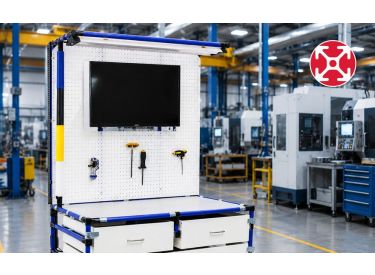
Automotive modular workstations made from T-slot aluminum can be optimized, and changes can be made in-house as needed. This is in stark contrast to fixed workstations that typically remain unchanged as automotive assembly and production requirements change.
Ultimately, poorly designed workstations contribute to operational delays and lost production time, including:
-
Longer and more expensive changeovers
-
Disruptions and downtime
-
Material flow issues
-
Part replenishment issues
-
Cluttered work surfaces
-
Poor ergonomics (operator strain)
-
Longer, inconsistent assembly cycle times
-
Difficulty integrating tools, LED lights, monitors, and accessories
-
Delays and difficult part mix changes
3. What Makes a Workstation Modular?
Automotive modular workstations must be built from materials and components that allow the workstation to be easily changed, modified, or adjusted without rebuilding the entire structure. The T-slot aluminum profiles allow for that flexibility.
T-slot aluminum workstations and accessories make it easy to…
-
Change or modify layouts
-
Customize bin placements
-
Reposition bins and shelves
-
Add monitor mounts, LED lights, panels, tools, and guarding, etc.
-
Scale from a single workstation to several
-
Initiate fast changes for evolving parts and processes
4. Five Ways Modular Workstations Reduce Downtime
Stating that modular workstations reduce downtime is one thing but demonstrating it is something else entirely. Here are five ways in which adopting automotive modular workstations improves ergonomics while leading to faster changeovers, easier layout adjustments, improved material flow, lower maintenance costs, and less downtime.
1. Faster Changeovers and Layout Adjustments
Automotive assembly lines are constantly evolving. New vehicle designs mean new materials, differently sized parts, and changing assembly processes. Automotive modular workstations must be able to keep up with this change.
T-slot aluminum workstations make it easy to:
-
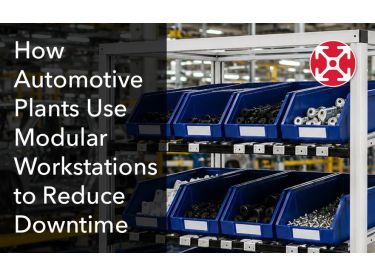
Reposition shelves and material bins
-
Change work surfaces
-
Adjust workstation structure for new assemblies
-
Adjust workstation layouts as production changes
-
Move from pilot builds to full production more easily
2. Improved Line-Side Material Flow
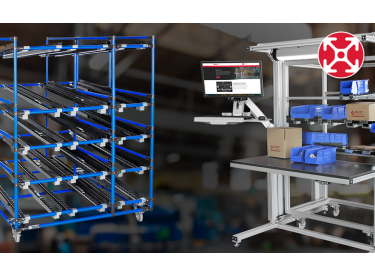
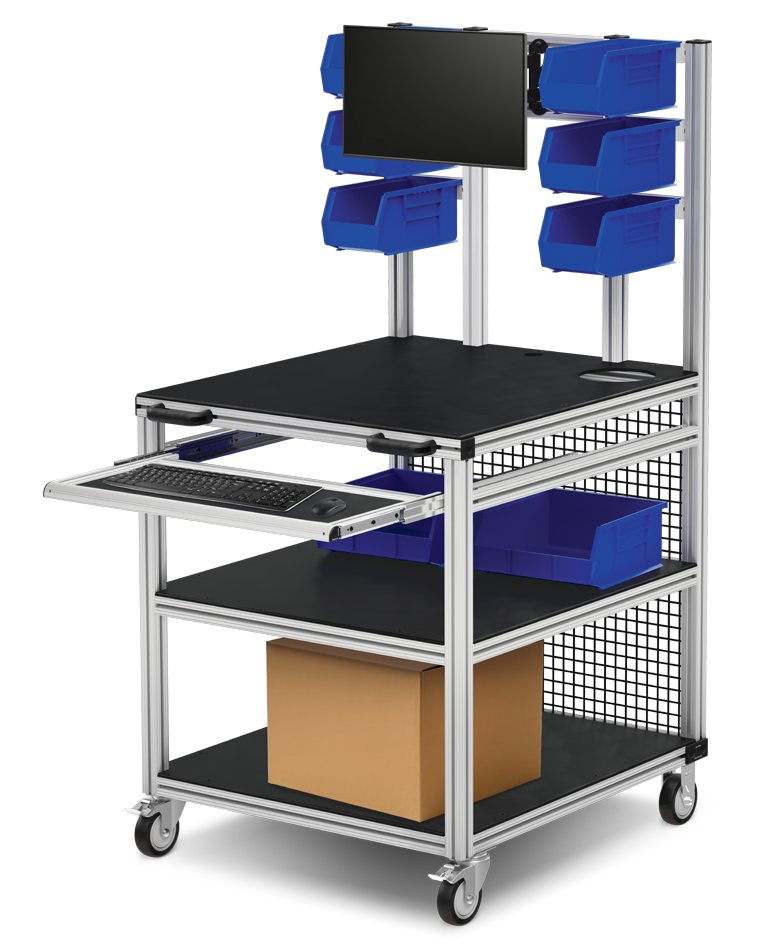
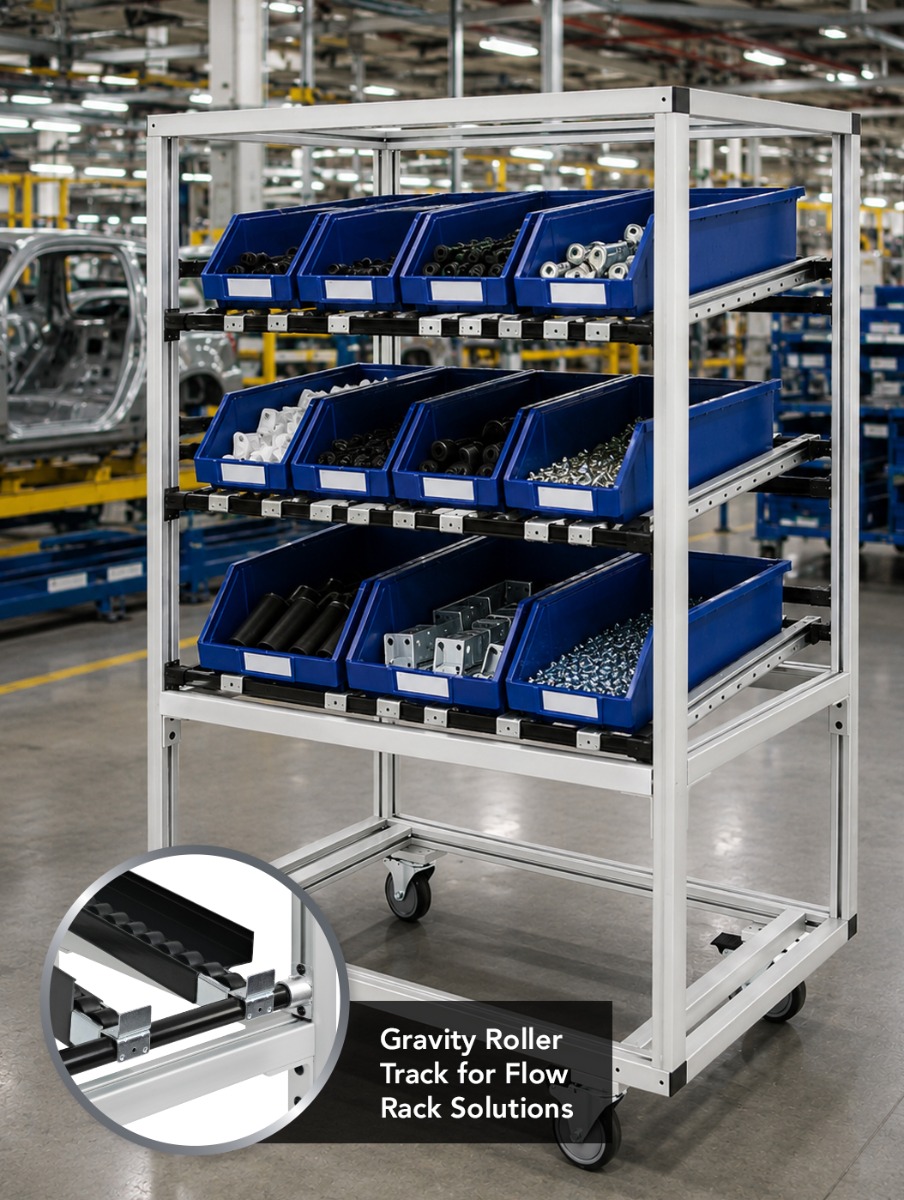
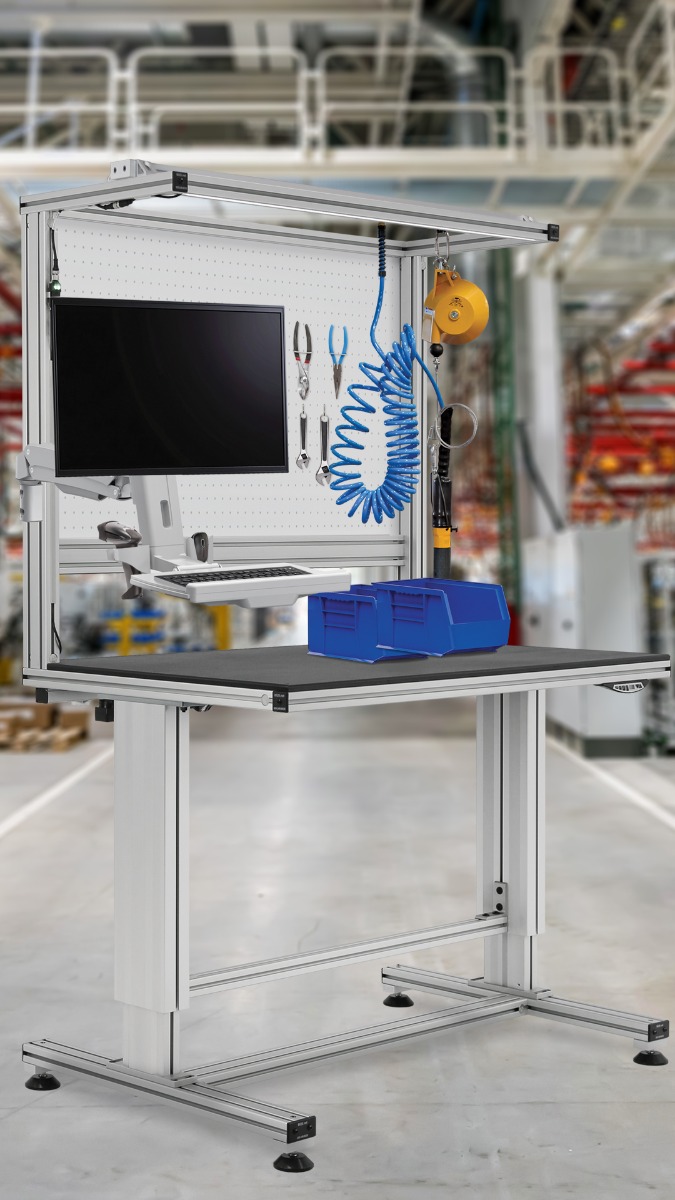
Modular assembly workstations result in less motion waste, faster material replenishment, and immediate access to tools, hardware, and consumables. This can further be supported with point-of-use storage from mobile FIFO flow racks immediately positioned in front of the modular workstation.
-
Workstation Bins for Immediate Access
-
FIFO Flow Rack for Material Replenishment
-
Reduced Motion Waste
-
Quick Access to Tools, Consumables, and Hardware
-
Point-of-use storage keeps parts within reach
3. Lower Maintenance Costs and Improved Access
When workstations are too difficult to access, proper maintenance and upkeep become a constant concern. Poorly designed workstations or poorly positioned ones are especially problematic. Worse yet, any steel-welded workstation with poor access means maintenance is always labor-intensive and costly.
With T-slot aluminum workstations, maintenance costs and access are dramatically improved. Open-frame designs with tightly secured electrical cables and wiring mean increased safety and simpler maintenance. Automotive assembly workstations allow room for easy-access tools and consumables while making maintenance and upgrades a much simpler and less expensive process.
-
Open frame designs
-
Safer cable and wire routing
-
More room for tools
-
More space for consumables and hardware
-
Simpler and less expensive maintenance
-
Easier to upgrade
4. Increased Ergonomics and Improved Work Zones
Ergonomic workstations are essential to reducing the costs of absenteeism, musculoskeletal injuries, and the resulting loss in production efficiency. Ergonomics also affects speed, quality, consistency of assembled parts, and technician fatigue. Tired technicians make mistakes, and the more mistakes they make, the higher the costs.
Modular workstations allow for:
-
Improved ergonomics
-
Better reach zones
-
Better placement for tools, bins, and work surfaces
-
Reduced motion waste
-
Reduced operator strain
5. Easier and Faster Continuous Improvement
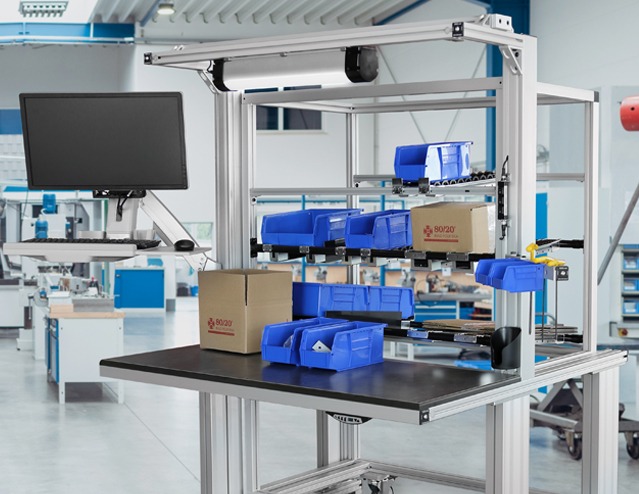
Continuous improvement is a much simpler and faster process when using modular workstations for automotive plants. Modular workstations allow teams to quickly adjust, modify, and refine layouts.
T-slot aluminum allows for rapid improvements, simplifies Kaizen initiatives and line balancing efforts while eliminating the time required to make important workstation layout changes. In the end, it means having a solution that makes it easy to make changes while empowering teams to quickly validate new layouts for improved efficiency.
-
Faster and easier changes and adjustments
-
Supports Kaizen initiatives
-
Supports line balancing
-
Easier to refine layouts
-
Faster validation for improved efficiency
5. Typical Automotive Applications for Modular Workstations
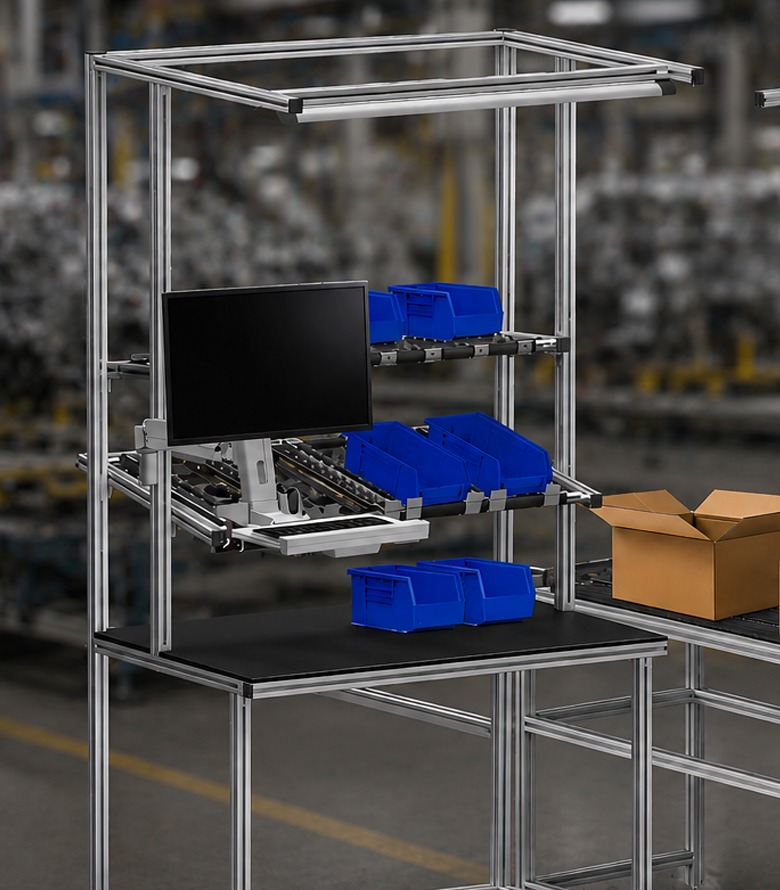
There are multiple applications for automotive manufacturing workstations. Modular assembly workstations allow technicians to piece together finished products, while sub-assembly automotive workstations are ideal for assembling subcomponent parts, integrated assemblies, and modules.
-
Final assembly workstations and subassembly workstations
-
Test, inspection, and QC stations
-
Kitting stations
-
Rework stations
-
Maintenance support stations
-
Packaging/labeling stations
-
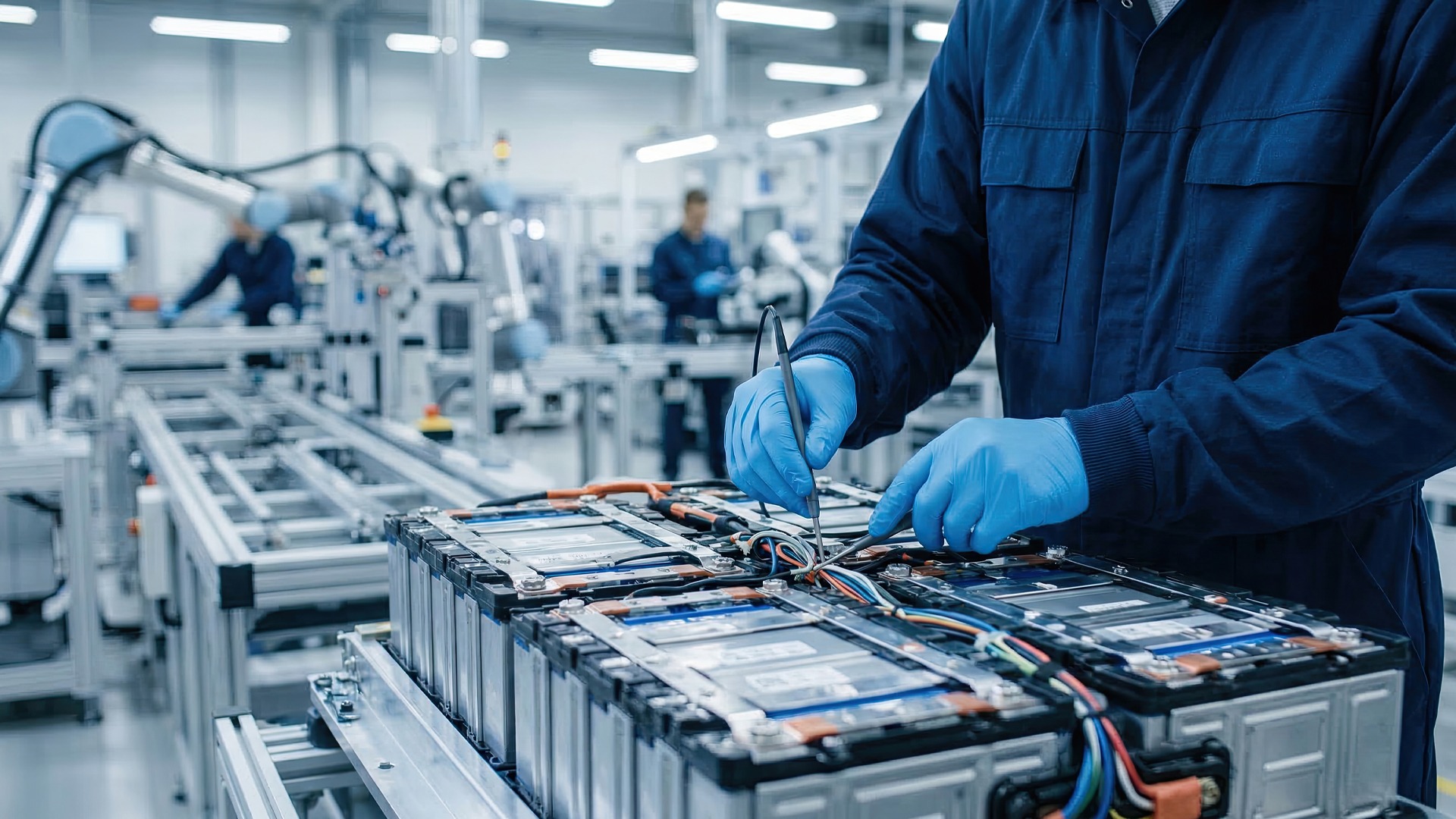
EV battery or electronics-related stations
Mobile test inspection tables and QC workstations ensure that in-process parts can seamlessly be tested and validated. Mobile kitting stations, maintenance stations, as well as part rework and repair stations all play a critical role in reducing downtime in automotive manufacturing.
Finally, customized mobile packaging and labeling stations, as well as designated EV battery or ESD (electrostatic discharge) compliance electronic assembly workstations, are also well represented on automotive production floors.
Automotive manufacturing workstations aren’t just for assembly and finished products. Customized mobile or stationary labeling workstations can be created, making it easy to label automotive parts and products.
From well-positioned work surfaces, keyboards, terminals, and packaging tools and consumables to easy-to-use conveyors to move shipped boxes, the size of the packaging workstation is entirely in your hands.
T-slot aluminum workstations are the ultimate in flexibility. Automotive manufacturers who use the T-slot aluminum profiles and all the accessories consider it their primary building tool for any material handling structure or workstation.
Mobile kitting carts and workstations make it easy for personnel to support technicians and operators working and assembling parts within automotive assembly workstations.
6. What Automotive Plants Should Look for in a Workstation System
Automotive manufacturing facilities looking to use T-slot aluminum workstations should focus on the following selection criteria.
First, the materials used for modular assembly workstations must have the durability and strength to withstand the rigors of an automotive shop floor. Second, they must allow for easy integration with multiple accessories and add-ons.
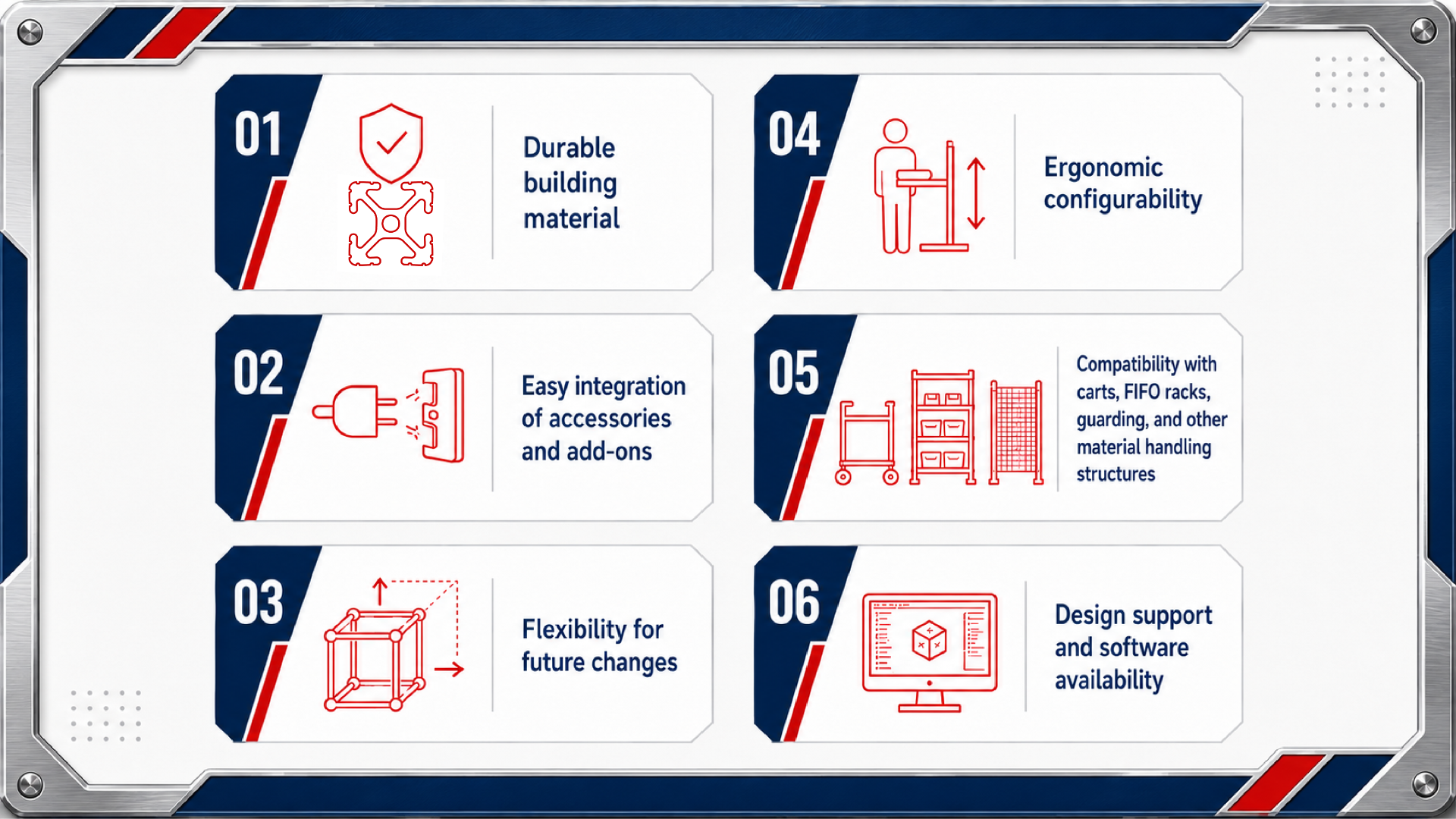
The ability to make future changes as needed without going outside to a third-party company or contractor is also important. The best modular assembly workstations are the ones you can assemble, modify, and change in your own facility with minimal downtime.
Your automotive workstations should also make it easy to safely secure cables and wires to ensure they’re not possible tripping hazards. In addition to automotive assembly workstations, the solution must allow for assembling other material handling structures like FIFO flow racks, carts, trolleys, and benches.
Finally, look for suppliers of T-slot profiles that provide design support as well as design tools like downloadable software.
In every measurable way, the 80/20 material handling system addresses and exceeds all these requirements. Making automotive workstations out of T-Slot Aluminum Profiles and add-ons from 80/20 means you’re able to customize whatever structure you need.
-
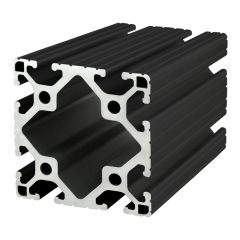 3030-Lite-Black
3.00" X 3.00" Lite T-Slotted Profile - Eight Open T-Slots
-
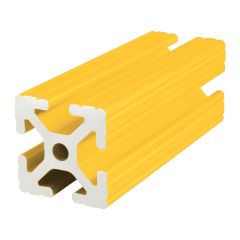 1515-YELLOW
1.50” X 1.50” T-Slotted Profile - Four Open T-Slots
-
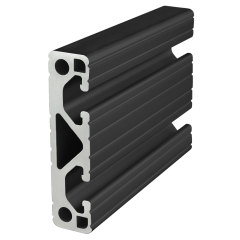 3034-Lite-Black
3.00" X .75" Lite T-Slotted Profile - Two Adjacent Open T-Slots
-
 1530-ULS-Black
1.50” X 3.00” Ultra-Lite Smooth Surface T-Slotted Profile - Six Open T-Slots
-
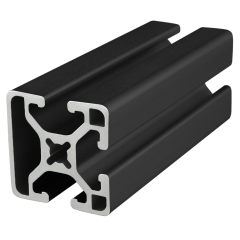 1503-LS-Black
1.50” X 1.50” Lite Smooth SurfaceT-Slotted Profile - Three Adjacent Open T-Slots
-
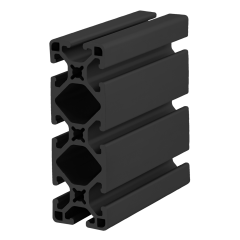 1545-LS-Black-FB
1.50” X 4.50" T-Slotted Profile - Eight Open T-Slot
-
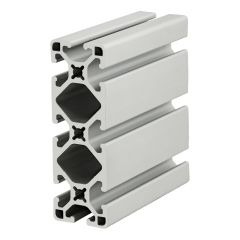 1545-LS
1.50” X 4.50" T-Slotted Profile - Eight Open T-Slot
-
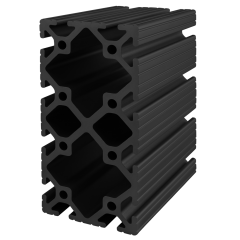 3060-Black-FB
3.00” X 6.00” T-Slotted Profile - Twelve Open T-Slots
-
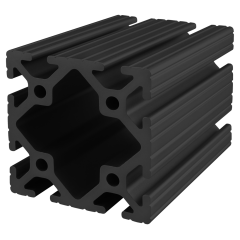 3030-Black-FB
3.00" X 3.00" T-Slotted Profile - Eight Open T-Slots
-
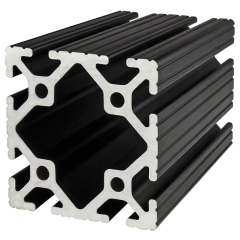 3030-Black
3.00" X 3.00" T-Slotted Profile - Eight Open T-Slots
-
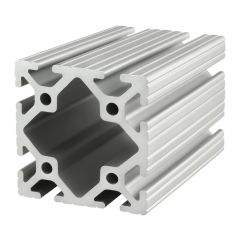 3030
30303.00" X 3.00" T-Slotted Profile - Eight Open T-Slots
-
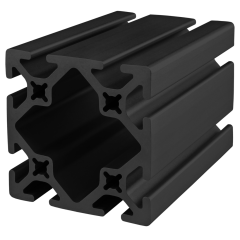 3030-S-Black-FB
3.00" X 3.00" Smooth T-Slotted Profile - Eight Open T-Slots
-
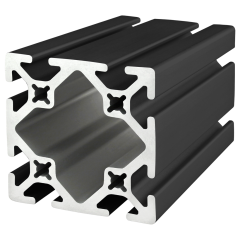 3030-S-Black
3.00" X 3.00" Smooth T-Slotted Profile - Eight Open T-Slots
-
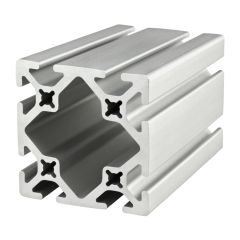 3030-S
3.00" X 3.00" Smooth T-Slotted Profile - Eight Open T-Slots
-
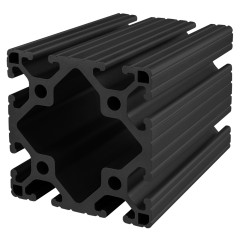 3030-Lite-Black-FB
3.00" X 3.00" Lite T-Slotted Profile - Eight Open T-Slots
-
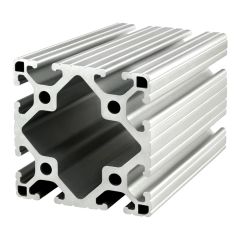 3030-Lite
3.00" X 3.00" Lite T-Slotted Profile - Eight Open T-Slots
-
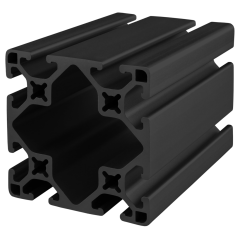 3030-LS-Black-FB
3.00" X 3.00" Lite Smooth T-Slotted Profile - Eight Open T-Slots
-
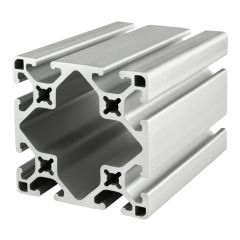 3030-LS
3.00" X 3.00" Lite Smooth T-Slotted Profile - Eight Open T-Slots
-
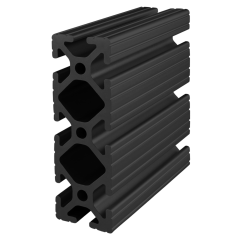 1545-Black-FB
1.50” X 4.50" T-Slotted Profile - Eight Open T-Slot
-
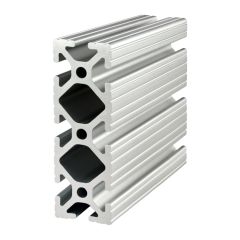 1545
15451.50” X 4.50" T-Slotted Profile - Eight Open T-Slot
7. How it all Fits Within Smarter Automotive Factories and Shop Layouts
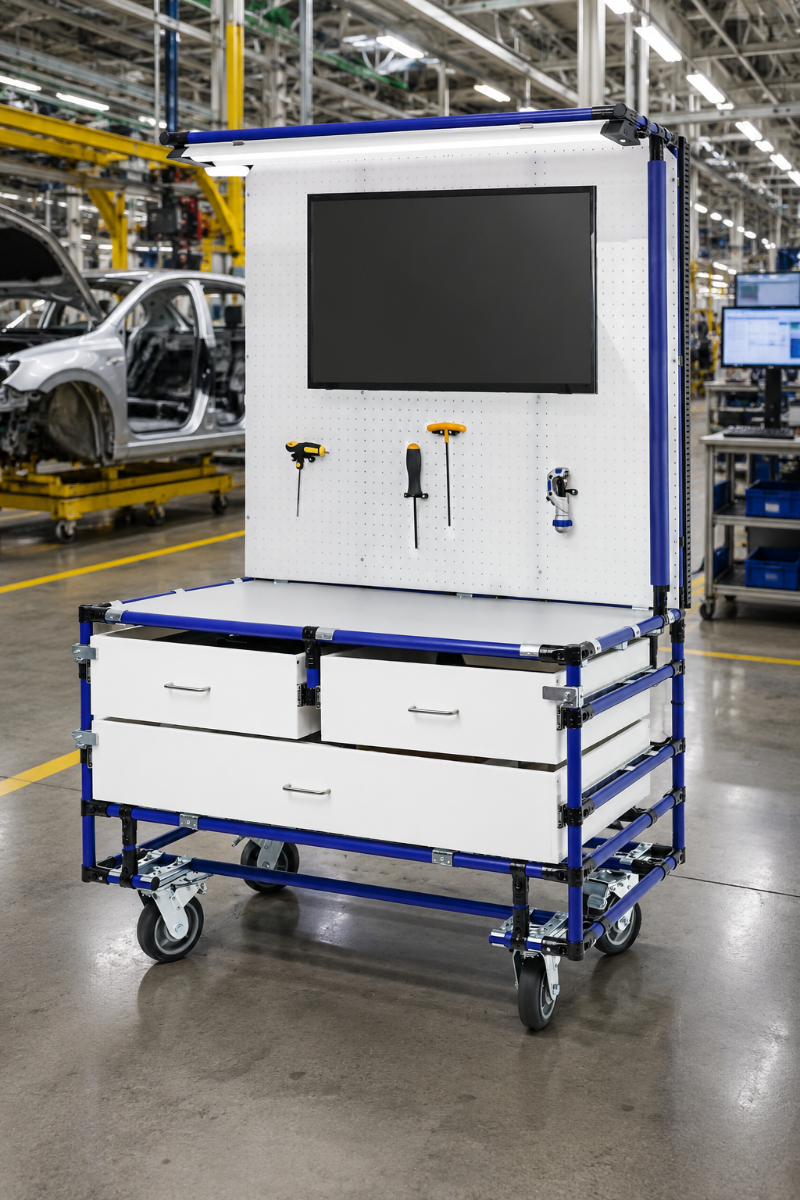
80/20 automotive workstations ultimately become part of a facility-wide ecosystem. Automotive manufacturers that rely on 80/20 T-slot aluminum profiles find immediate improvements in material flow, workflow, and operator safety with the ability to create machine guarding enclosures.
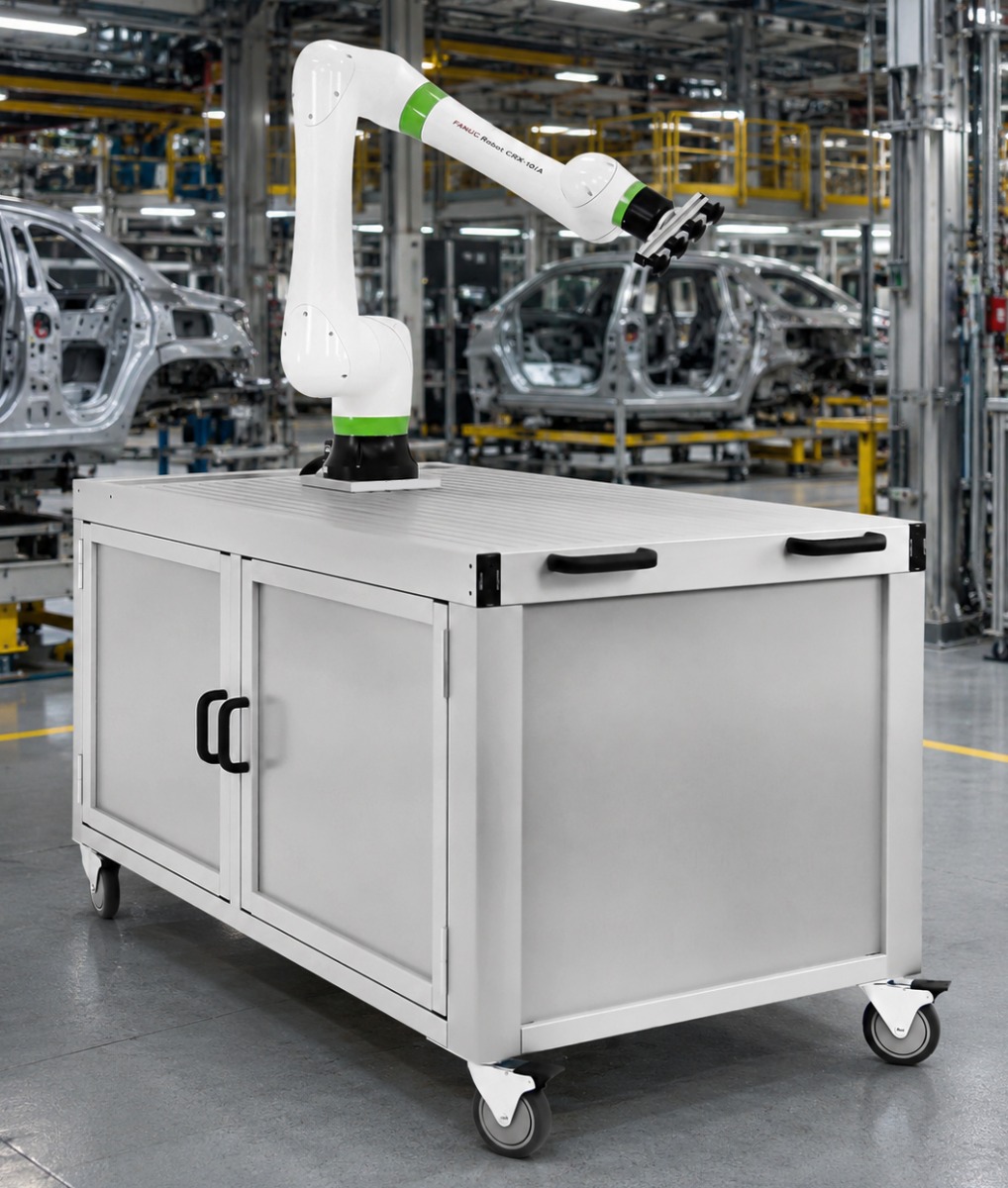
From mobile workstations and carts, FIFO flow racks, trolleys, to flexible and scalable automotive workstations, lean work cells, and even end-of-arm tooling (EOAT) and automation support, the sky is the limit with 80/20.
-
Improved material flow
-
Improved workflow
-
Increased safety
-
Equipment guarding
-
Machine support
-
Mobile carts, kitting carts, FIFO flow racks, and trolleys
-
EOAT and automation support
5 Warning Signs Your Automotive Workstation Contributes to Downtime
Identifying downtime caused by your current automotive workstations is easy. The following warning signs are much more prevalent among automotive manufacturers who use fixed, steel-welded workstations and workbenches.
-
Operators leave the station too often for materials and parts.
-
Maintenance access is blocked.
-
Changeovers require extensive and expensive rework.
-
Tools and consumables are easily lost and poorly positioned.
-
The workstation cannot adapt to new product requirements
The 80/20 Difference: Why Automotive Manufacturers Use the 80/20 Material Handling Solution
Eliminating downtime in automotive manufacturing is never a one-time event. It takes a continued effort where multiple small operational improvements continually reduce bottlenecks and downtime.
Ergonomic modular workstations are one of those improvements. 80/20 T-Slot Aluminum Profiles and add-ons help automotive plants adapt faster, support operators better, and quickly adjust to changing product mixes, all the while minimizing downtime and disruption.
Key Takeaways on Automotive Material Handling
· Reduce changeovers and lifecycle cost:
o Reuse T-slot frames
o Reuse hardware across programs
o No dealing with steel-welded and heavy work benches or steel material handling structures.
· Improve safety and ergonomics:
o Height-adjustable
o Smart cable routing
o Easy air routing
o Compliant guarding
· Scale material flow:
o Lineside FIFO
o Kitting carts
o Both solutions balance the line and minimize wasted motion.
What's the Next Step with 80/20
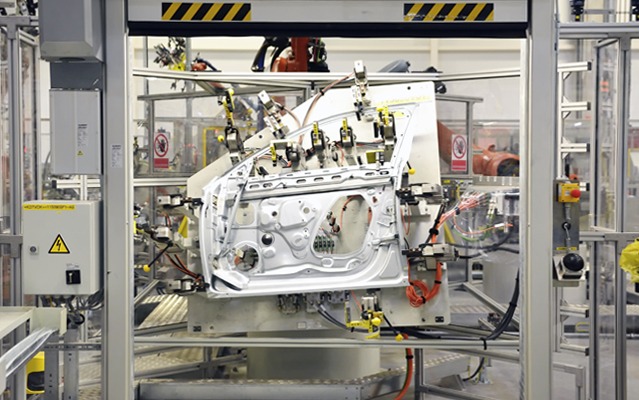
See More 80/20 in
Automotive Manufacturing
Get a full overview of 80/20 in the automotive industry. Explore 80/20 solutions, products, and applications designed to support automotive manufacturing.
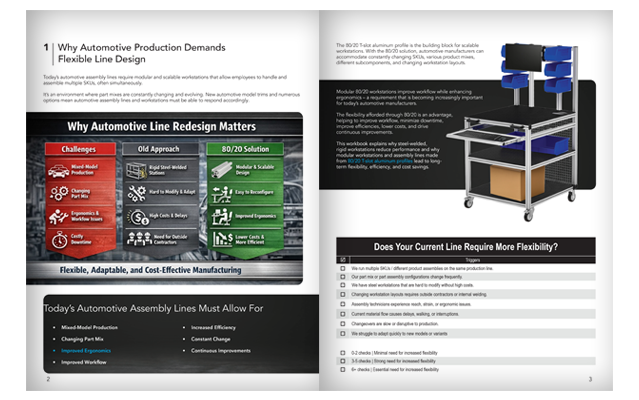
Dive into the Automotive
Line Redesign Field Guide
This step-by-step workbook helps automotive manufacturers identify production bottlenecks, evaluate workstation layouts, and redesign assembly lines for maximum flexibility.
Start Designing with
IdeaBuilder Software
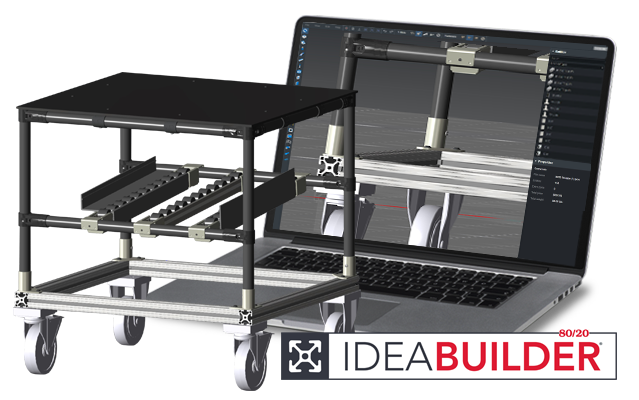
If you are familiar with 80/20 or would like to start your own design work to assemble your own material handling structures, then try IdeaBuilder®, a free web-based software.