Reducing Automotive Material Handling Costs with T-Slot Aluminum
Reducing Automotive Material Handling Costs with T-Slot
Automotive plants can cut material handling costs by replacing heavy, inflexible welded structures with modular 80/20 T-slot aluminum. The system enables faster reconfiguration, safer ergonomics, and lean/JIT alignment. Teams modify carts, flow racks, and workstations in-house, reducing downtime, transport waste, and part damage.
Success requires modular and scalable automotive material handling solutions designed for simplicity and ease-of-use, while allowing for quick changes or modifications. The ability to adjust these material handling structures according to constantly changing requirements is what makes the T-slot aluminum profile from 80/20 so highly valued by companies throughout global automotive supply chains.
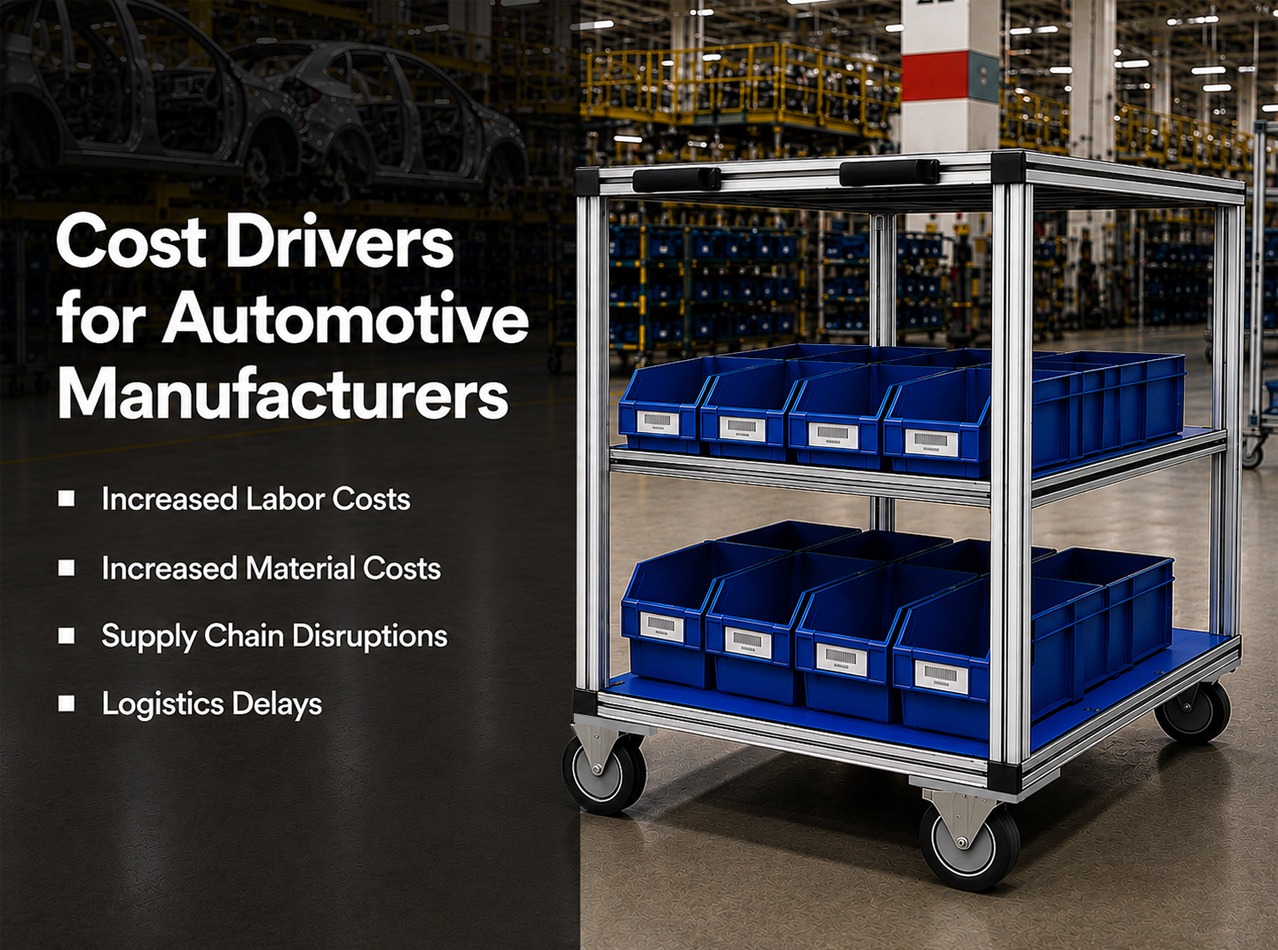
Cost Pressure in Automotive Manufacturing
Today’s automotive manufacturers face constant headwinds. A highly competitive market means labor costs are always on the rise. Supply chain shortages and logistics disruptions have become the norm. Whether it’s increased labor and logistics costs, supply chain delays, or seemingly never-ending increases in material costs, today’s automotive manufacturers cannot afford to add to their costs with lackluster material handling processes.
Read More in the Automotive Line Redesign Field Guide
This step-by-step workbook helps automotive manufacturers identify bottlenecks, and redesign assembly lines for maximum flexibility. Discover how modular 80/20 T-slot aluminum solutions improve ergonomics, streamline material flow, reduce downtime, and more cost-effective. Download the workbook and start optimizing your production line today.
The Drive for Innovation
Increased competition within the automotive industry leads to constant market disruption. This market disruption drives investment and innovation. Whether it’s innovation in EV-battery designs or increased efficiency, or new innovative car designs, this innovation means changing manufacturing and production processes.
All vehicle designs follow a cycle. A complete redesign often occurs between three to seven years. These redesigns are often all-encompassing and include significant changes to a vehicle’s interior layout and exterior aerodynamics.
Facelifts are a common adjustment and can occur from year to year. These types of changes may
include new front facias, grilles, bumpers, changes or modifications to headlights and other exterior elements, as well as changes to a vehicle’s interior.
As inconsequential as some of these changes may seem, they invariably lead to a substantial change in production processes.
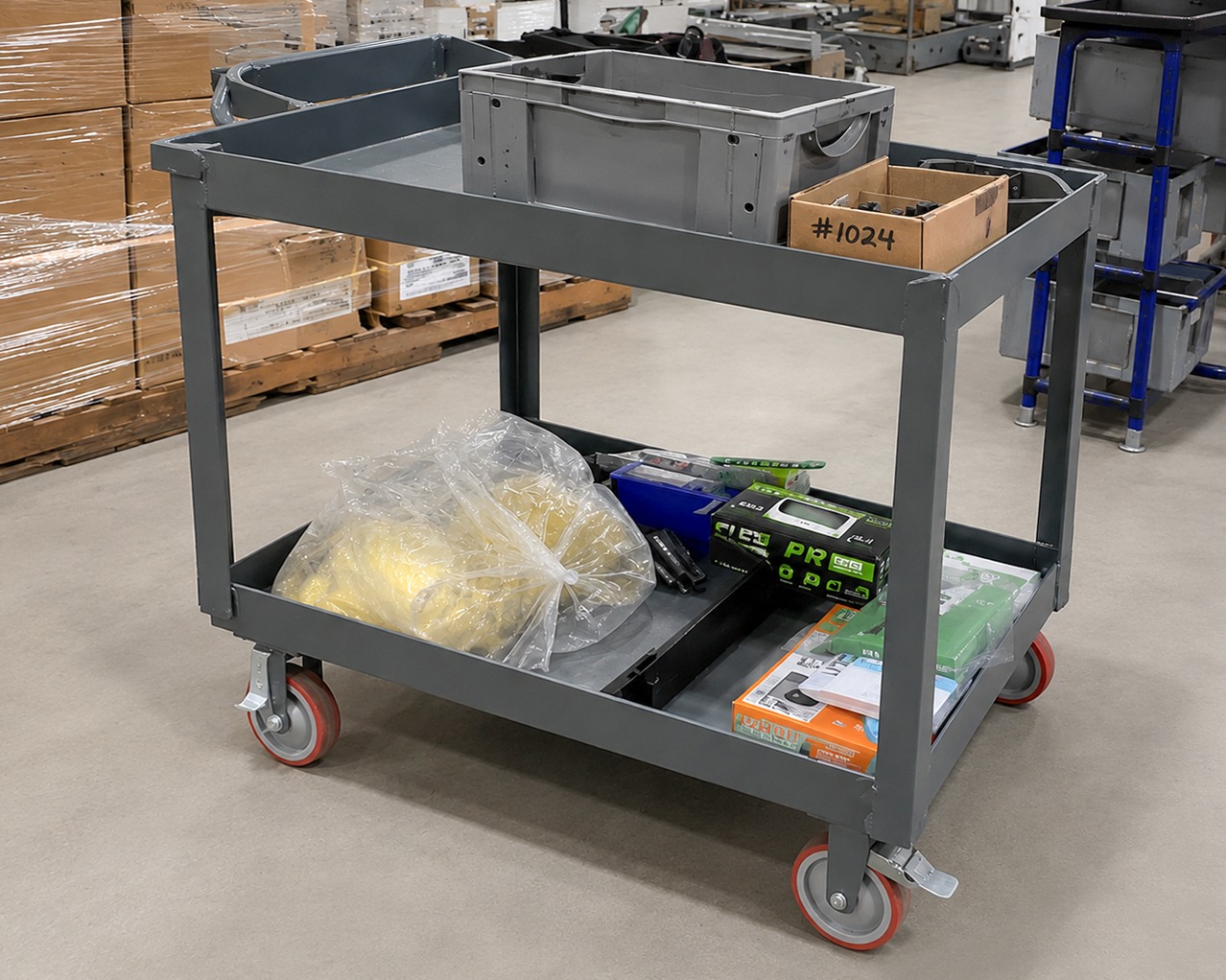
The Problem with Welded Material Handling Structures
Given the impact of today’s cost drivers, automotive and industrial manufacturers can’t allow inadequate material handling structures and processes to further exacerbate these costs.
Fixed, welded material handling structures are wasteful. They lead to constant motion and transport waste, damaged materials, and damaged semi-finished assemblies and parts. Quality problems increase, and the lack of modularity and scalability with these material handling structures means automotive manufacturers aren’t maximizing their available shop floor space.
Welded, fixed-in-place material handling workbenches, work cells, carts, trolleys, and flow racks do not have the modularity and scalability to adjust to changing manufacturing requirements. They’re expensive, heavy solutions that often lead to work-related injuries and absenteeism.
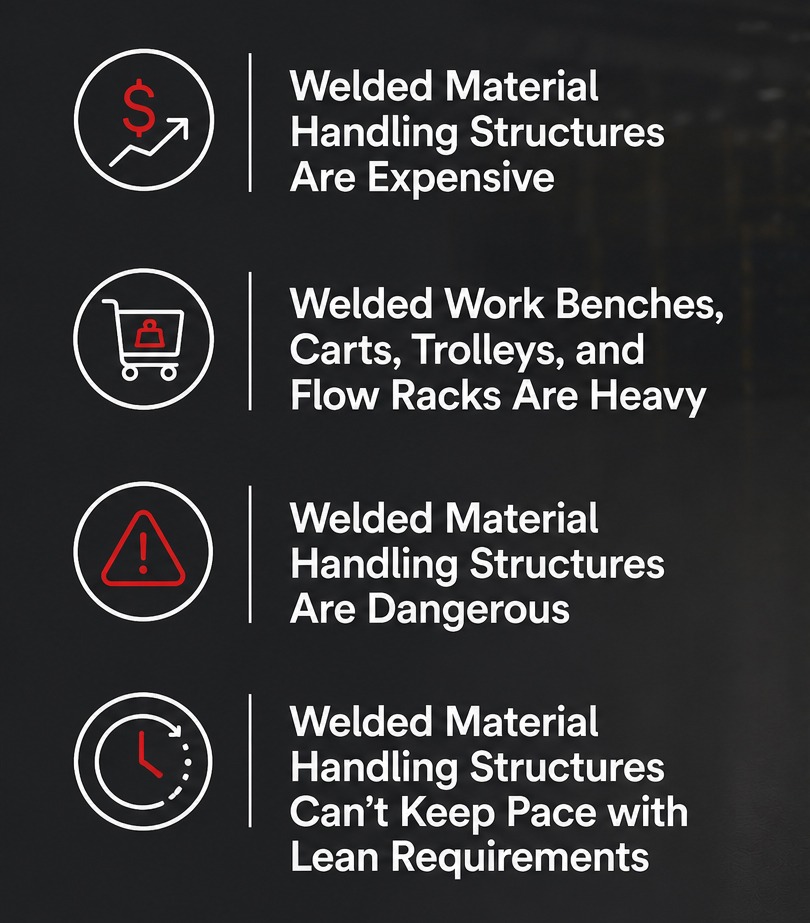
4 Reasons Welded Doesn't Work
First, welded workbenches and carts are expensive. They cannot be modified or changed in-house. Automotive manufacturers must send these structures outside to a third-party to be changed or modified. This is incredibly expensive and adds extensive delays.
Second, welded workbenches and desks are incredibly heavy. Moving or changing their location risks injuries to workers. These structures are not ergonomic and do not belong in lean manufacturing environments.
Third, material and part damage are commonplace with welded carts and platform carts. Materials are
haphazardly stored, move far too often, and can lead to serious damage.
Fourth, welded structures can cause multiple work-related injuries. Whether it’s overhanging parts and materials strewn about on platform carts that either lead to trips or falls for employees or having to move incredibly heavy workbenches, welded structures are rarely safe.
Finally, welded structures cannot keep up with the constant changes in the production process and manufacturing requirements. They occupy more space than needed and cannot be quickly modified.
Why T-Slot Aluminum is a Game Changer
The T-slot aluminum profile is a lightweight aluminum fin extrusion with exceptional load-bearing capabilities. Fully corrosion-resistant, the T-slot aluminum profile from 80/20 can be cut to any requirement and forms the essential building block of all modular and scalable 80/20 material handling structures.
Customers who use the T-slot aluminum profile for automotive material handling solutions can design and assemble whatever material handling structure is needed. The assembly of the structures occurs within the customer’s facility. An extremely simple system, production employees and technicians typically design and assemble their own material handling structures, and changes are always done in-house by the employees themselves.
-
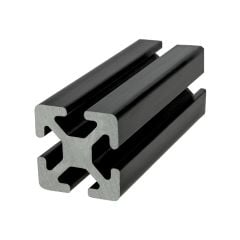 1515FRP-BLACK
1.50” X 1.50” Fiber Reinforced Polyurethane (FRP) T-slotted Profile - Four Open T-slots
-
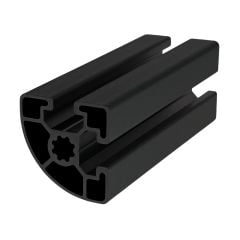 45-4538-LITE-Black-FB
45mm X 45mm Quarter Round Lite T-slotted Profile - Two Open T-slots
-
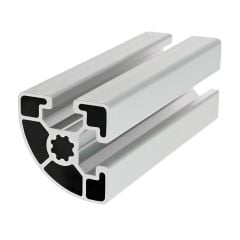 45-4538-LITE
45mm X 45mm Quarter Round Lite T-slotted Profile - Two Open T-slots
-
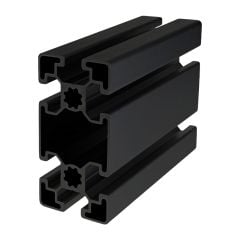 45-4590-LITE-Black-FB
45mm X 90mm Lite T-slotted Profile - Six Open T-slots
-
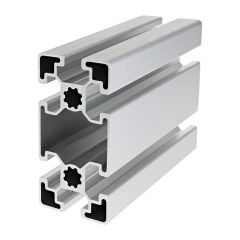 45-4590-LITE
45mm X 90mm Lite T-slotted Profile - Six Open T-slots
-
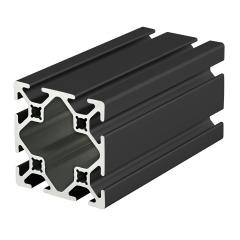 2020-S-Black
2.00” X 2.00” Smooth Surface T-Slotted Profile - Eight Open T-Slots
-
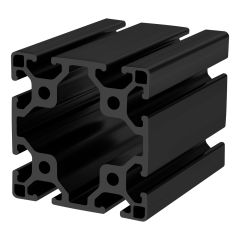 40-8080-Lite-Black-FB
80mm x 80mm Lite T-Slotted Profile - Eight Open T-slots
-
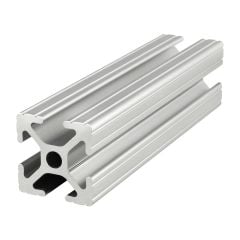 1010
10101.00” X 1.00” T-Slotted Profile - Four Open T-Slots
-
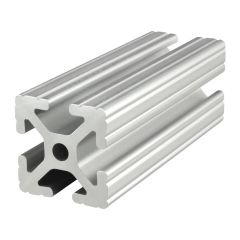 1515
15151.50” X 1.50” T-Slotted Profile - Four Open T-Slots
-
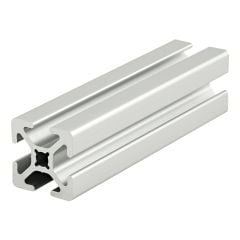 1010-S
1.00" x 1.00" Smooth Surface T-Slotted Profile - Four Open T-Slots
-
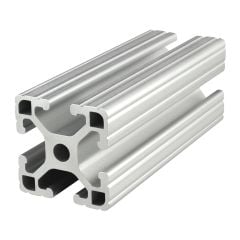 1515-Lite
1.50” X 1.50” Lite T-Slotted Profile - Four Open T-Slots
-
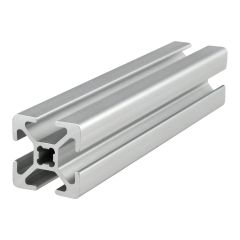 20-2020
20mm X 20mm T-Slotted Profile - Four Open T-Slots
-
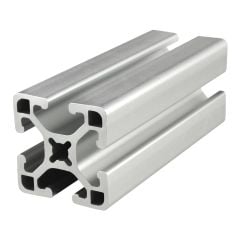 1515-LS
1.50” X 1.50” Lite Smooth Surface T-Slotted Profile - Four Open T-Slots
-
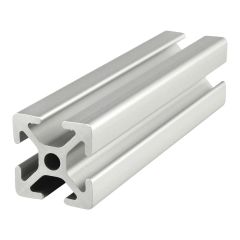 25-2525
25mm X 25mm T-Slotted Profile - Four Open T-Slots
-
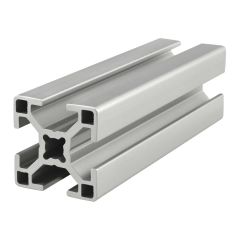 30-3030
30mm X 30mm T-Slotted Profile - Four Open T-Slots
-
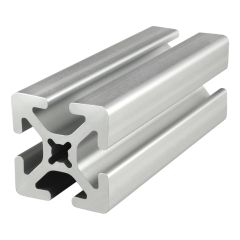 1515-S
1.50” X 1.50” Smooth Surface T-Slotted Profile - Four Open T-Slots
-
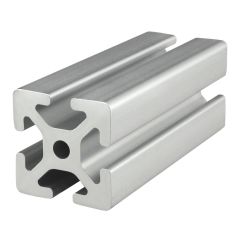 40-4040
40mm X 40mm T-Slotted Profile - Four Open T-Slots
-
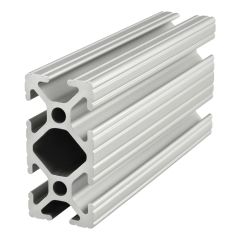 1020
10201.00” X 2.00” T-Slotted Profile - Six Open T-Slots
-
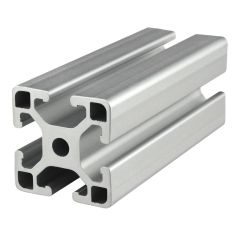 40-4040-Lite
40mm X 40mm Lite T-Slotted Profile - Four Open T-Slots
-
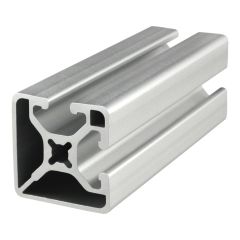 1502-LS
1.50” X 1.50" Lite Smooth SurfaceT-Slotted Profile - Two Adjacent Open T-Slots
The T-slot aluminum comes in black, yellow, and clear. It can easily be cut to any required length and can be combined with an extensive array of ancillary support products such as fasteners, joints, nuts, bolts, screws, decking material, steel tubes/pipes, and Kaizen foam.
The entire system is perfectly suited for lean manufacturing environments where rapid changes to carts, trolleys, flow racks, work benches, lead work cells, tables, boards, and other structures are critical for automotive manufacturers.
A staple of Just-In-Time (JIT) and lean manufacturing environments, global manufacturers have been using 80/20 as their automotive material handling solutions for over 35 years.
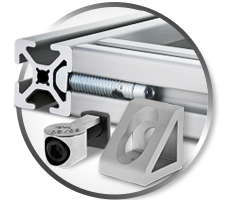
Large Selection of
Fastening Methods
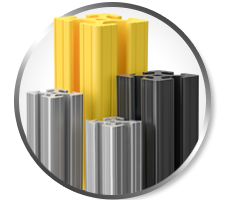
Various Colors and Sizes
for T-slot profiles
5 Ways Automotive Manufacturers Cut Costs with T-Slot Aluminum Profiles
While the applications for automotive manufacturers using 80/20 T-slot aluminum profiles when assembling material handling structures are endless, these represent the five most common ways to cut material handling costs using the 80/20 system.
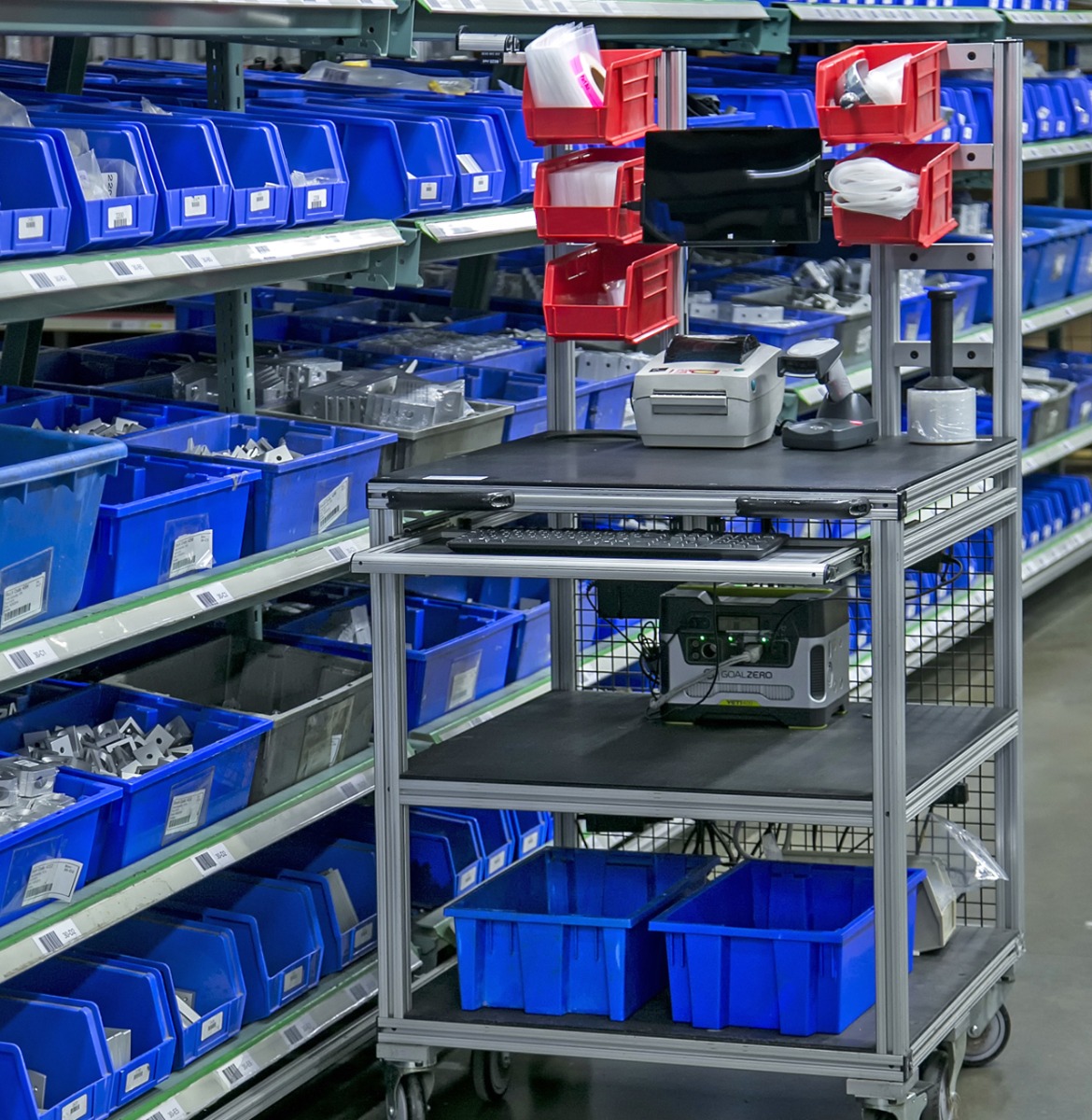
1. Custom Kitting Carts for Line-Side Delivery
Assembling customized kitting carts, modular carts, and flow racks for automotive with the 80/20 system is substantially less expensive compared to purchasing a customized welded picking cart. Not only can that welded picking cart never be modified or adjusted without incurring substantial costs, but the engineering cost of the initial design makes purchasing customized welded picking carts unsustainable.
With the 80/20 T-slot aluminum profile and all the accessories, automotive material handling solutions like kitting or picking carts can be custom-designed and assembled to whatever is needed. These mobile kitting carts can be used to deliver work order materials and parts directly to a given workstation.
Changes or modifications can be made on-site, either to add extra levels for material bins or to increase the size of the decking platform.
Kitting carts help to reduce walking and material transport times by ensuring each workstation gets exactly what’s needed.
2. FIFO Flow Racks
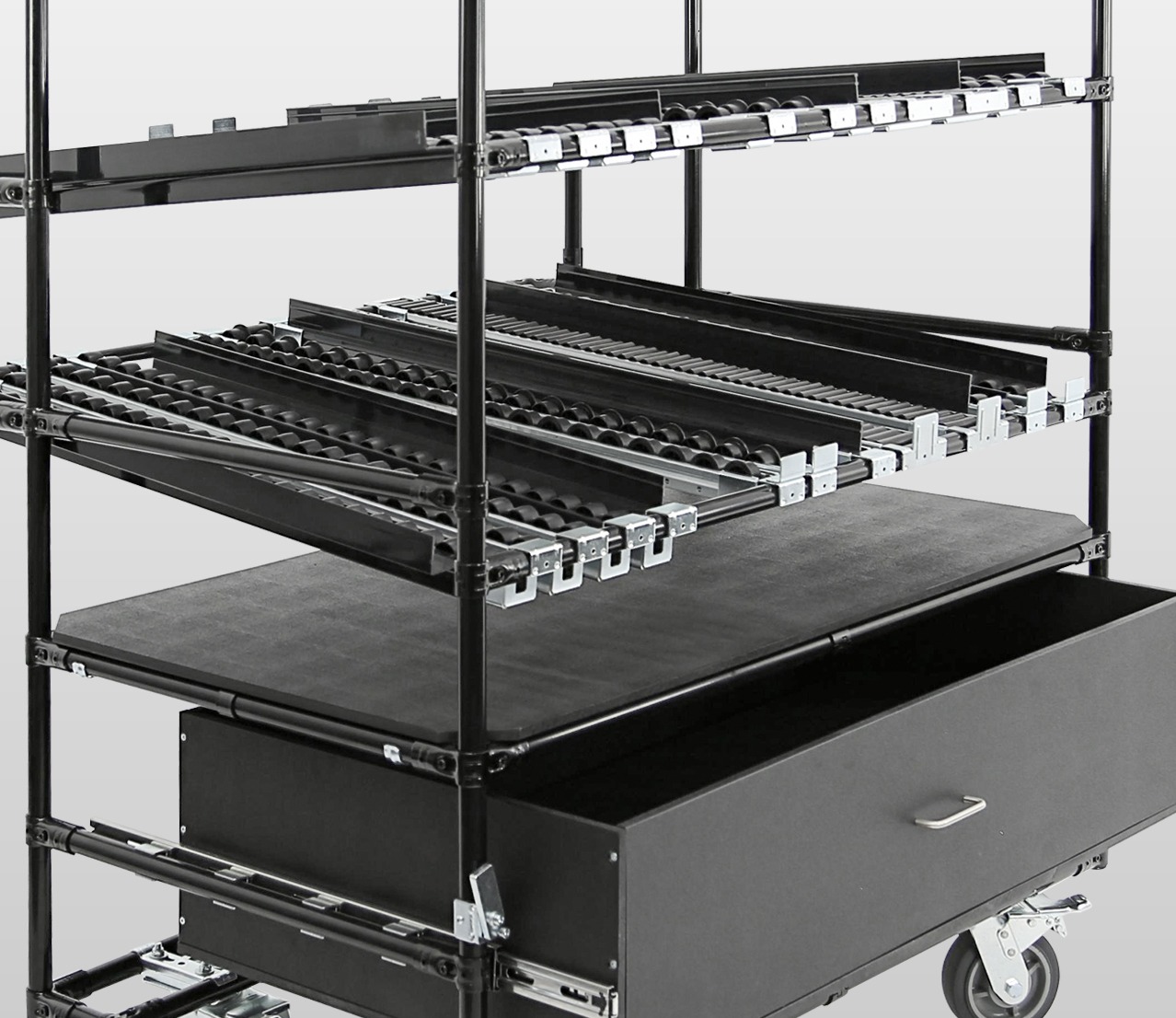
When it comes to improving automotive production line efficiency, a FIFO flow rack is a must-have. First-In, First-Out (FIFO) flow racks act as both a visual queue and a simple way to retrieve material bins. More importantly, FIFO flow racks reduce picking errors while streamlining workflow.
Each level of the FIFO flow rack is angled at 15 degrees with stoppers on each level. Material bins are stored from behind and removed from the front as needed.
FIFO flow racks can be used for line-side material retrieval, in or in front of lean workstations and work cells, or within the warehouse. This FIFO flow rack is made from Flexpipe steel tube and joints. Flexpipe is an 80/20 brand.
The ability to decide the size, number of racking levels, angle, and width between each level is a hallmark of the 80/20 system. This level of functionality, low cost, modularity, and scalability simply is not possible with welded FIFO flow racks.
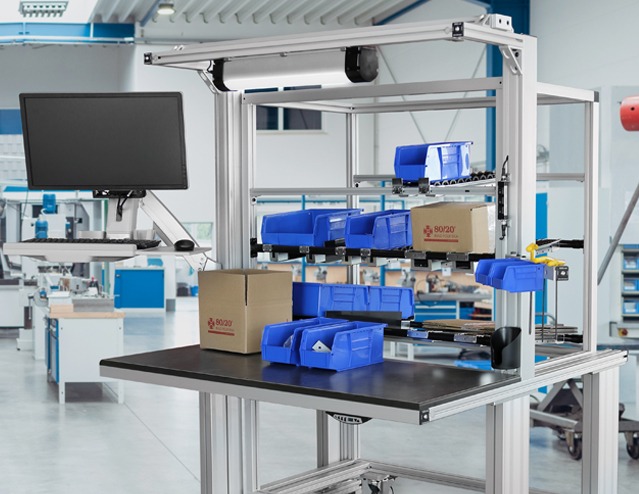
3. Workstations
There are several cost savings with automotive T-slot aluminum workstations. Numerous automotive manufacturers rely on the 80/20 when creating lean workstations and lean work cells. Exceptionally durable, these automotive T-slot aluminum workstations can be configured to whatever dimensions and configurations are needed. Fully customizable and easily modified, having 80/20 mobile or stationary workstations helps to ensure proper ergonomics for employees while helping to maximize shop floor space.
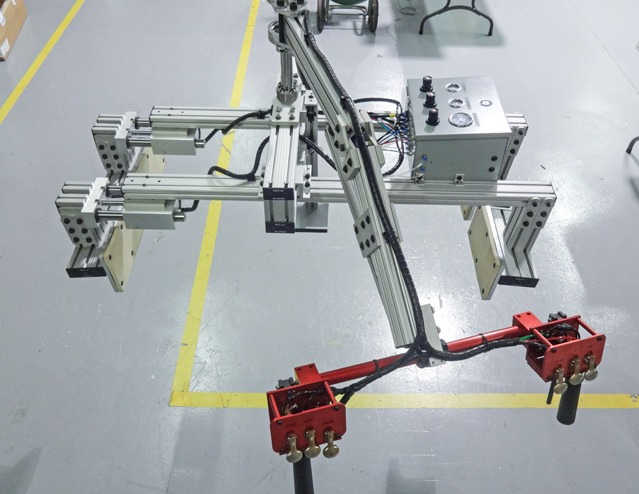
4. End-Of-Arm Tooling
An incredible money-saver compared to hiring third-party contractors to design end-of-arm tooling solutions, the 80/20 T-slot aluminum profile is the most popular of automotive material handling solutions. The ability to design custom end-of-arm tooling means automotive manufacturers save a considerable amount of time and money.
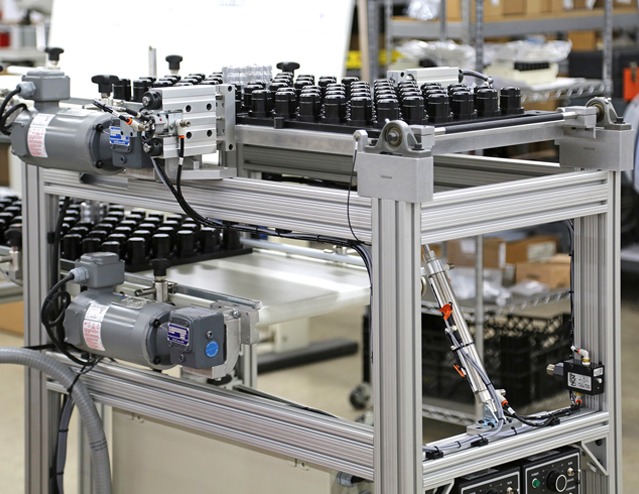
5. Conveyors & Robotics
When it comes to robotics and extending the lifespan of existing equipment, the T-slot aluminum profiles are the ultimate cost-effective solution. With the T-slot aluminum profiles, companies can refurbish existing equipment, modify that equipment, or provide a new protective enclosure. This is especially beneficial to automotive manufacturers with legacy or grandfathered equipment.
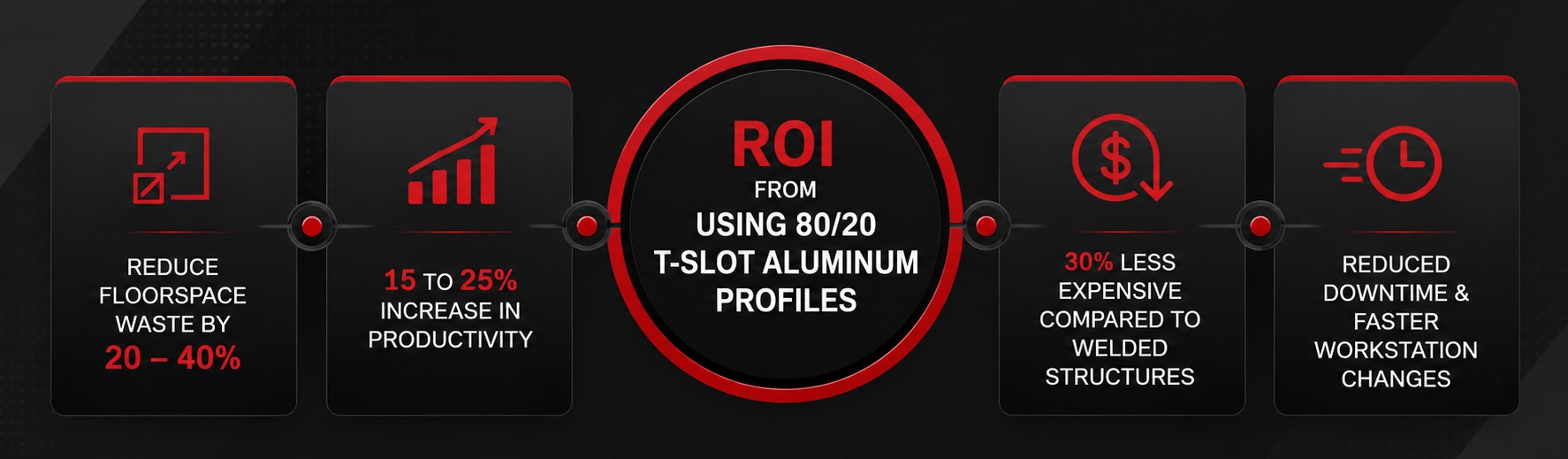
Proven Results & ROI
The automotive industry is best defined by its high volume of repetitive parts and high throughput of repetitive processes. All vehicles are manufactured from a fixed bill of materials (BOM). Parts do not change during a given production year. This means modular mobile carts and FIFO flow racks save a considerable amount of time and money while ensuring consistent, uninterrupted material flow.
Take the Next Step with 80/20
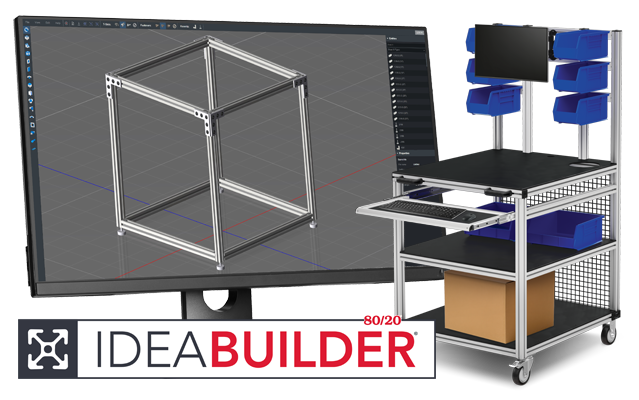
Start Designing with
IdeaBuilder Software
If you are familiar with 80/20 or would like to start your own design work to assemble your own material handling structures, then try IdeaBuilder®, a free web-based software.
Learn More About 80/20 in
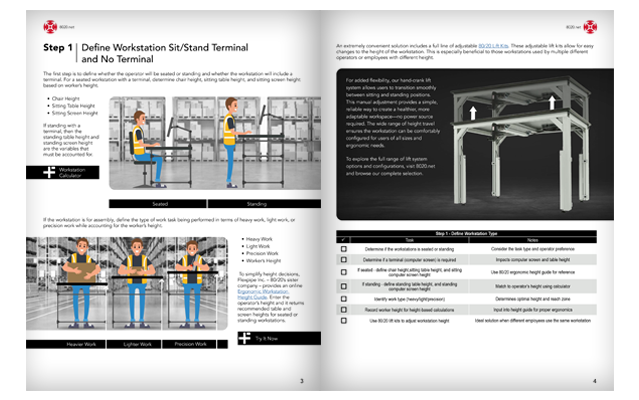
the Workstations Field Guide
This guide outlines a 7-step workstation design process, from defining seated or standing use and task needs to selecting profiles, casters, storage, lighting, and safety features.
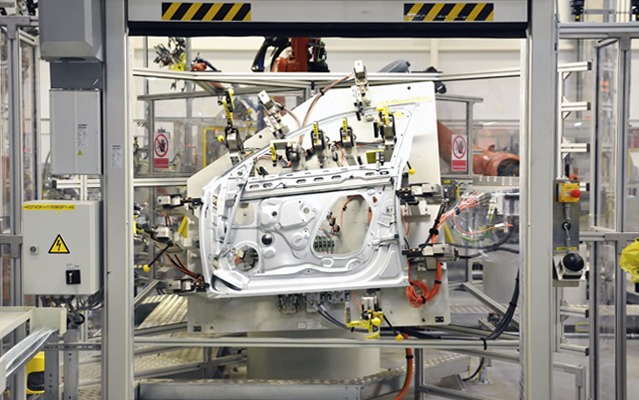
See More 80/20 in
Automotive Manufacturing
Get a full overview of 80/20 in the automotive industry. Browse solutions, products and more within a dedicated page to all the way 80/20 is involved in automotive manufacturing.
From ESD basics to your next project
Plan your next ESD-protected workstation and learn more in the ESD-Compliant Workstations Field Guide.
Go deeper on compliance and testing in our ESD Compliance Guide for Manufacturing.
Ready to build? Start designing in 80/20's IdeaBuilder in minutes. Need local support? Talk to the 80/20 team or your local 80/20 distributor about ESD-safe panels, grounding hardware, and workstation designs.
Key Takeaways on ESD Basics
-
ESD can damage electrical components during assembly and testing and lead to latent failures.
-
ESD protection improves manufacturing efficiency, reduces costs and increases safety.
-
Material selection is essential for ESD protection.
-
Grounding is an absolute must for any 80/20 ESD-compliant workstation.
-
ESD-safe and compliant workstations require a complete system-wide approach.