
Custom Data Center Racking & Modular Framing Systems
Custom Data Center Racking & Modular Framing Systems
Scalable aluminum and FRP framing solutions for data center racks, containment structures, enclosures, carts, and workstations.
1. Custom Data Center Racks & Framing Systems
Standard fixed-structure racking, or steel-welded carts, trolleys, workstations, and containment enclosures cannot address the constantly changing needs of today’s data center environments.
Welded structures are rigid. They're extremely heavy and hard to move Expensive, difficult to reconfigure, and requiring outside fabrication or contractors for modifications, retrofitting steel welded racks and frames can lead to extensive delays when layouts or data center equipment change.
What’s needed is a custom framing solution that empowers teams to design and assemble their own racking and enclosures.
Whether it’s designing and assembling custom racking for unique-sized servers, assembling scalable framing and enclosures for firewalls, routers, and network switches, needing a framing barrier for power distribution units (PDUs), or needing mobile carts and workstations, 80/20 provides numerous options to help teams create customized enclosures.
80/20 offers both T-slot aluminum profiles and Fiber Reinforced Polymer (FRP) profiles, made with polyurethane resin. Our Polyurethane FRP Profiles consist of 80% fiberglass and 20% polyurethane resin, resulting in a non-metal framing solution for applications where electrical non-conductivity, thermal non-conductivity, and corrosion resistance are needed.
From aluminum and Polyurethane FRP Profiles to industrial casters, monitor mounts, work surfaces, fasteners, lighting solutions, and other accessories, 80/20 ensures data centers have the tools needed to design, assemble, and modify racking and framing structures as needed.
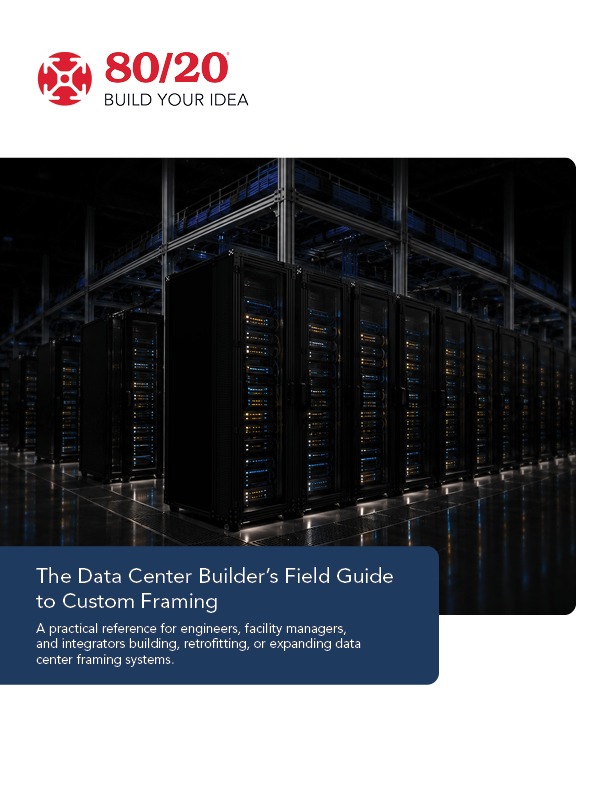
Read More in the Data Center Design Field Guide
This step-by-step workbook helps data center teams identify challenges, evaluate layouts, and design more flexible, efficient spaces. Learn how modular 80/20 T-slot aluminum solutions improve scalability, organization, and future adaptability.
2. Custom Rack and Frames for Data Center Equipment
Far too often, data centers are limited in their selection of racking and framing solutions. Standard, prefabricated, me-too racks, frames, and enclosures are built for common applications. These racks do not always fit specialized data center equipment.
The limitations of standard racks and frames force data center teams to stack equipment in haphazard ways, increasing fire or safety hazards. As data center layouts expand, these standard racks and frames become extremely problematic.
80/20’s aluminum and Polyurethane FRP framing solutions allow for relatively quick and inexpensive adjustments. This means having a solution that is incredibly flexible and can easily adjust when data center layouts change. It’s a modular and scalable solution that increases flexibility and safety while significantly reducing costs.
-
Standard Racks and Frames Have Serious Limitations
-
Steel-Welded Racks Don't Allow for Proper Storage of Non-Standard Equipment
-
Facility Layouts Change and Grow Over Time
-
80/20 Aluminum and FRP Profiles are Ideal for Custom Framing
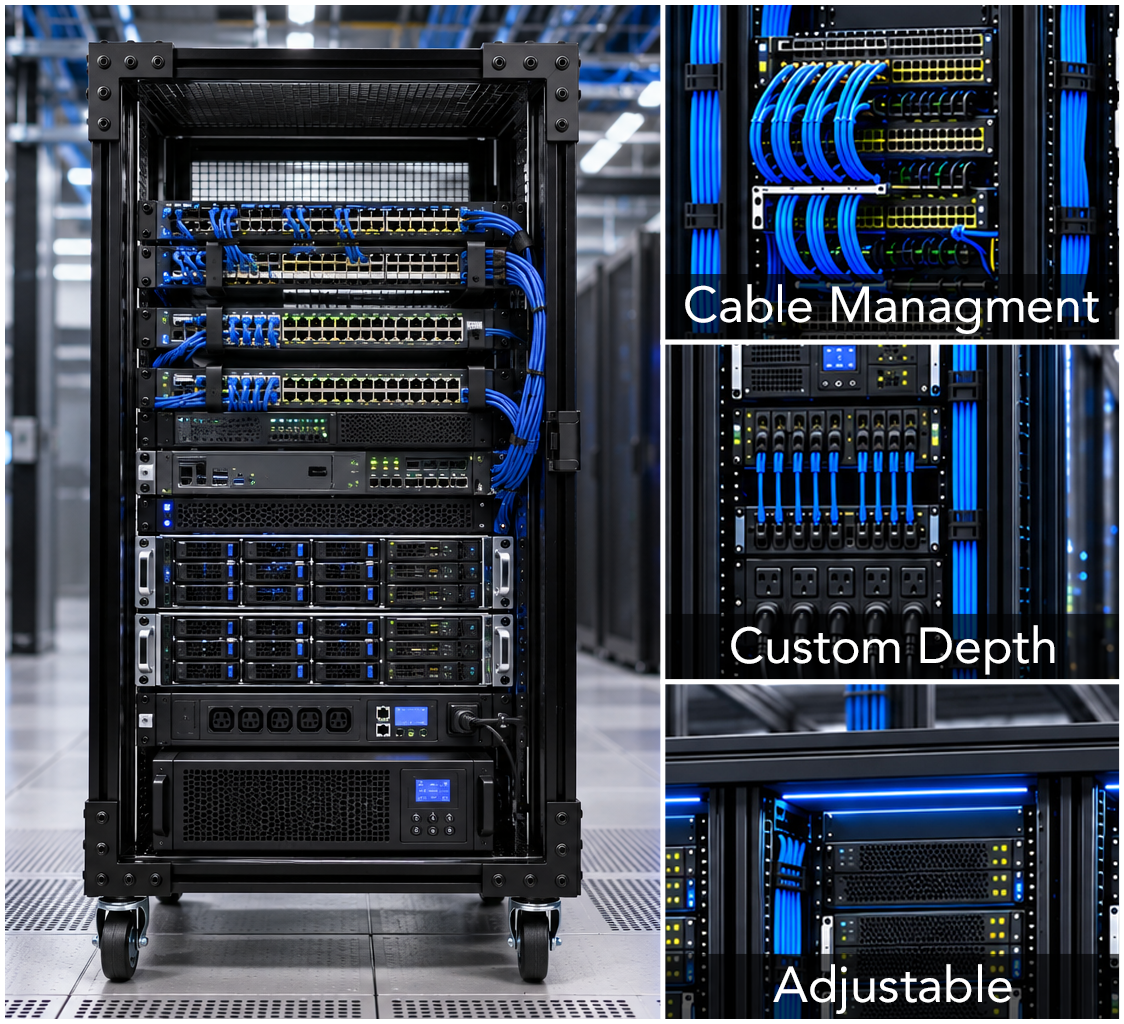
A. Custom Frames for Data Center Equipment
A perfect example of specialized data center equipment includes unique-sized servers, switches, firewalls, storage arrays, PDUs, and UPS systems with non-standard dimensions. Standard racking and shelving often don’t accommodate this type of equipment. This leads to wasted storage space, uneven spacing between equipment, poor airflow, and unsecured cables and wires.
Data center framing systems should allow for easy access to installed equipment. While standard welded racks and frames make that difficult, 80/20 doesn’t.
-
Improved Airflow
-
Secured Cables and Wires
-
Made-To-Fit and Customized
-
Easily Changed
-
Adjustable to Fit Any Space
-
Easy Access for Maintenance and Upkeep
B. Expanding Structures and Building Out
By their very nature, fixed-structure racking and frames don’t allow for expanding, contracting, or building out to accommodate changing equipment. In many instances, these fixed racks and shelves are welded, and hiring a third party to modify them is not feasible.
With 80/20, your data center team can adapt to already installed equipment, existing aisle spacing, and grandfathered infrastructure. There’s no need to completely rebuild existing infrastructure immediately. Changes can be made as needed.
The ability to expand existing structures is a hallmark of the 80/20 solution. Whether you need to create custom racks and frames for servers and equipment, mobile test racks, auxiliary and support frames for specialized hardware, or enclosures for non-standard equipment with unique dimensions, the 80/20 solution is flexibility personified.
Data center equipment racks can be expanded to account for new equipment or to account for increased capacity. This means teams are 100% in control of their data center containment frames.
C. Material Considerations
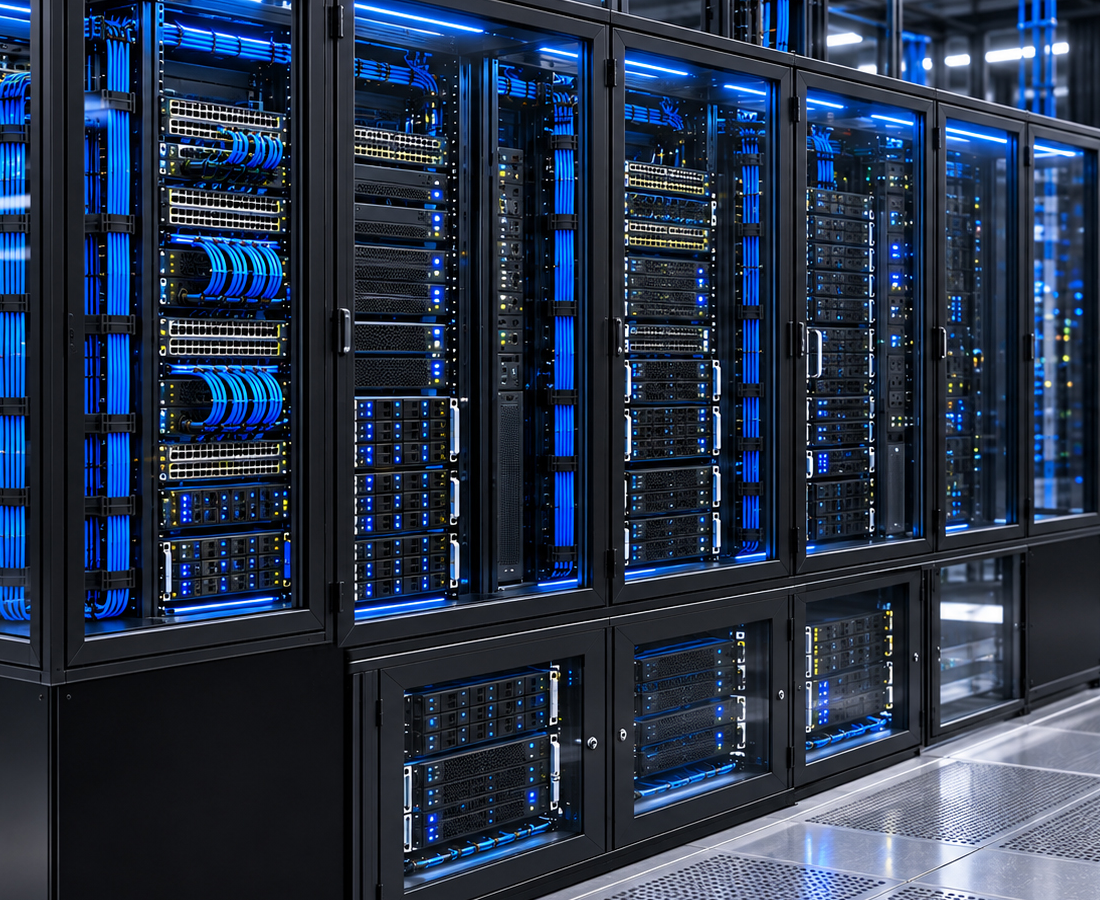
While T-slot aluminum Profiles are the most common choice for many data centers, our Polyurethane FRP Profiles allow teams to create enclosures if they need corrosion-resistant, thermally and electrically non-conductive framing.
3. Choosing Between Aluminum and FRP for Data Center Framing
When it comes to data center containment frames, it’s ultimately about having a choice in building materials. 80/20 provides data center teams with either T-slot aluminum profiles or FRP Profiles.
Ultimately, selecting between these two materials comes down to considering the purpose of the data center enclosure frames, the environment, nearby equipment, and what’s needed for integrating adjacent equipment.
-
Purpose of Custom Server Rack Frame
-
Environment
-
Nearby Equipment
-
What’s Needed to Integrate Adjacent Equipment
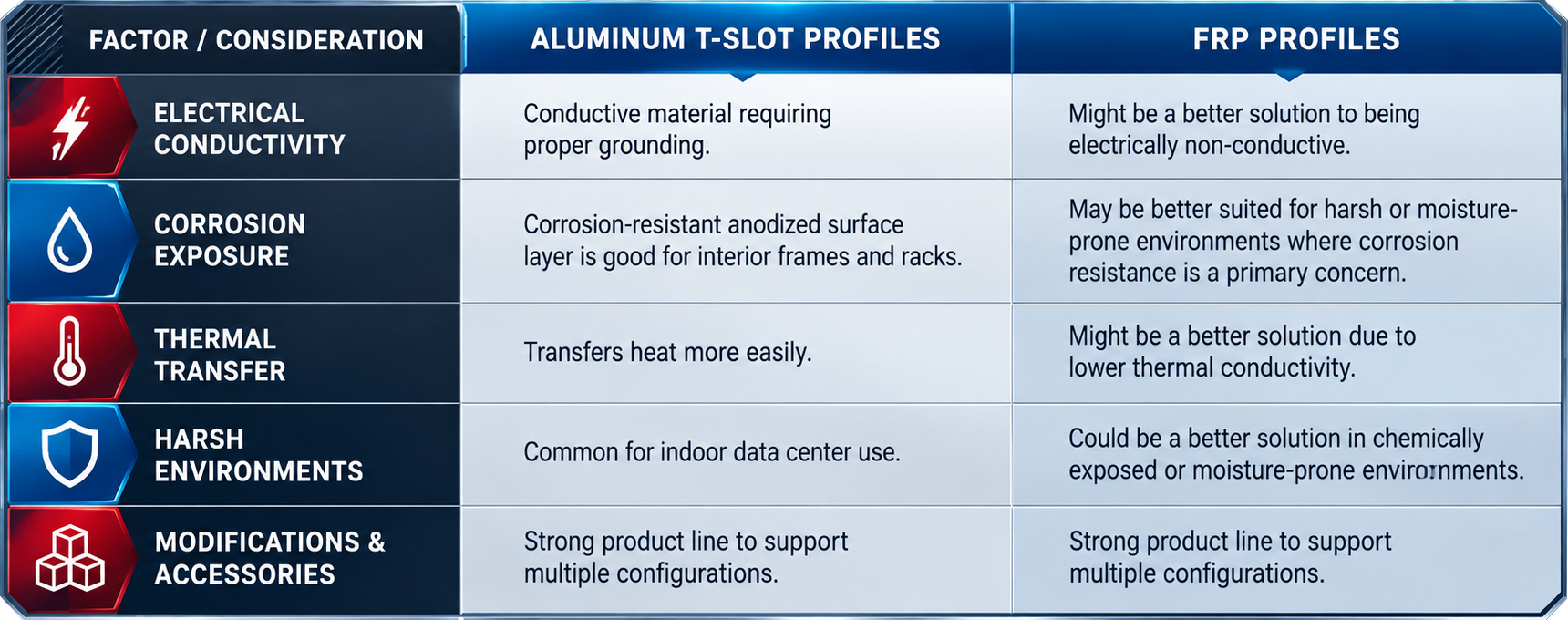
The T-slot aluminum profiles are the most common solution for building data center enclosure frames, data center equipment racks, mobile carts, and trolleys, in addition to mobile workstations and containment racking.
An exceptionally strong material with excellent load-bearing capabilities, the T-slot aluminum profiles help data center teams create durable, strong, and clean-looking racks and frames.
Polyurethane FRP profiles are another effective solution and could be the material of choice in environments where electrical conductivity and thermal conductivity is a concern. The non-conductive properties of FRP profiles, along with their excellent corrosion and heat resistance, might be the ideal solution for certain highly corrosive or harsh environments.
If you are unsure about which material is best for your application, the 80/20 team is more than able to assist.
4. Solutions and Containment Structures
80/20 data center containment frames help separate hot and cold air paths, reduce hot air recirculating around equipment, and improve cooling.
Cool air still comes from the data center’s HVAC system and its CRAC (Computer Room Air Conditioner) and CRAH (Computer Room Air Handler) units. However, containment structures built with 80/20 T-Slot Aluminum or FRP Profiles increase cooling efficiency by maximizing spacing between equipment. [PK2.1][CS2.2][IJ2.3]
Fixed steel-welded racks and containment structures often cramp space, forcing equipment to be forced-fit into tight-fitting spaces on rack levels. This reduces airflow and leads to overheating.
80/20 allows teams to customize spacing between equipment. Cable routing is cleaner and more spaced out, while the equipment benefits from less restricted airflow around ports, switches, patch panels, and server intakes.
With 80/20, data center teams can customize cable and wire paths as layouts evolve so that cable congestion is minimized while integration of trays, panels, and partitions becomes much easier.
Given the amount of heat that can be generated by servers, network switches, patch panels, firewalls, and storage arrays, it only makes sense to have data center containment frames that reduce the impact of that heat.
Every portion of these data center containment frames can be built with 80/20 materials. That includes the door frame, panel supports, aisle partition frames, and individual sections.
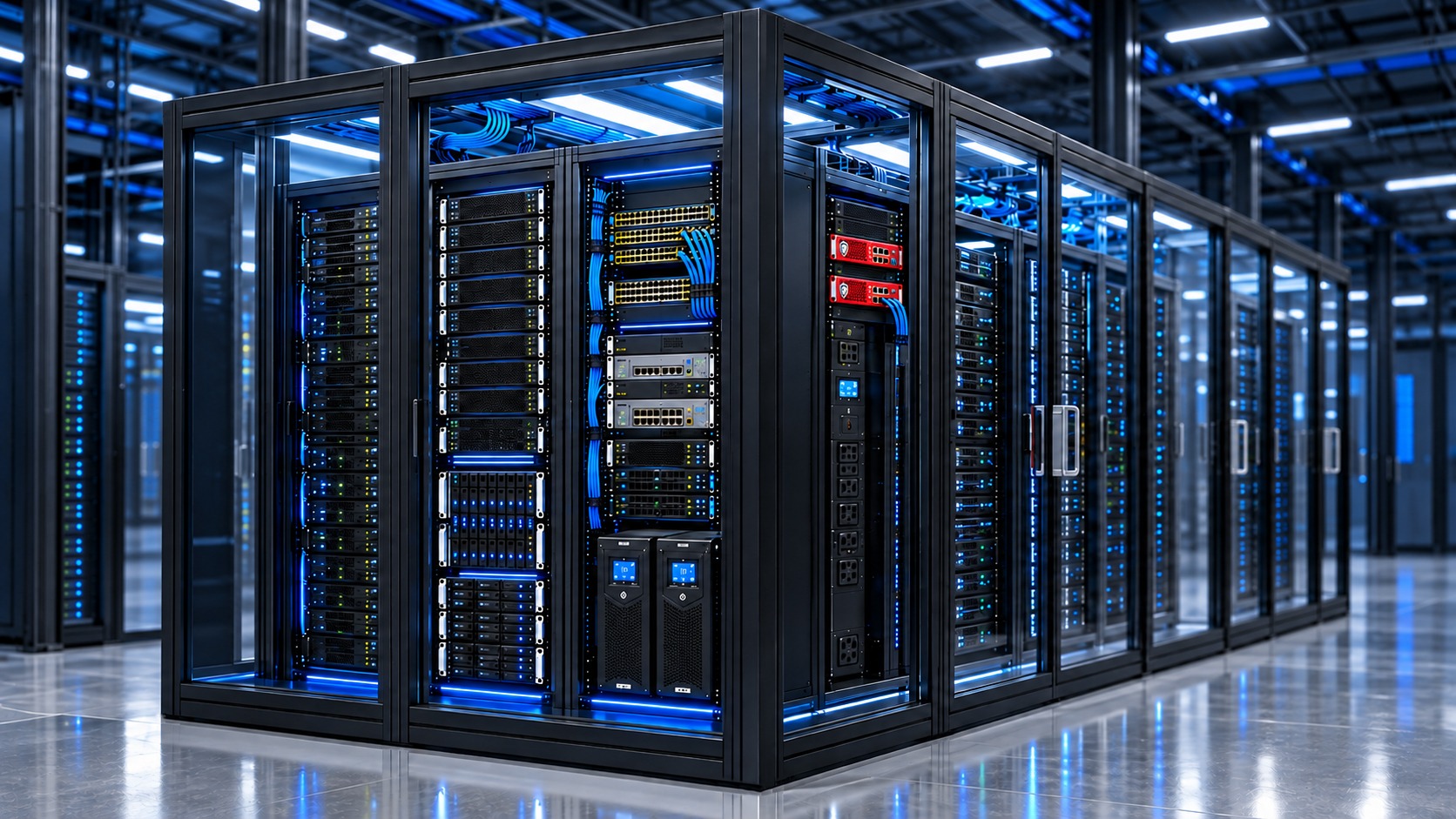
The benefits of being able to create data center containment frames using 80/20 include increased cooling efficiency and improved organization of servers, firewalls, network switches, and storage arrays. Additional benefits include the ability to expand the structure as needed and being able to adapt rack layouts and aisle configurations.
-
Improved Cooling
-
Better Equipment Organization
-
Allows for Modular Expansion
-
Adaptable Rack Layouts
-
Adaptable Aisle Configurations
Ultimately, the size and scope of the containment structure are determined by the needs of the data center. The 80/20 system allows for customized structures in terms of size, width, height, and other critical variables.
Choosing between 80/20 T-slot aluminum profiles or Polyurethane FRP Profiles ultimately comes down to considering where your containment structure is located, what access your team needs, and if there are any electrical or heat-related concerns.
5. Physical Protection, Enclosures, and Controlled Access
As any data center team will tell you, not all equipment is the same. Some equipment is more essential and critical than others. This equipment may require additional physical protection and controlled access.
Whether it’s because the equipment itself supports critical infrastructure, contains sensitive hardware, or presents operational and electrical safety concerns, having the ability to build customized data center access barriers is essential.
It’s about using 80/20 framing solutions to build custom enclosures, safety barriers, partitions, and structures that protect the equipment, keep employees safe, and simplify how that equipment is maintained.
80/20 safety and guarding solutions are structured so that data center teams can create custom safety fencing and guarding enclosures while using visual barriers, rail systems, and partitions to ensure valuable, high-end equipment and employees are safe and secure.
From materials to build the critical fencing and structures to enabling the integration of switches, security cameras, LED lighting, panels, latches, and hinges, the entire 80/20 line makes safety and security easy.
-
Equipment enclosures
-
Access partitions
-
Physical barriers
-
Security cages
-
Visual barriers
-
Restricted zones
-
Camera and lighting mounts
-
Doors, panels, latches, and hinges
-
Service access
The image on the right represents how data center access barriers can protect high-value equipment and data center employees at the same time. Everything needed to build these data center access barriers can be purchased through 80/20.
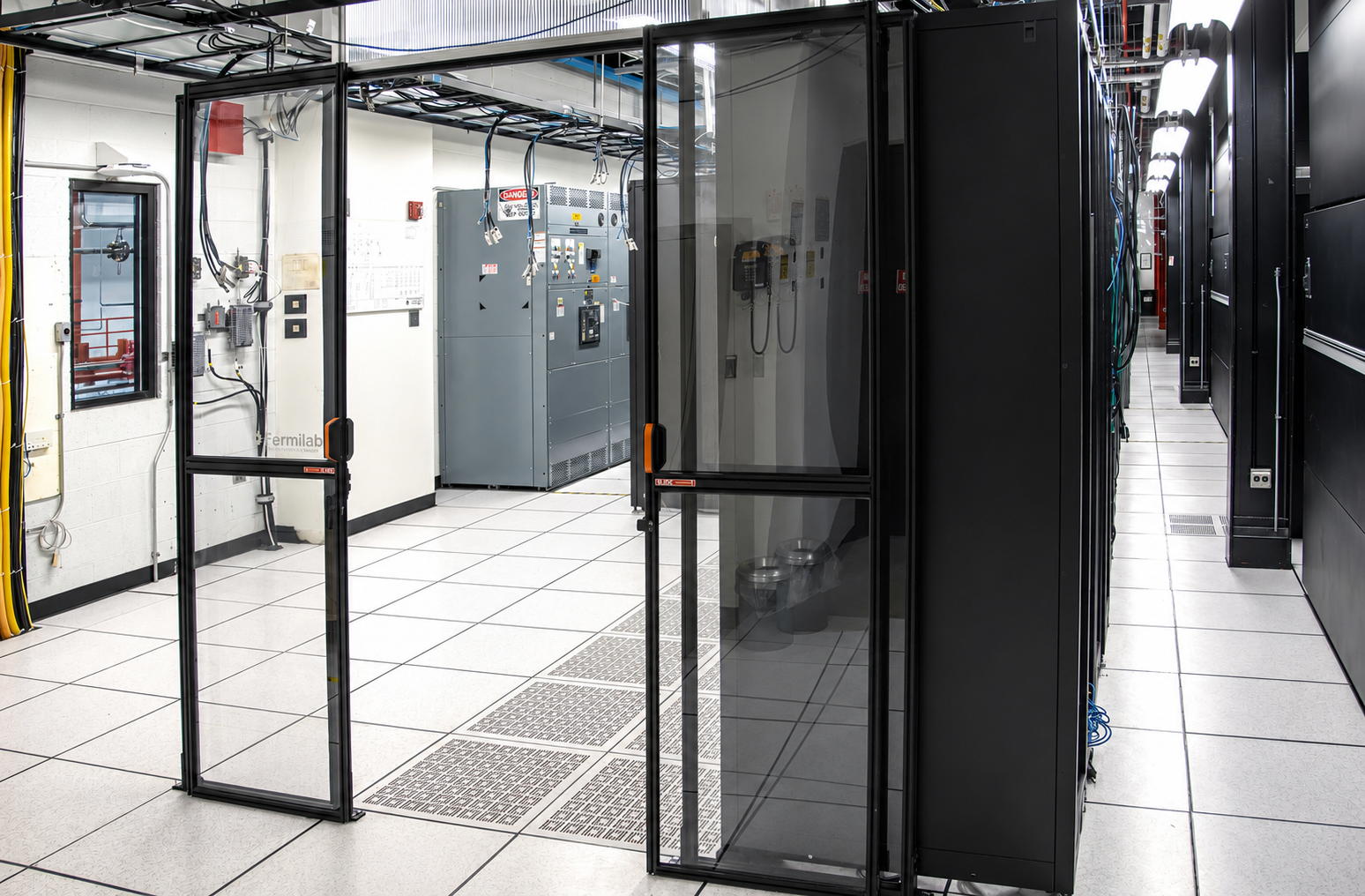
Again, while the most common profiles used are aluminum, some data center teams may choose to use Polyurethane FRP profiles if needing a more corrosion-resistant, non-conductive, and non-thermal conductive framing solution.
6. Maintenance Carts and Mobile Workstations for Data Center Teams
Data center maintenance teams need to be able to respond at a moment’s notice. That means having access to mobile tool carts, spare part carts, and testing carts, in addition to fully mobile maintenance carts.
It’s not just about having readily available tools and troubleshooting equipment for custom data center racks, but also about having modular and scalable mobile workstations that allow teams to perform time-critical work maintenance in different locations within the data center.
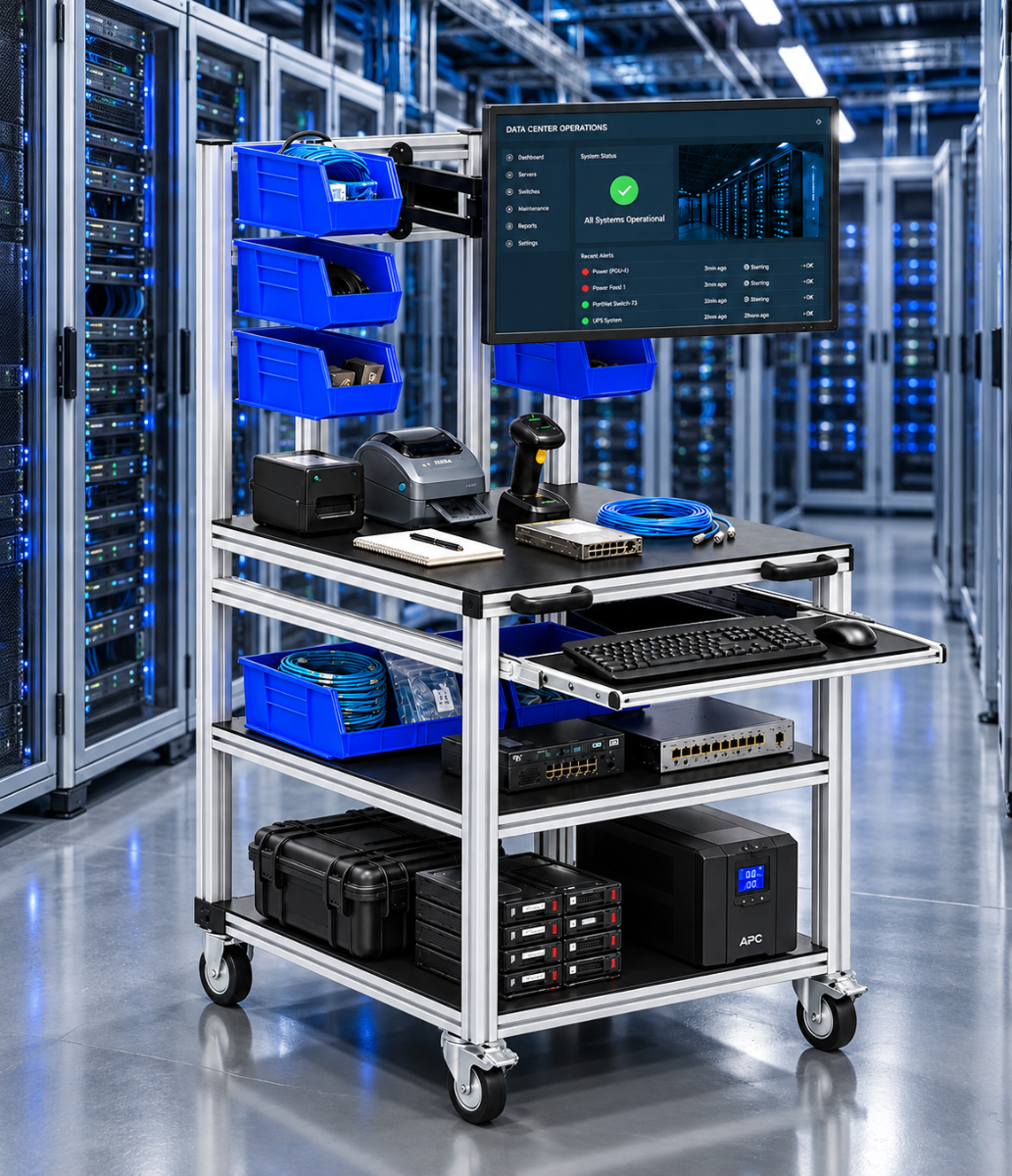
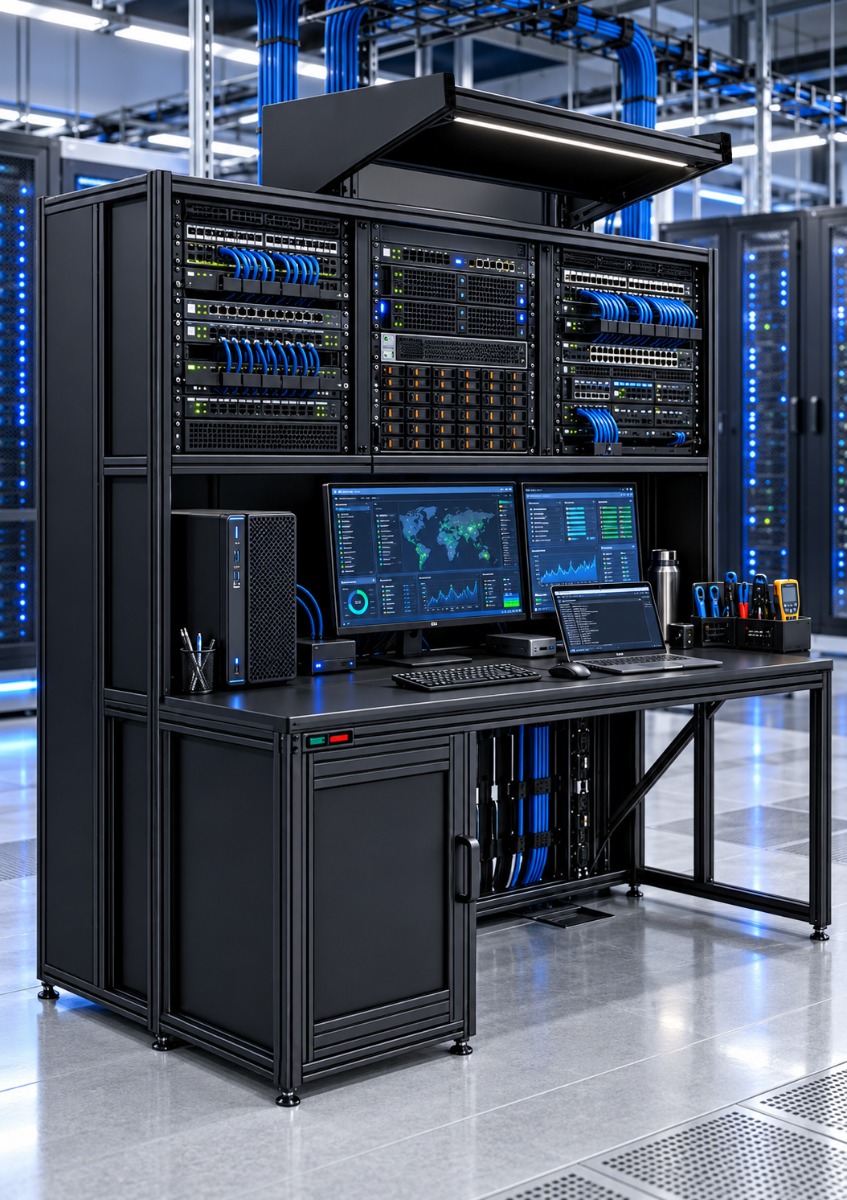
80/20 provides numerous ready-made designs for data center teams needing maintenance, service, laptop, and diagnostic carts. Whether it’s needing a mobile workstation with a terminal and laptop for mobile diagnostic testing or service technicians and maintenance teams needing a mobile service cart, whatever your team needs can be designed and assembled with 80/20
With 80/20, data centers can determine the size, structure, dimensions, and layouts of their mobile workstations and carts. Whether it’s adding a pull-out drawer, using an 80/20 monitor mount, or using 80/20 LED lights to illuminate work surfaces, ergonomics, affordability, scalability, and functionality are what make the 80/20 system so essential.
The 80/20 system allows for the ultimate in customization. Data center teams can design and assemble whatever structure is needed. Whether it’s custom data center racks, server frames, data center enclosure frames, mobile workstations, or maintenance and service carts, the solution affords teams endless options.
-
Tool, laptop, and spare-part carts
-
Testing and diagnostic carts
-
Mobile workstations
-
Maintenance and service carts
With 80/20, teams can decide for themselves how wide or tall their mobile workstations or carts are. This is especially important with installed equipment. There is nothing more frustrating than buying a fixed welded cart that doesn’t fit in between the established rows or separations of existing equipment and hardware.
7. Why Use 80/20 Framing Systems for Data Center Rack Applications?
The 80/20 solution is an extremely convenient tool for custom data center racks because it empowers teams to create clean, modular, scalable, and easily adjustable frames, racks, carts, and workstations. An extremely low-cost solution compared to conventional, outdated steel-welded carts, workstations, and structures, the 80/20 system enables teams to create customized structures as needed.
These structures are easy to modify, allow for seamless integration, have an exceptionally clean appearance, and are durable and require no welding whatsoever.
80/20 provides customers with the option of either T-slot aluminum profiles or FRP Profiles, depending on the application. These profiles are then combined with an extensive selection of fasteners, hardware, panels, doors, and other accessories, enabling teams to create modular framing and racking structures to protect equipment.
-
Custom dimensions
-
Easy modification and integration
-
Clean appearance
-
Material options based on application
-
Quick assembly
-
No welding required
-
Reconfigurable and adjustable
-
Compatible with panels, doors, hinges, fasteners, and mounting hardware
-
Inexpensive compared to steel-welded and fixed structures
-
Fast changeovers
-
Minimal downtime for changes
8. Common Data Center Applications for 80/20
The 80/20 system is designed for flexibility and to keep up with a constantly changing data center environment. Literally any standing structure, rack, or frame needed to protect, store, and organize equipment, tools, consumables, and spare parts can be created with the 80/20 system.
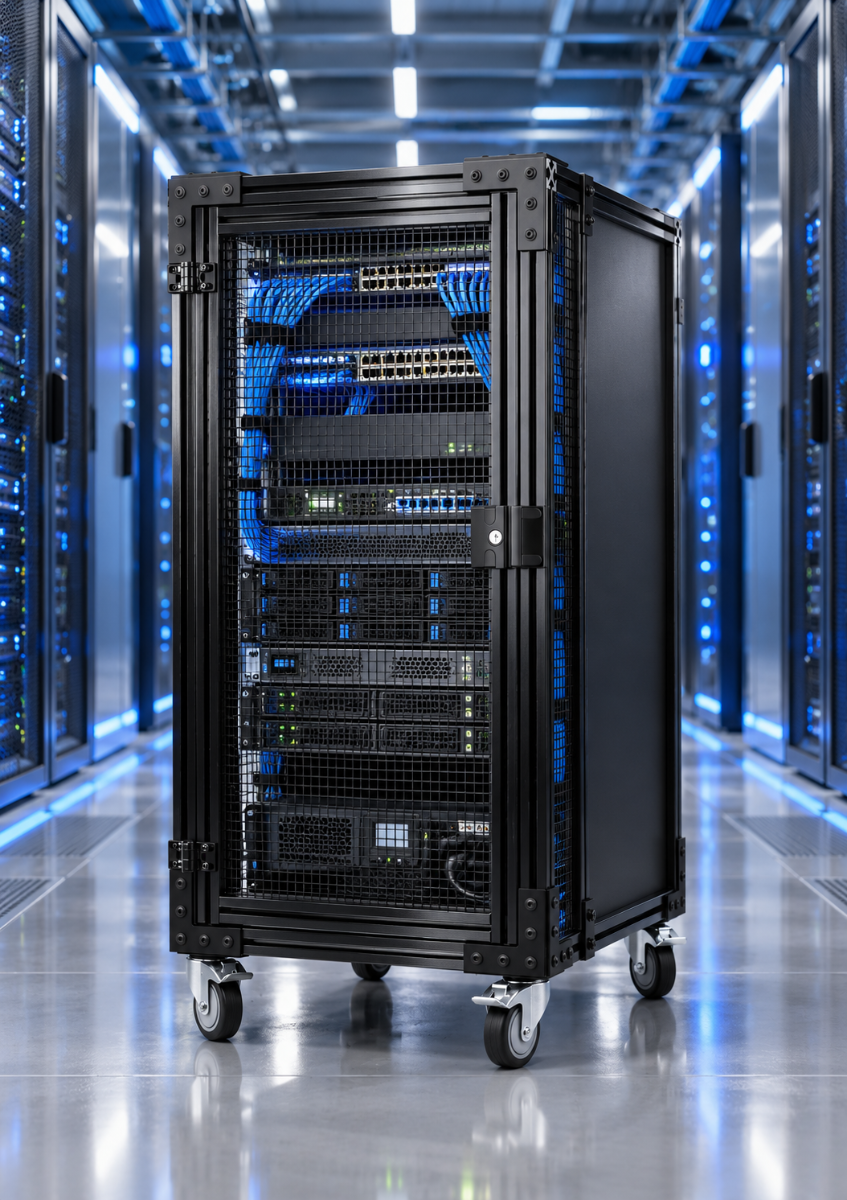
Custom Server Rack Frames
For non-standard equipment, prototypes, auxiliary systems, and custom mounting requirements.
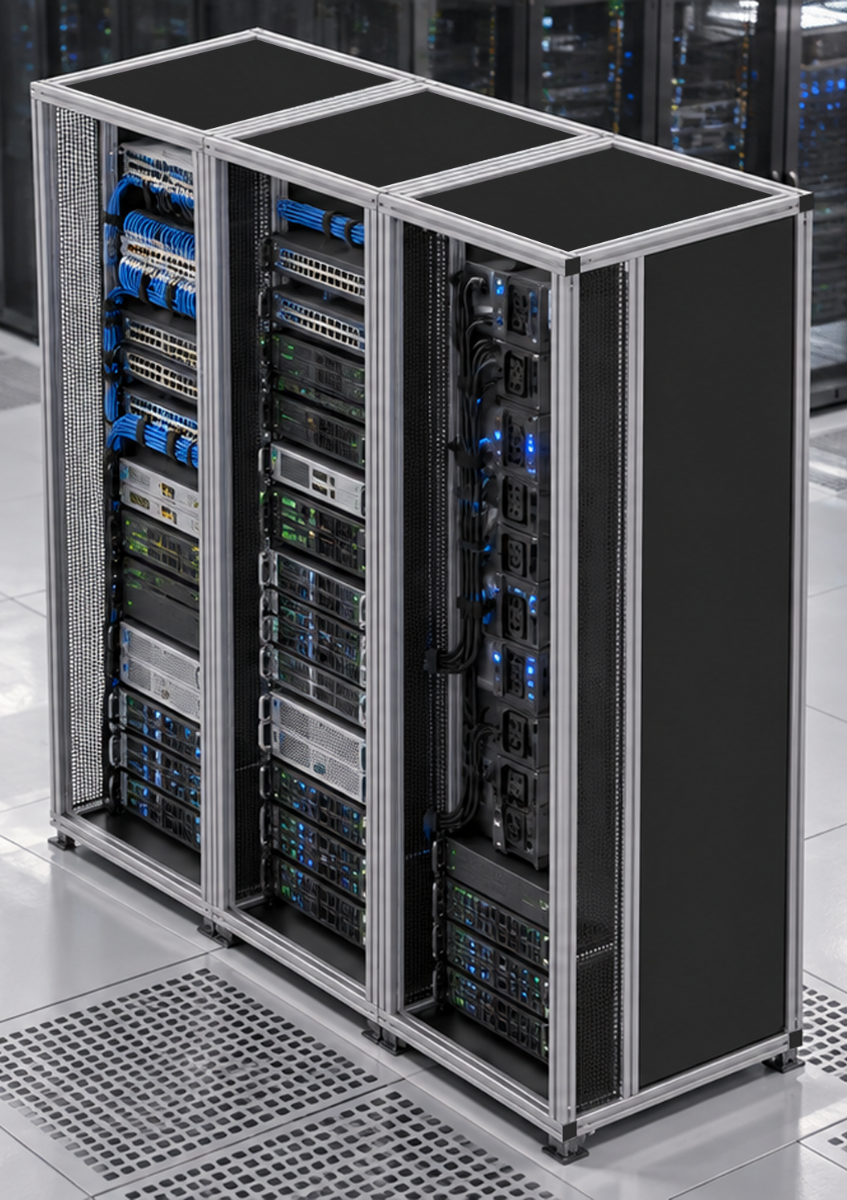
Equipment Support Frames
For hardware, monitoring systems, test equipment, and facility-specific support needs.
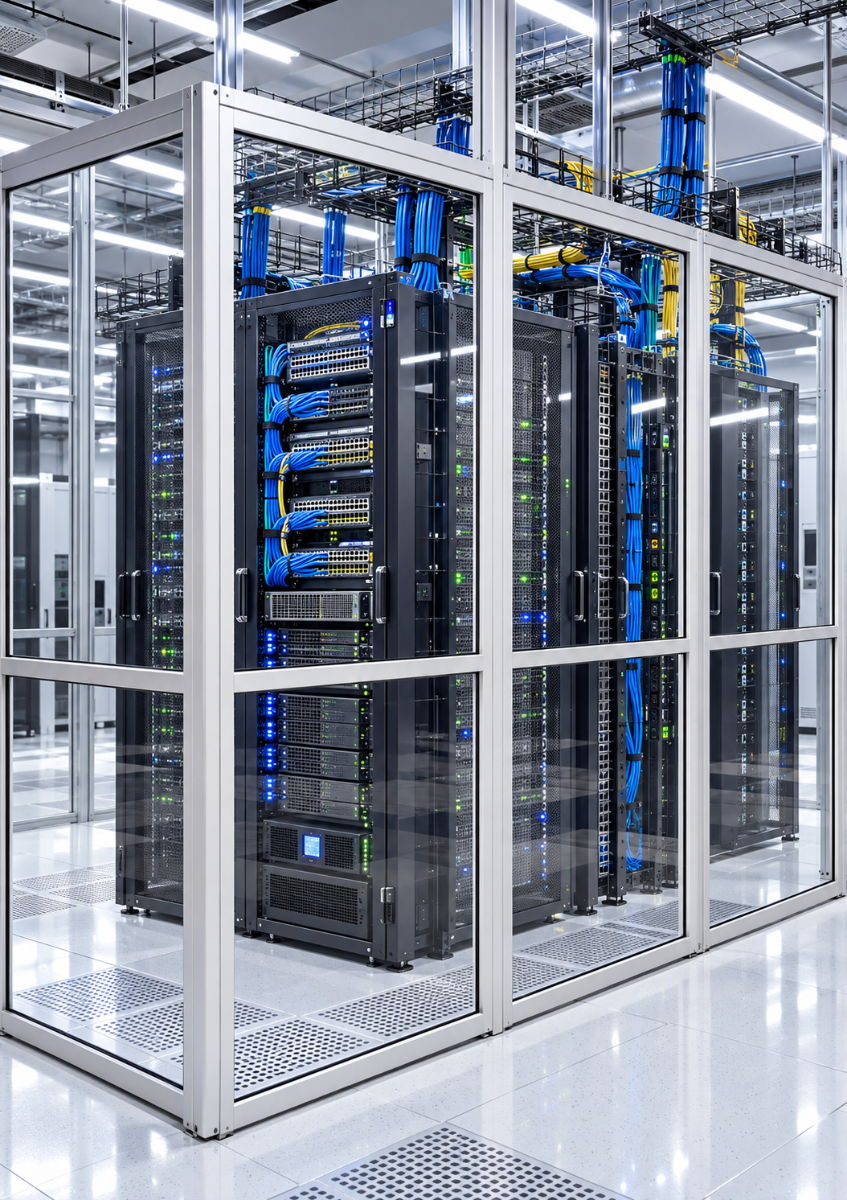
Containment Support Frames
For hot aisle, cold aisle, or custom containment panel and door structures.
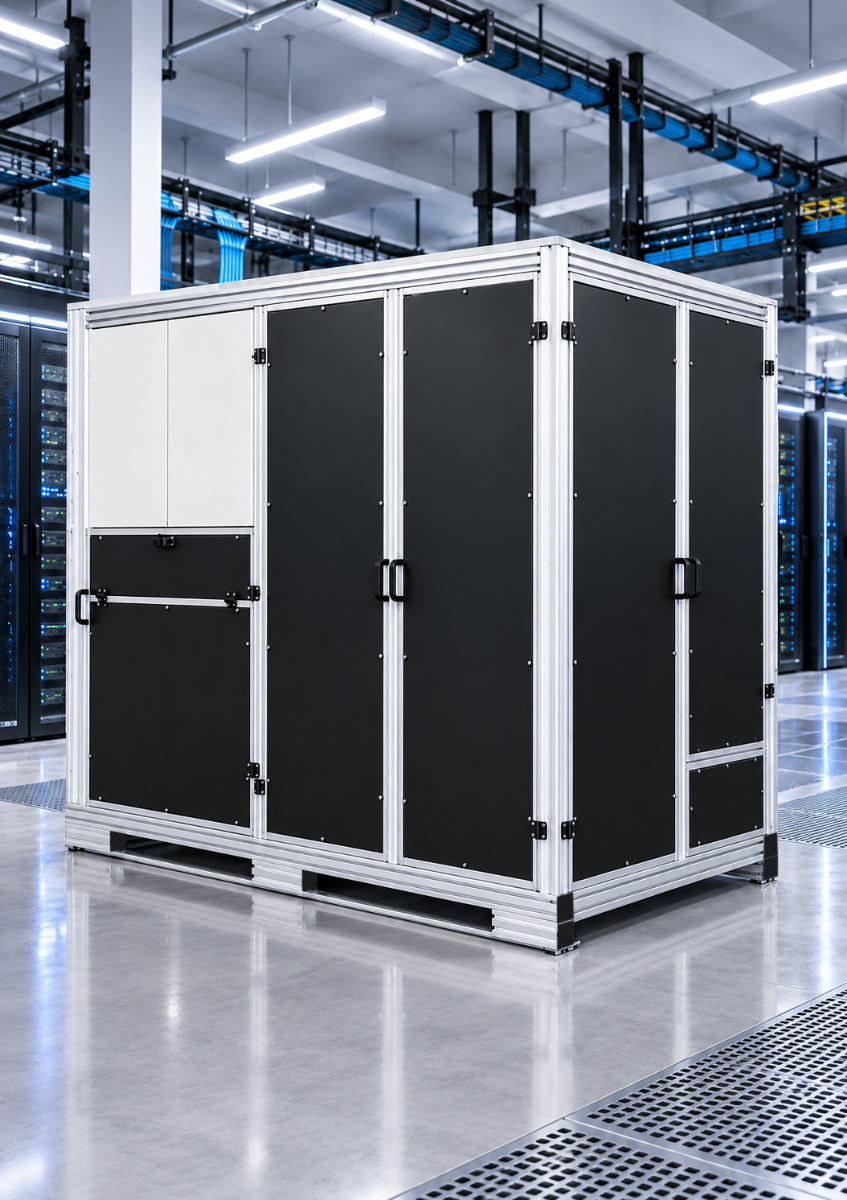
Equipment Enclosures
For protecting sensitive, valuable, or restricted-access equipment.
Whether you need to create custom racks for servers and other equipment, containment enclosures for improved cooling, or even equipment enclosures for sensitive equipment, tools, spare parts, and consumables, the 80/20 solution ensures you can create the perfect rack and frame.
Requiring no welding whatsoever, the aluminum and FRP profiles are easily connected using 80/20 hardware. As a data center expands and uses up more space, teams can expand their 80/20 structures as needed without ever having to hire an outside contractor.
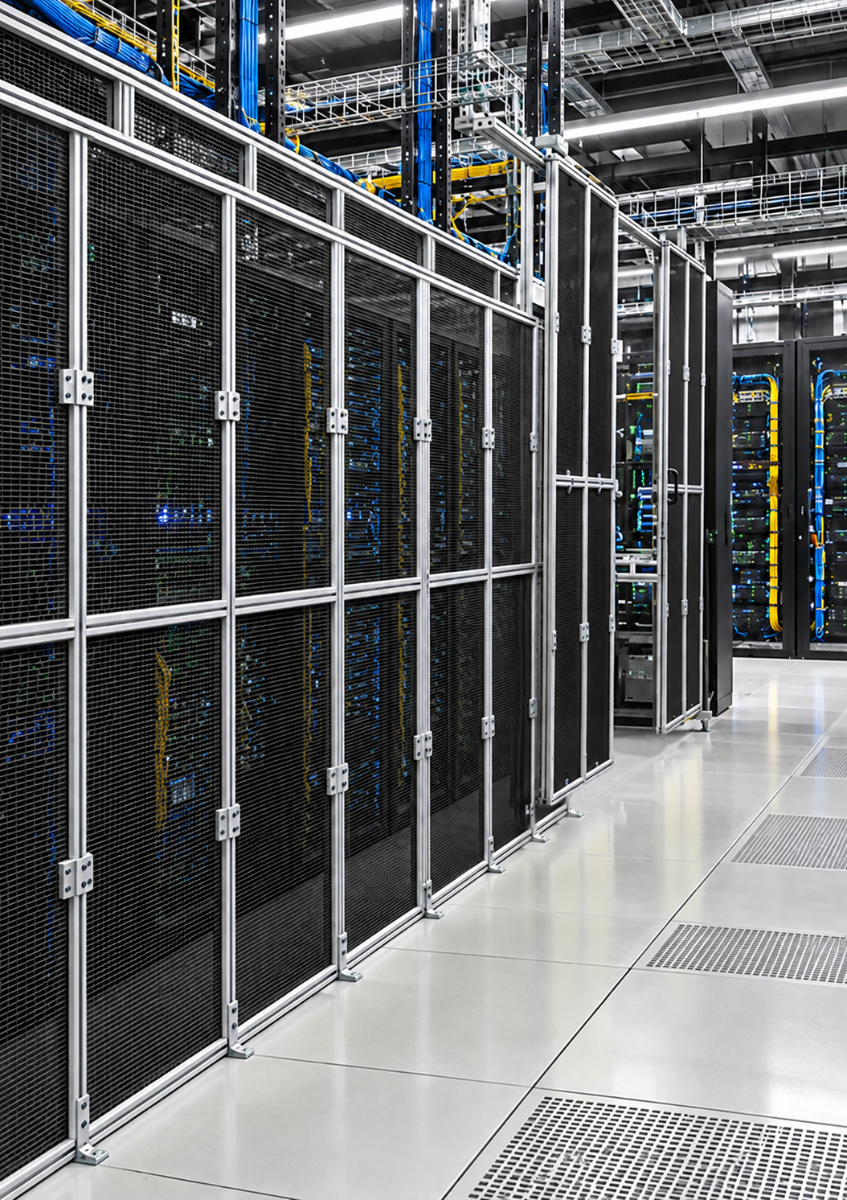
Access Barriers and Partitions
For separating maintenance zones, restricted areas, and critical equipment spaces.
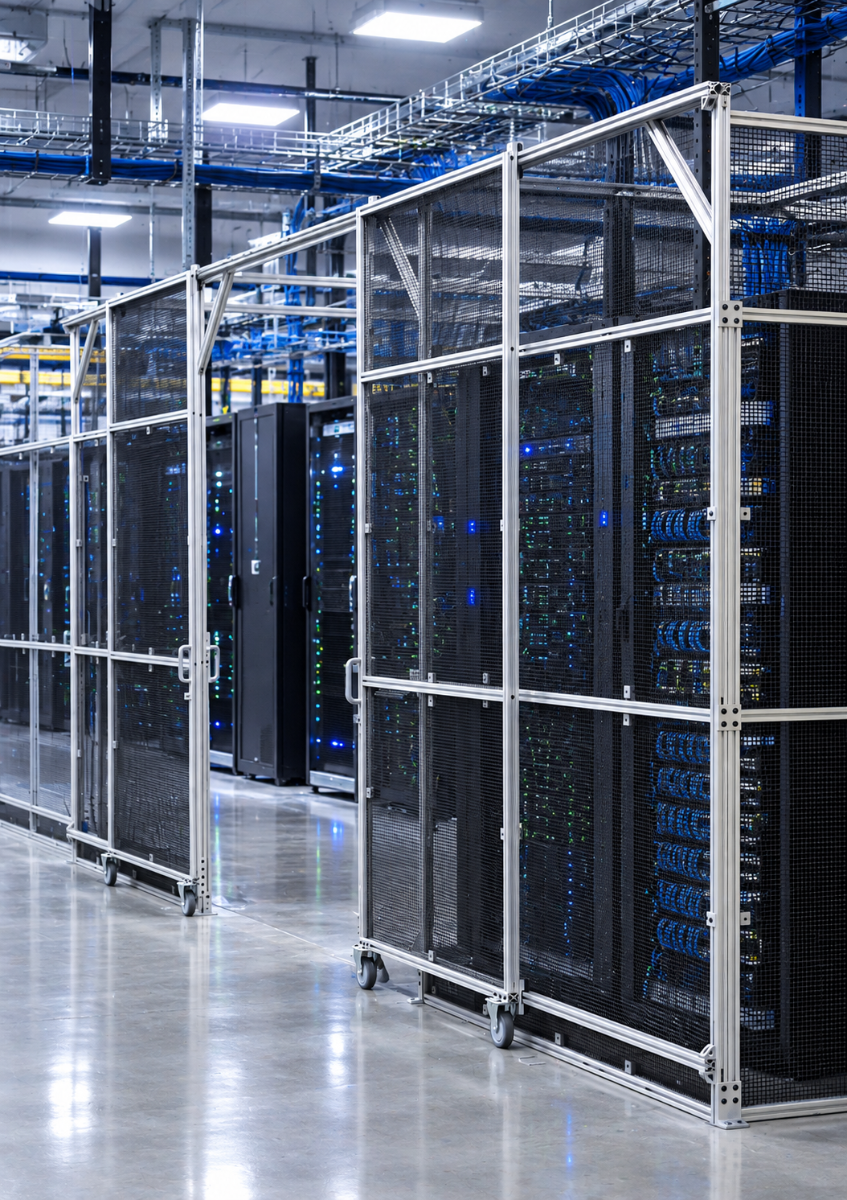
Security Cages
For controlled-access areas or equipment protection.
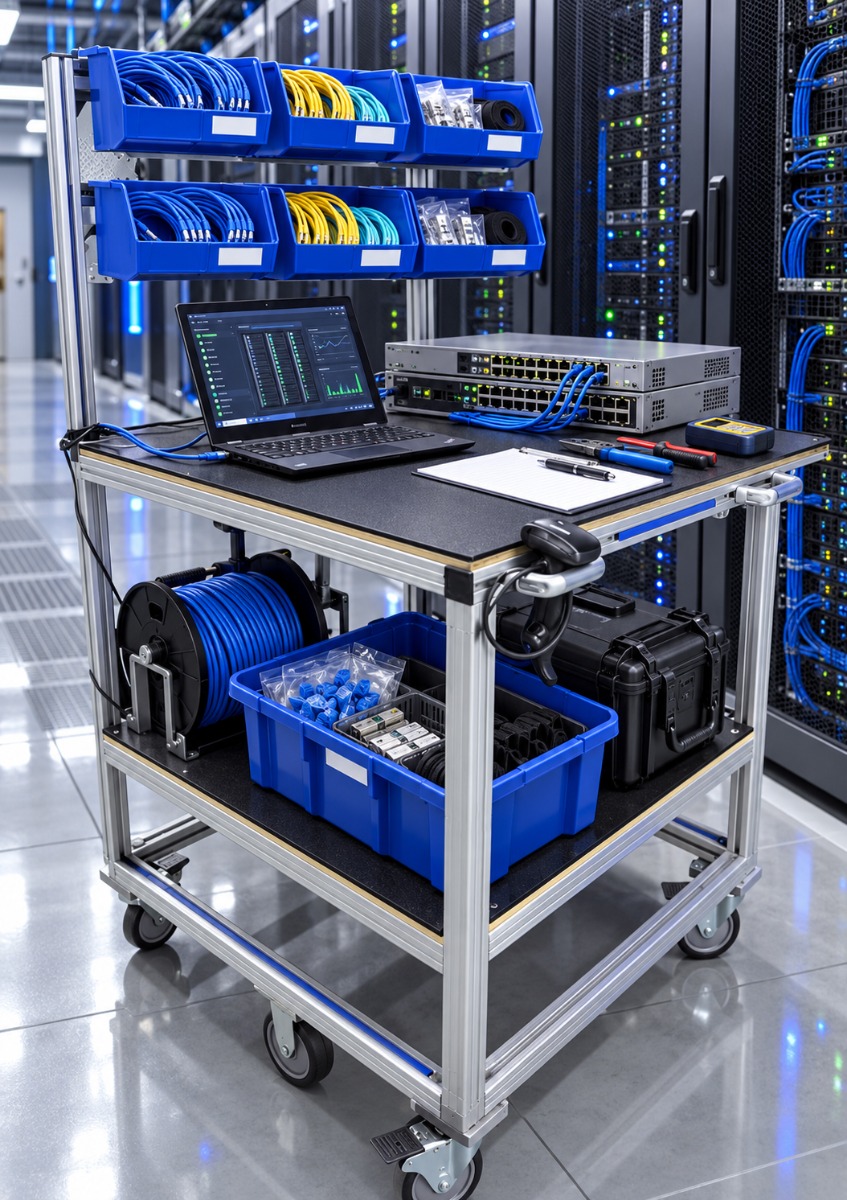
Mobile Maintenance Carts
For tools, laptops, spare parts, diagnostics, and technician workflows.
Workstations
For monitoring, service, testing, and documentation tasks.
With 80/20, teams can ensure they have right-sized mobile carts and workstations that are easily maneuvered between installed equipment. The solution makes maintenance and upkeep a less costly and less time-consuming affair while ensuring data center teams can maximize available space.
9. Design Support for Custom Rack and Framing Projects
80/20 offers more than just the essential building materials for custom data center racks. 80/20 also provides design tools, engineering, and technical support to help your team to easily move from a rough concept of a given structure to a buildable design.
With 80/20, data center teams will be able to define their exact dimensions, specific mounting and hardware requirements, load-bearing needs for their structures, and how those structures can be accessed for maintenance.
Whether it’s using IdeaBuilder® – an exclusive web-based design tool from 80/20 that does not require CAD and is Windows and Mac-compatible – leveraging the insight of the design assistance team, uploading existing files and designs, taking advantage of 80/20’s build services, or tapping into an extensive network of distributors who will come on-site to help, 80/20 has covered all the bases.
What's the Next Step with 80/20?
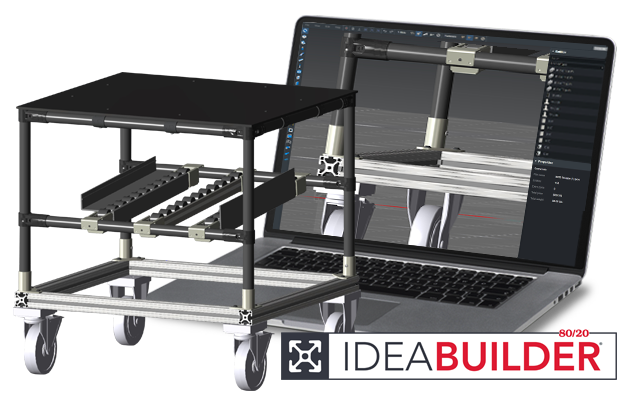
Start Designing with IdeaBuilder® Software
If you would rather explore a concept first, IdeaBuilder® can help you begin designing a project for free.

Contact a Network of Support Specialists
If you are ready to start the conversation, contact us on how to get your next project from concept to completion.
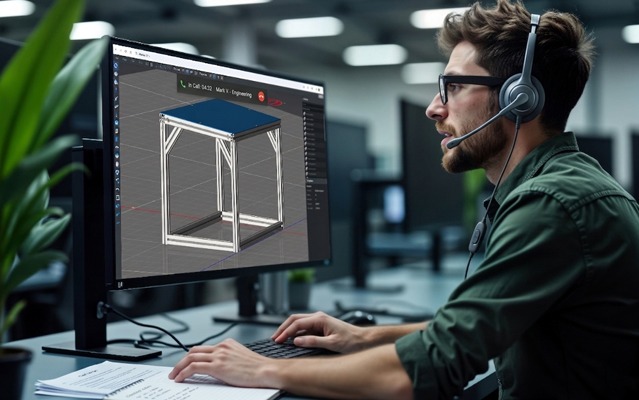
Move Your Project Efficiently from Concept to Completion
If you want to explore how that could apply in your environment, design assistance can help you think through the challenge.