
Build Smarter: Framing Data Center Retrofits and Expansions
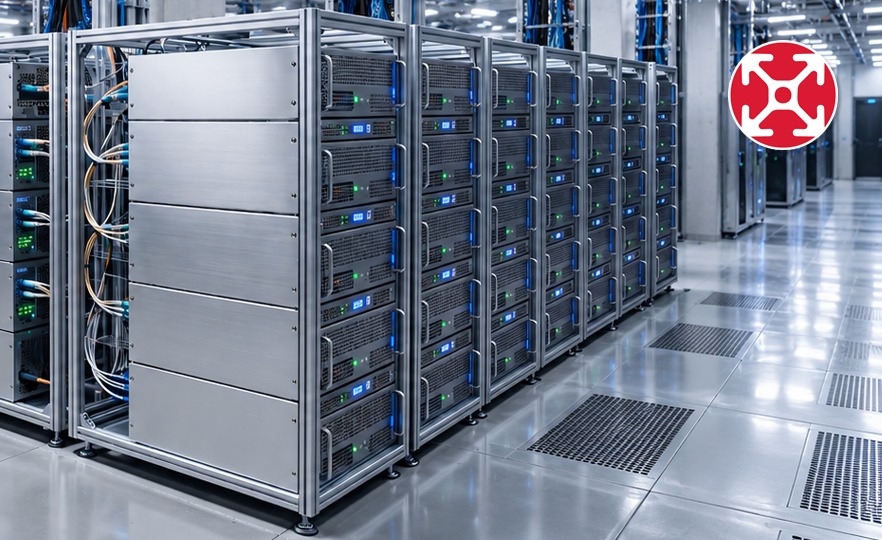
Framing Data Center Retrofits and Expansions That Work
How to custom-build support structures for data center environments that save time without sacrificing flexibility and future expansion options.
Data center retrofit framing projects and facility expansion are rarely easy, especially when the frustration is driven by steel-welded frames and prefabricated racks. Not only do these prefabricated structures have long fabrication times, but they simply do not allow for quick, on-site adjustments or modification by data center teams.
Retrofits and expansion must be managed while systems are live. While the long established 19-inch rack standard for servers (EIA-310) is well-known, there are still variations in server height, depth, mounting and posts that can add an element of complexity to rack retrofitting. Off-the-shelf, standardized frames often don’t accommodate these unique sizes and variations, making expansions and modifications exceptionally difficult and expensive.
What’s needed is a solution where data center retrofit framing is modular and scalable. A solution where data centers can custom-design and assemble right-sized frames and racks matched specifically to all data center equipment is best. That system should allow for relatively quick, on-site adjustments that are far less expensive than rewelding steel racks and frames.
80/20 is that system.
The modular T-slot aluminum and Polyurethane FRP framing solution allows data centers to design and assemble custom frames and racks they can modify, expand, and reconfigure themselves, on-site, as their requirements change.
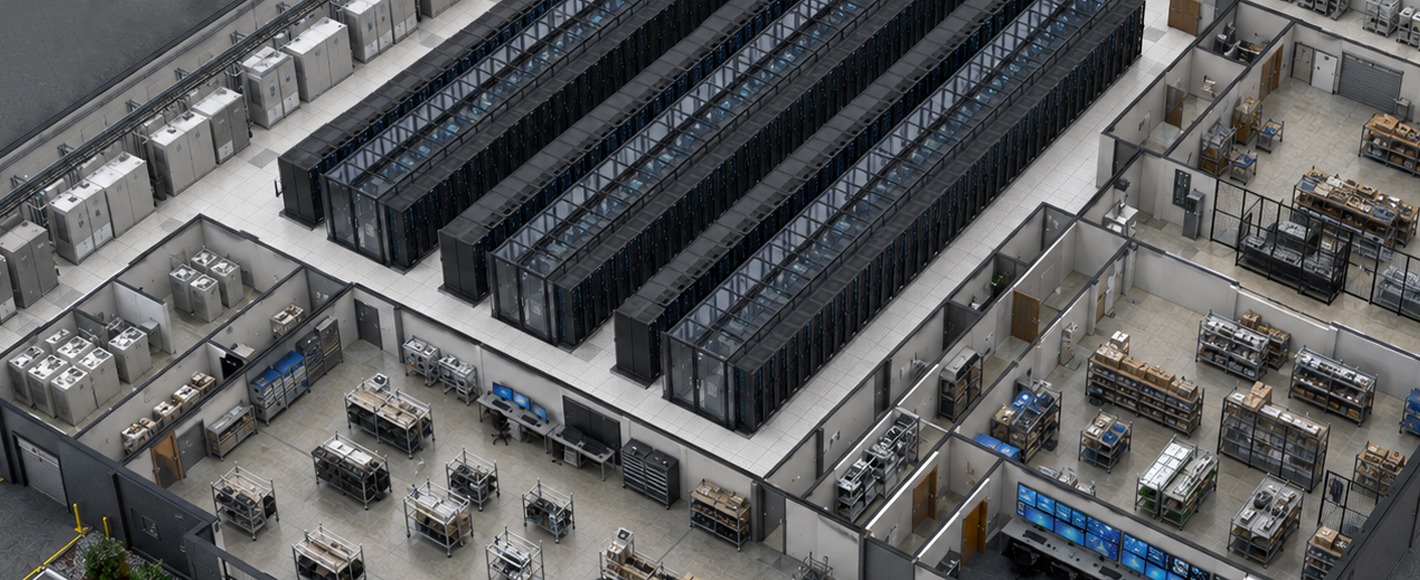
1. Why Retrofits and Expansions are a Different Kind of Framing Challenge
Data center expansions are driven by an organization’s need for higher computing capacity and increased bandwidth to support new software, applications, and a higher volume of users.
A single accidentally disconnected server, switch, or router can create serious service interruptions, leading to expensive downtime. This means expansions and retrofits must be meticulously managed.
These retrofits don’t occur on an empty floor with large swaths of open space. Instead, teams must manage their rack and frame expansions around existing, in-use equipment, some of which have non-standard dimensions, unique sizes, and minimal dimensional tolerances.
From managing these retrofits in live environments where equipment is in use, to dealing with space constraints and non-standard equipment dimensions, there is often little room for error.
Read More in the Data Center Design Field Guide
This step-by-step workbook helps data center teams identify challenges, evaluate layouts, and design more flexible, efficient spaces. Learn how modular 80/20 T-slot aluminum solutions improve scalability, organization, and future adaptability.
-
Live Environments: Shutting everything down and rebuilding racks and frames is not an option. Servers are running, applications are being used, and the network must support the current traffic. Teams must ensure minimal interruptions during retrofits.
-
Tight Spaces: When a data center is occupied with existing racks and equipment enclosures, bringing in prefabricated racks and steel-welded frames often doesn't work. These preconfigured structures aren’t custom fitted to existing equipment. With pre-assembled racks and frames, teams often cram space and force-fit cables and wires to ensure frames are complete. This limits airflow between levels and data center equipment within the frame.
-
Length of Downtime: The longer a retrofit or expansion takes, the greater the risk of service interruptions and the more interruptions, the higher the costs are for the data center. Retrofitting steel-welded frames and racks will always take longer and present more problems than having a modular and scalable framing solution.
-
Retrofit Schedules: Most expansion and frame retrofit schedules are aligned with a data center’s maintenance windows. This means teams must be able to reduce the time for frame retrofits and reconfigurations.
-
Staged Expansions: Given that expansions are often staged or staggered over time, a data center’s frames, racks, enclosures, and structures must be able to accommodate future expansions and increased racking space. It’s next to impossible with prefabricated frames, but much cheaper, easier, and faster with modular 80/20 framing solutions.
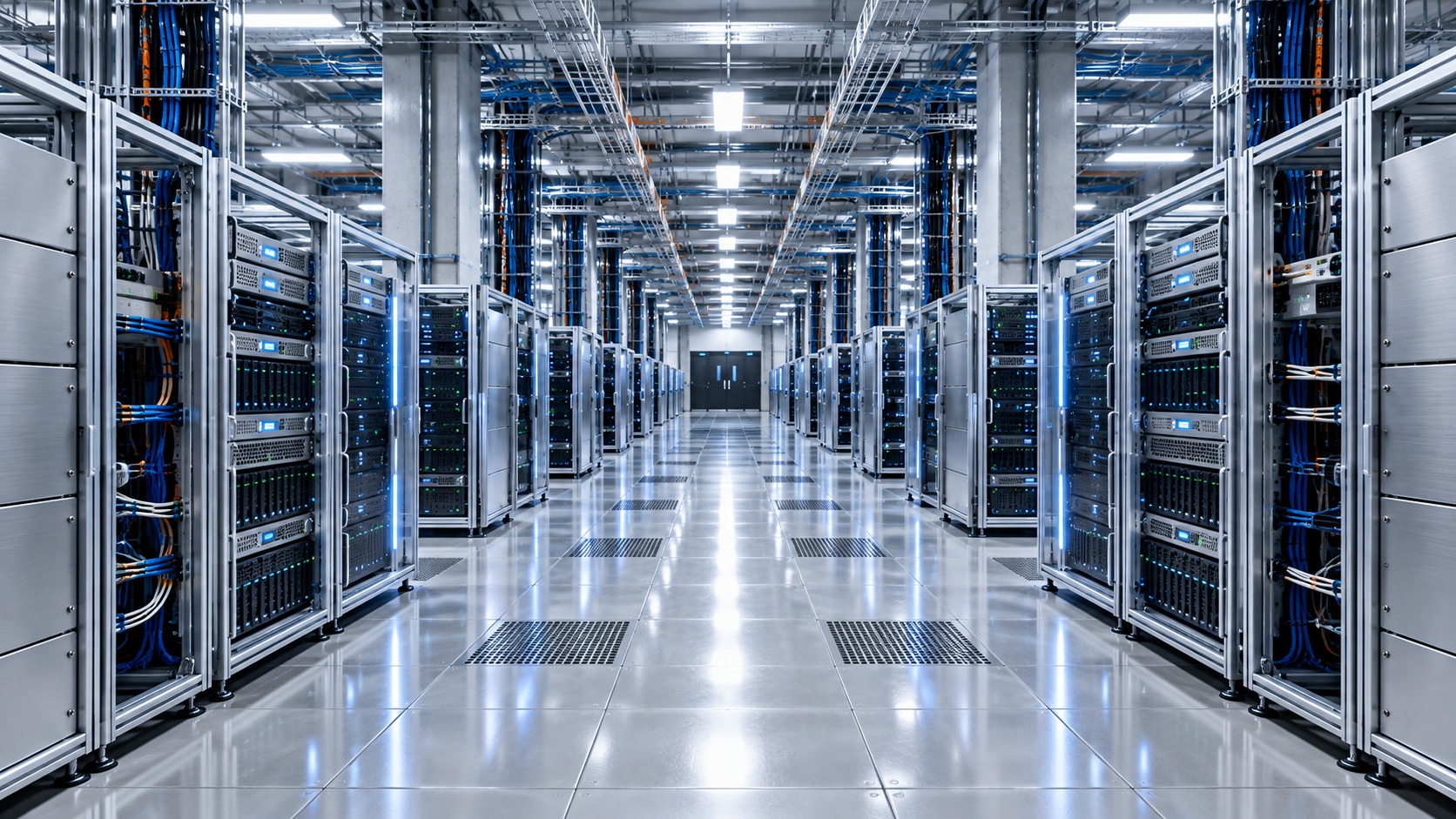
Future changes are entirely driven by the data center. This straightforward six-level cabinet can be widened and expanded further and eventually be turned into a larger enclosure complete with doors and cabinets.
Having an expansion plan is essential to controlling costs, reducing retrofit timelines, and ensuring current and future racks, frames, cabinets, and enclosures can be scaled as needed. The following list of variables should be considered when planning an expansion of future data center framing structures.
-
Before Anything Else, Audit Your Available Space
Long before getting started, data center teams must first properly measure their available floor space. It’s not uncommon for data center teams to forgo this critical first step. Instead, they rush into their expansion and encounter space constraints while retrofitting frames and racks. Finding out that space is smaller, more constrained, and less forgiving during a retrofit is never ideal.
Measure accurately. Your team should have a comprehensive floor layout with pinpoint dimensions that outline the available space. The future scalability of racks, frames, cabinets, and enclosures must be taken into consideration. Teams must define their current rack and frame sizes and whether there is sufficient space for those same racks to be increased in size for future retrofits.
-
Identify Which Equipment Must Run During the Retrofit
After defining the available floor space, your team needs to determine which equipment must stay online during the retrofit. Again, not doing this beforehand can cause serious problems. Accidentally disconnecting critical servers, switches, routers, and PDUs can cause serious downtime, shortages, and increased costs.
Data center retrofit framing using modular T-slot aluminum allows teams to assemble and change racks and cabinets by section. They can maximize which data center equipment and systems run and how long others are offline.
Identify which equipment must remain untouched and ensure each has a designated backup. As each rack retrofit is completed, more equipment can be brought back online. As that happens, teams can then focus on retrofitting previous untouched racks and frames that had running equipment.
-
Maintain a Long-Term View Towards Expansion
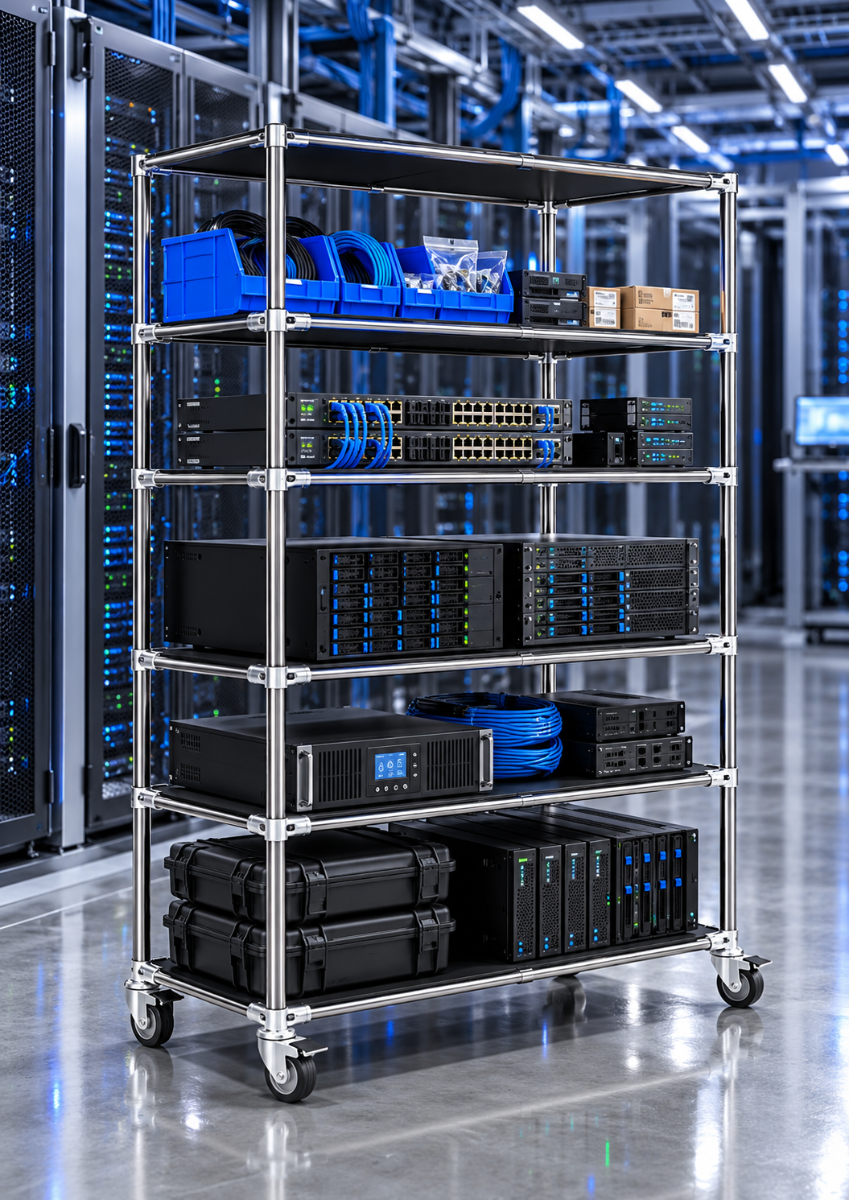
Regardless of what your expansion looks like, your data center team must account for variances in equipment dimensions. Given the wide range of equipment used within a data center, non-standard dimensions and variation in equipment sizes are the norm.
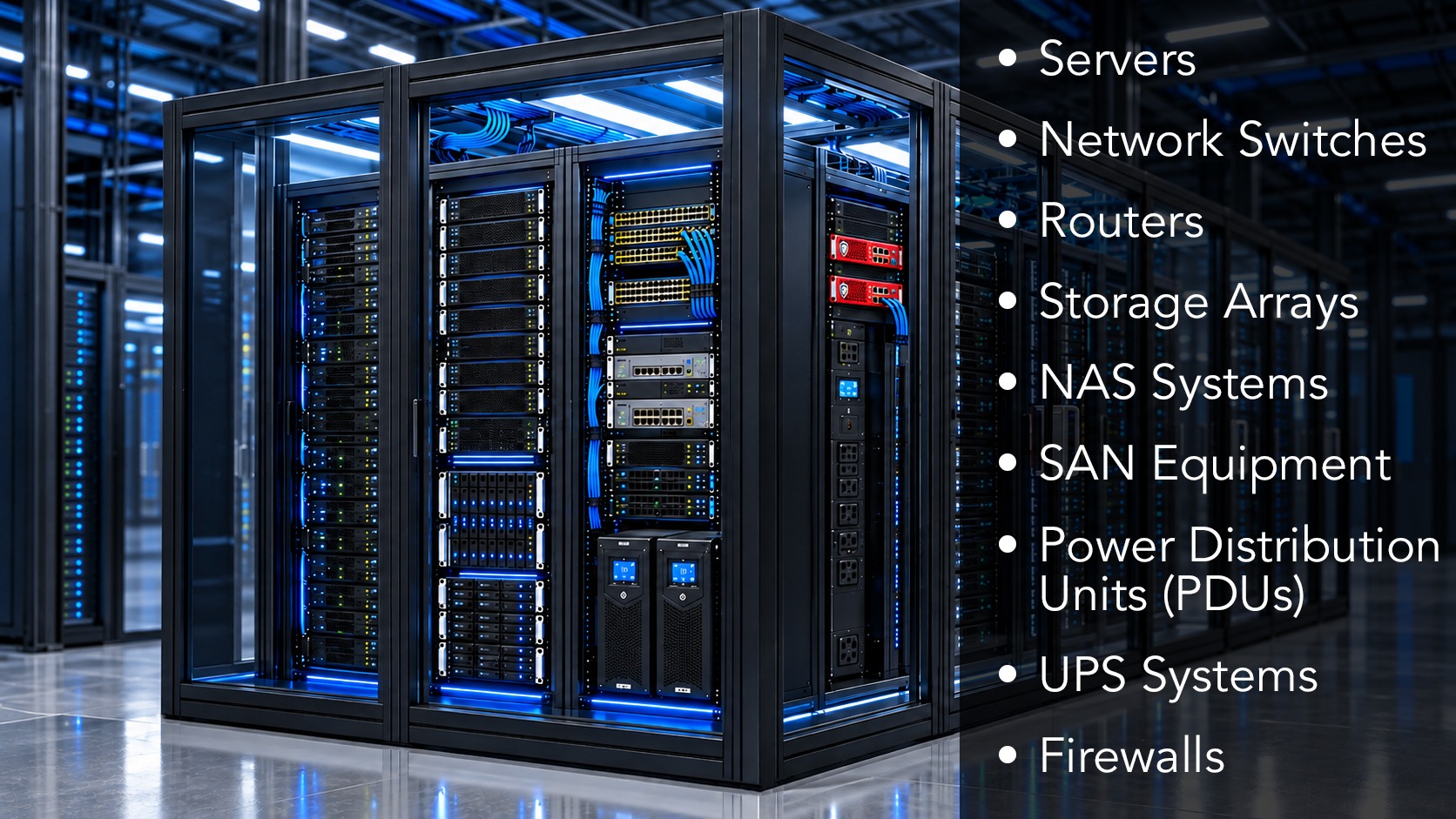
All the equipment above has different dimensions and profiles. These variances increase when data centers buy the above equipment from different suppliers. With prefabricated frames and racks, data center teams must make the equipment fit within the available rack space. This is entirely different from custom-designing a frame or rack that is right-sized to that equipment.
-
Match Your Framing Material to Your Environment
T-slot aluminum is the most common material chosen for racks, cabinets, and data center retrofit framing. With their galvanized layer, the T-slot aluminum profiles have fantastic corrosion resistance. However, there is another framing material.
80/20 also offers Polyurethane FRP profiles, which could be a solution when installing racks and frames in environments where electrical conductivity and thermal conductivity are concerns. Also with excellent corrosion resistance, Polyurethane FRP profiles are just another way that 80/20 ensures customers have the ultimate in material flexibility.
-
Ensure Material Uniformity
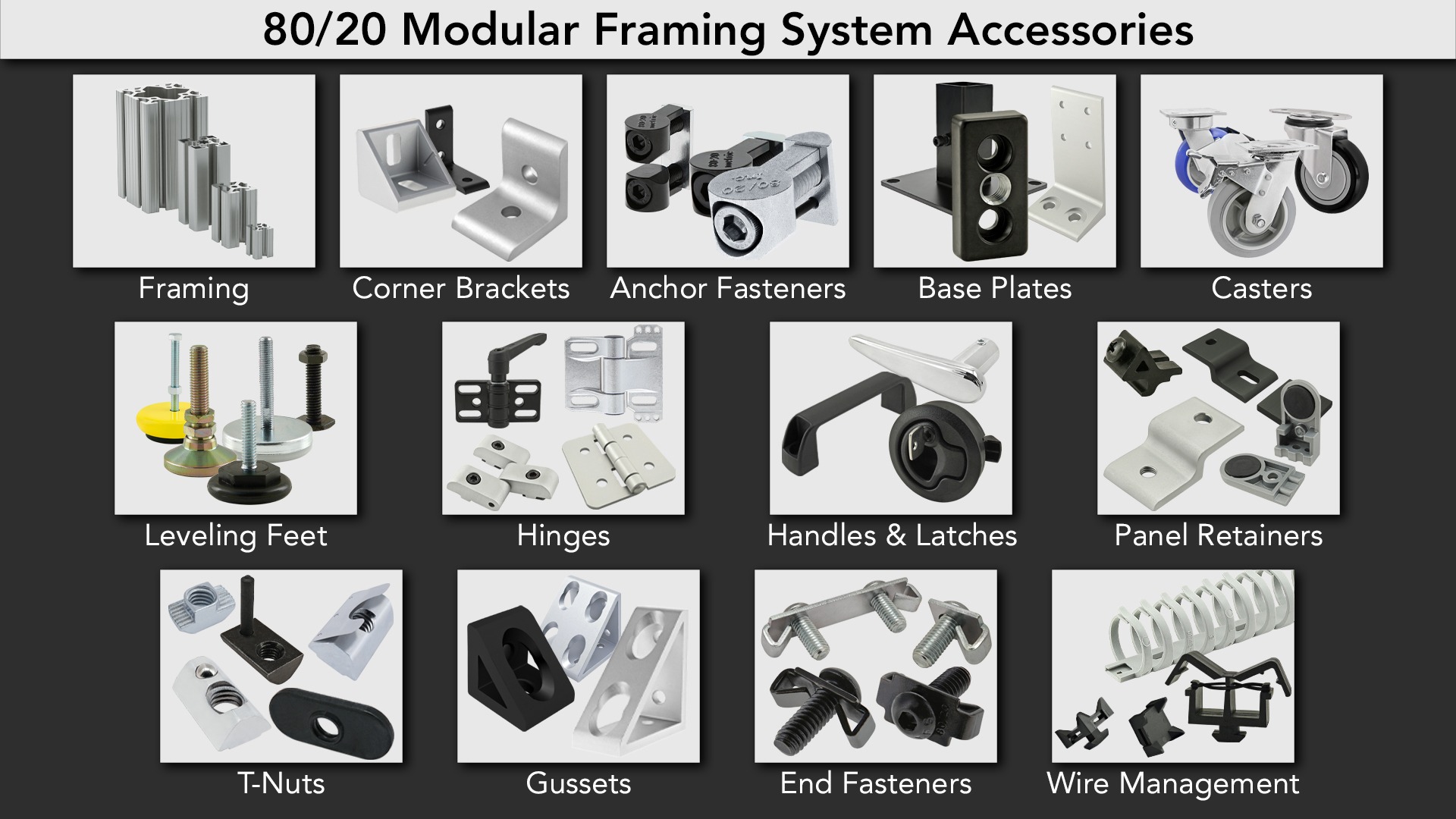
Don’t stop at just the framing materials. It’s not just about aluminum or FRP profiles but also about ensuring the entire rack, enclosure, frame, or cabinet has material uniformity. This means benefitting from a complete lineup of 80/20 accessories and add-ons specifically designed to support data center retrofit framing.
Whether it’s fasteners, panels, door handles, industrial casters, nuts, bolts, and other hardware, 80/20 ensures data centers have a single source for all their data center frames and racks. As a single-source solution, data center teams that buy everything from 80/20 can reduce assembly risk and complexity.
The very nature of data center retrofit framing and expansions demands a cost-effective, modular, scalable, and flexible framing solution. Data centers need an affordable framing solution that allows them to customize levels and rack sizes as needed. 80/20 meets and exceeds these challenges head-on.
Here are just some of the reasons why data centers trust T-Slot Profiles.
-
Full Customization: No matter what type of equipment you have, you can customize the size, depth, width, and overall configuration of your server rack or frame with 80/20. Cut the framing materials to your exact dimensions and assembly requires simple tools.
-
No Welding: There is no welding whatsoever, which means faster assembly times, quicker changeouts, less downtime, and less disruption to running systems.
-
Modular and Reconfigurable: Add, change, modify, or retrofit your frames as needed. You’ll have complete control over every expansion stage.
-
Over 120 Profile Shapes: From light-duty to heavy-duty, there is a T-slot profile to fit any structure and load requirements.
-
Complete Build System: From T-slot profiles, fasteners, and hardware to casters, door handles, panels, and numerous other accessories, you’ll have everything you need to build customized racks.
-
Hands-On Engineer, Design Assistance and Free Downloadable Software: Whether it’s working with 80/20 engineering on framing material selection, benefitting from our design services, or downloading our free design software IdeaBuilder®, you’re never alone with 80/20.
4. Common Framing Retrofit and Expansion Applications for 80/20 Profiles
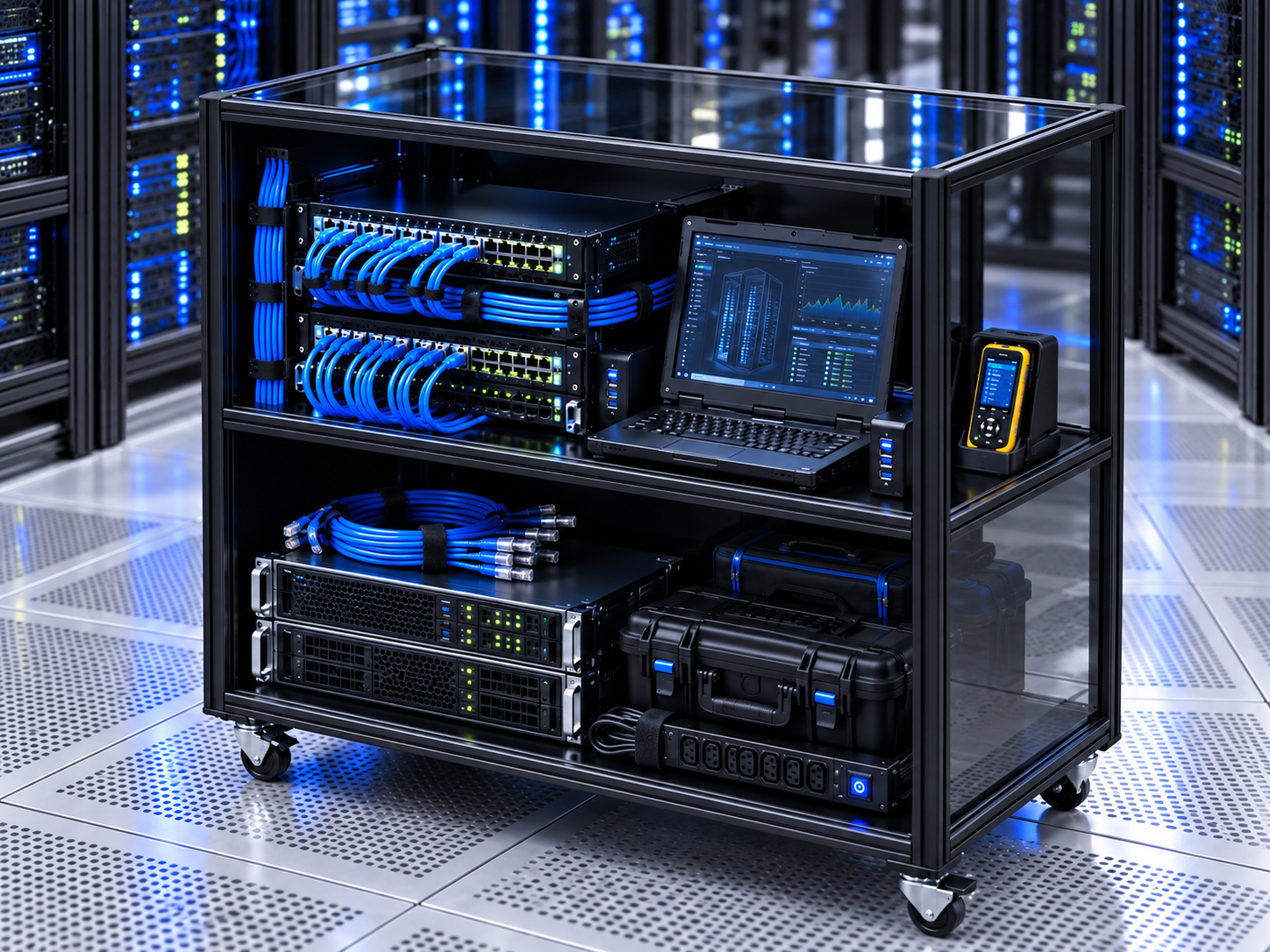
80/20 profiles and accessories aren’t just for frames, racks, cabinets, and enclosures. Numerous types of structures can be made with T-slot aluminum. Aside from adding customized frames and racks for servers in and around new equipment, data center teams can build mobile workstations, carts, and trolleys for maintenance teams and employees.
From building support structures to house additional hardware, servers, PDUs, routers, and firewalls, to assembling mobile workstations and customized maintenance carts, if you have a structure you need, it’s more than likely you can build it with 80/20.
-
Adding server frames around new equipment in an existing row
-
Building support structures for additional network hardware or PDUs
-
Creating mobile workstations for maintenance teams during the project
-
Expanding or reconfiguring containment support framing
-
Building temporary barriers or enclosures during active construction phases
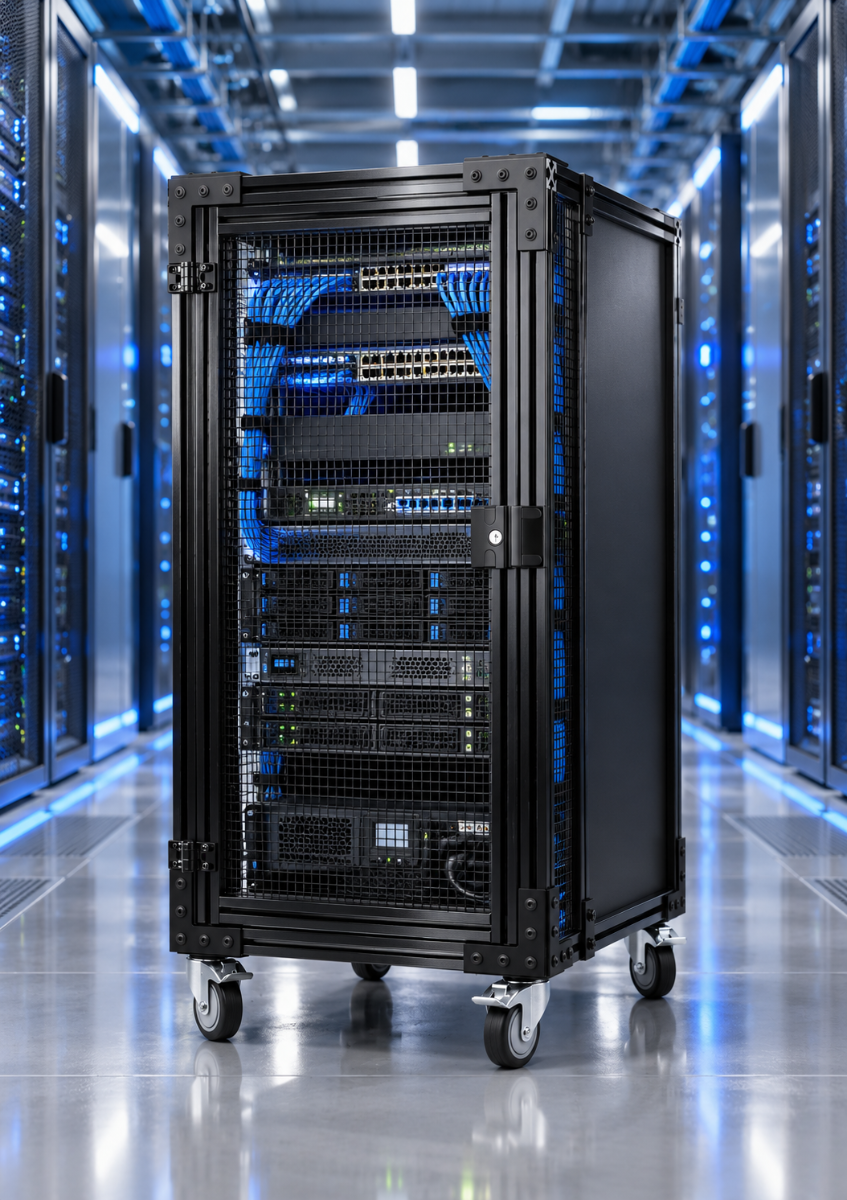
The same framing used to create racks and cabinets is used to create safety enclosures such as the one above. The entire 80/20 system ensures data centers can create the structures they need when they need them.
Start Planning Your Next Data Center Retrofit Framing Project
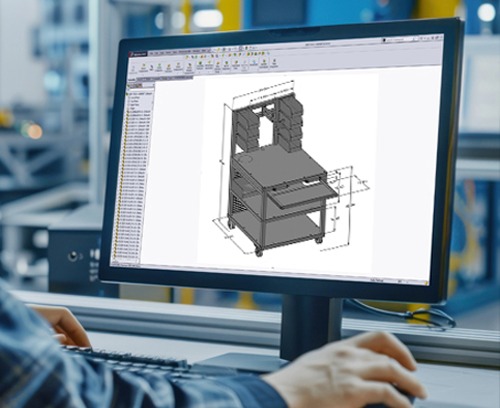
For today’s data centers, flexibility, speed of response, and scalability are all essential criteria when managing rack retrofits and frame expansions. The 80/20 system is a durable, high-strength solution that allows data centers to custom-design and build whatever structure they need and change that structure as needed.
The 80/20 team supports these endeavors with free downloadable software, custom design services, a vast distributor network that can provide on-site demonstrations, and an engineering and design team with decades of experience in multiple industries requiring time-critical builds.
Start Your Data Center Retrofit for Free with IdeaBuilder®.
What's the Next Step with 80/20?
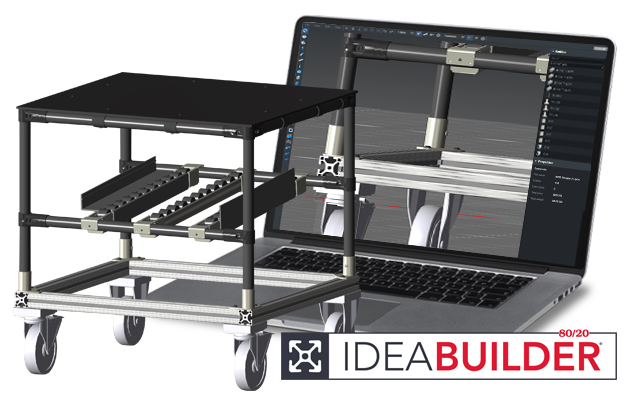
Start Designing with IdeaBuilder® Software
If you would rather explore a concept first, IdeaBuilder® can help you begin designing a project for free.

Contact a Network of Support Specialists
If you are ready to start the conversation, contact us on how to get your next project from concept to completion.
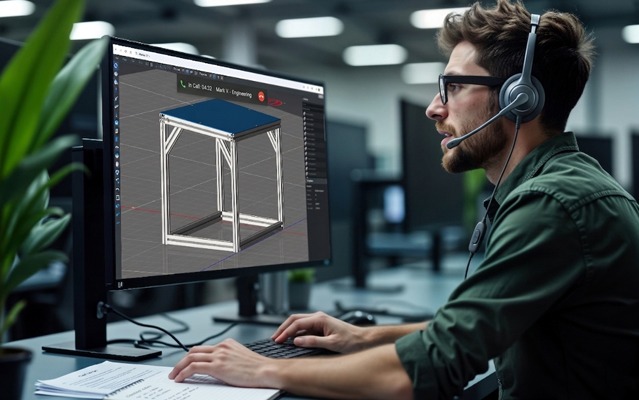
Move Your Project Efficiently from Concept to Completion
If you want to explore how that could apply in your environment, design assistance can help you think through the challenge.
Key Takeaways on Data Center Retrofits and Expansions
Data center frame retrofit and expansion projects demand inexpensive, easy-to-cut, and easy-to-assemble framing materials. These solutions mean racks and frames have faster installation times, easily fit into non-standard spaces, and are easily changed as expansion evolves.
-
80/20 T-slot aluminum profiles can be cut to exact dimensions, require no welding, and can be assembled around live data center systems with minimal disruption.
-
Plan for future expansion phases from the start. A modular framing and rack system avoids the higher costs associated with having to install expensive, pre-made racks and frames.
-
For environments with specific conductivity or corrosion requirements, FRP profiles are also available.
-
IdeaBuilder® lets you design and model your retrofit layout for free before committing to an order.