
Data Centers and T-Slot Profiles
Data Centers and T-Slot Profiles
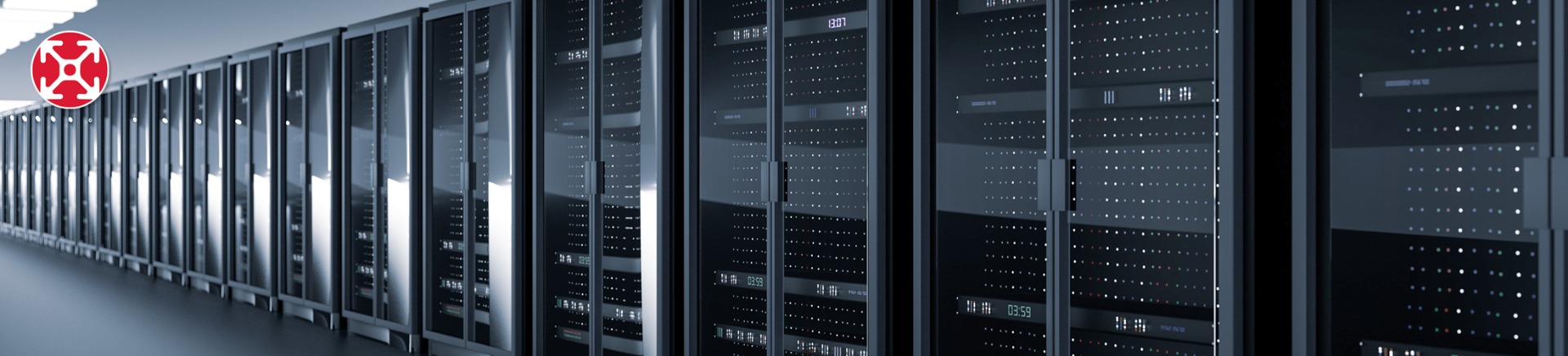
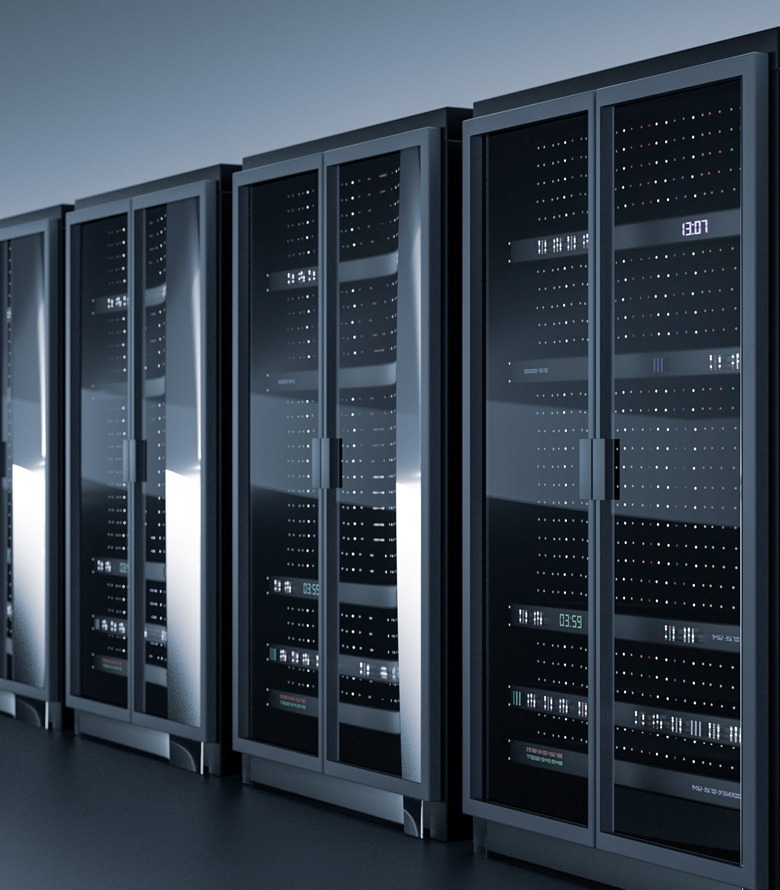
If data is the lifeblood of a business or organization, then the data center is the heart. After all, it's the dedicated space where all that data is stored and processed. This, of course, brings with it a whole slew of complications as you’re talking about a confined space with a lot of computer hardware that is constantly running. Said hardware generates a lot of heat and requires a lot of cooling to prevent it from overheating.
Many small businesses use enterprise data centers, where the facility and equipment (servers, storage systems, switches, routers, etc.) are owned and operated by the company itself. Enterprise data centers are generally onsite and consist of small bank of servers housed in a dedicated room and cooled with standard air conditioning (and perhaps a few strategically placed fans).
However, as businesses grow larger, they often find they need a data center solution that is going to scale up with the company. For some, this means renting or buying space, power, and cooling from a facility that provides this service to multiple clients (colocation data center). For others, it means building or buying a dedicated facility to house their servers and data storage.
While colocation and hyperscale centers are a great solution for large-scale data storage and processing, they aren’t without their complications. Colocation facilities usually house the hardware for hundreds (if not thousands) of individual clients, while hyperscale data centers are typically greater than 10,000 sq. ft. in size (with some into the millions of sq. ft.) and contain thousands of servers linked with an ultra-high-speed network. When you’re talking about cooling at this scale, air-conditioners and fans simply aren’t going to cut it. To keep the hardware chugging along efficiently, you have to make sure that the hot air and the cooled air are circulating properly and not mixing between the aisles.
That's where aluminum extrusion aisle containment comes in.
The Benefits of T-Slot Aluminum Profiles
Regardless of whether you decide to go with CAC or HAC, you’ll find that t-slotted aluminum extrusions are ideal for building the framework of your aisle containment system. T-slots are flexible and versatile enough to construct the containment walls, ceilings, doors, and overall enclosures.
Here are just some of the benefits of building with extruded aluminum:
- Modular. The modular design of 80/20’s t-slot extrusions ensures that your data center can be tailored to your specifications, regardless of height and space requirements, while also allowing for scalability.
- Easy to Assemble. All that’s required to build with t-slot profiles are simple hand tools. There’s no welding, cutting, or drilling required!
- Non-Combustible and Non-Toxic. Extruded aluminum dissipates heat and will melt, not burn, if exposed to fire for a long period of time (which prevents the spread of flames). Anodized aluminum is also non-toxic, even at extremely high temperatures.
- Corrosion Resistant. Aluminum does not rust and has an oxide coating that makes it very resistant to corrosion.
- Non-Magnetic. Aluminum won't acquire a magnetic charge, which makes it perfect for use in high-voltage situations or around electronics (where magnetic fields can play havoc with delicate components).
What Is Aisle Containment?
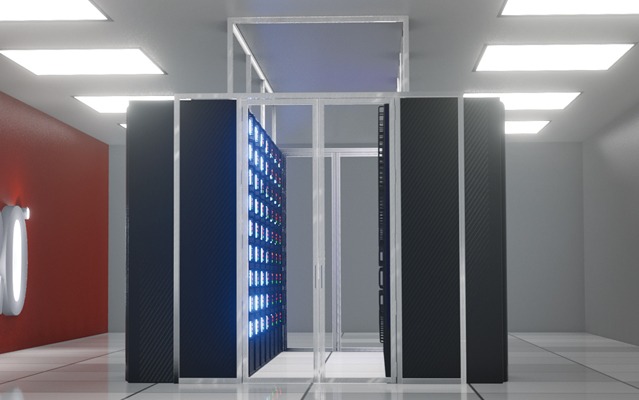
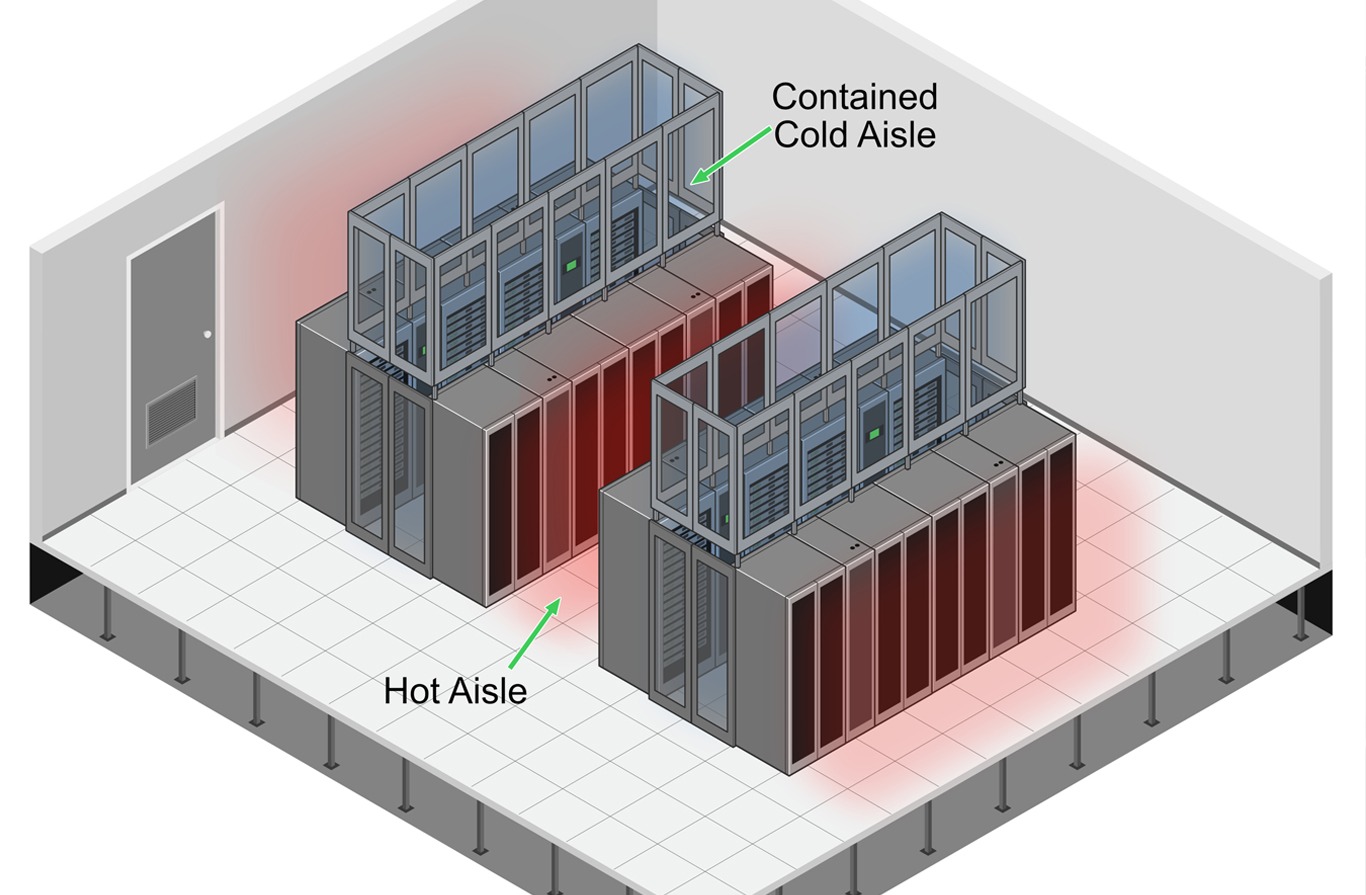
Aisle containment is a physical barrier that separates the heat of the servers from the cold supply airflow. This partition is often constructed using aluminum construction components to improve airflow efficiency.
The server racks are lined up in rows with the cold air intakes facing one direction and the hot air exhaust facing the other. This makes one side of each server row hot and the other cold. Some data centers use cold air containment (CAC) to trap the cold air and dispose of it so it won't mix with the hot. Others use hot air containment (HAC), which disposes of the heat exhaust to keep it from mixing with the cold air. CAC is cheaper and easier to implement, but HAC is generally more effective as the number of servers grows.
80/20 T-Slot Aluminum Extrusions
If you're looking to assemble a data center for your business (or expand the one you currently have), 80/20 has the extruded aluminum t-slot channels, profiles, and other components you need. And if you need help with planning and implementation or find you need a custom part, 80/20 has teams of professionals standing by to help.