
What Are 80/20 FRP Profiles? Uses & Benefits
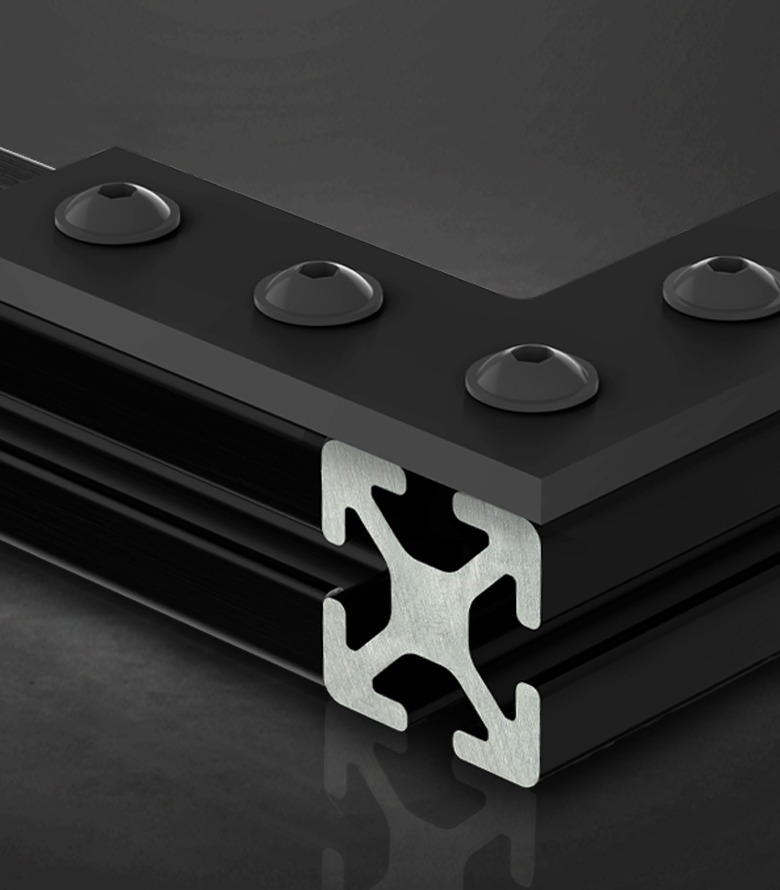
What are FRP Profiles? Where They Fit Best
A Modular Building System for Corrosive, Electrical, and Thermal Environments
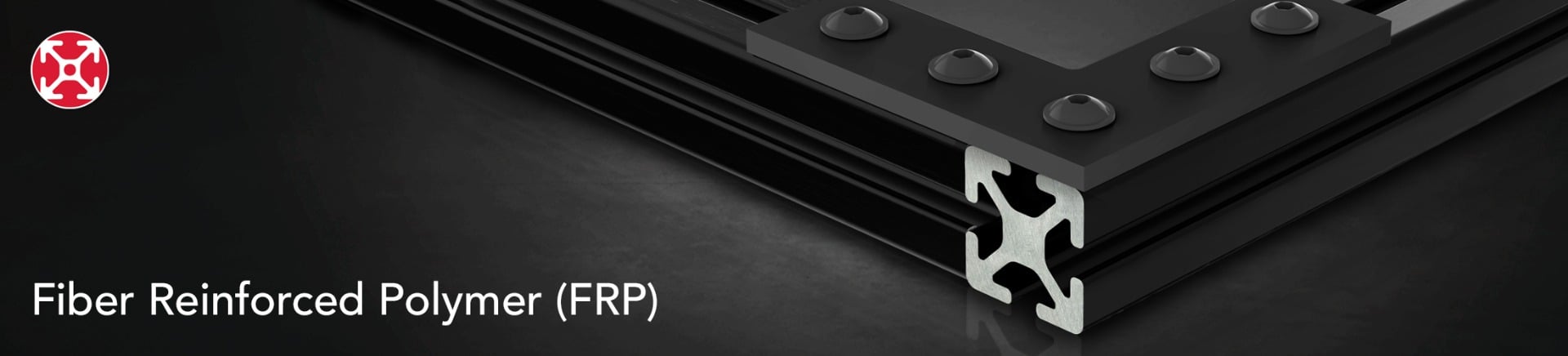
80/20 offers Fiber Reinforced Polymer (FRP) profiles with a composition of 80% fiberglass and 20% polyurethane resin — a blend that sets them apart from standard FRP products and delivers a high-strength, non-metallic framing option.
Our Polyurethane FRP does not conduct electricity or transfer heat like metal. As such, it is well suited for sensitive applications such as equipment enclosures, racks, and EMI/RFI-sensitive environments — without adding unnecessary conductivity or corrosion concerns.
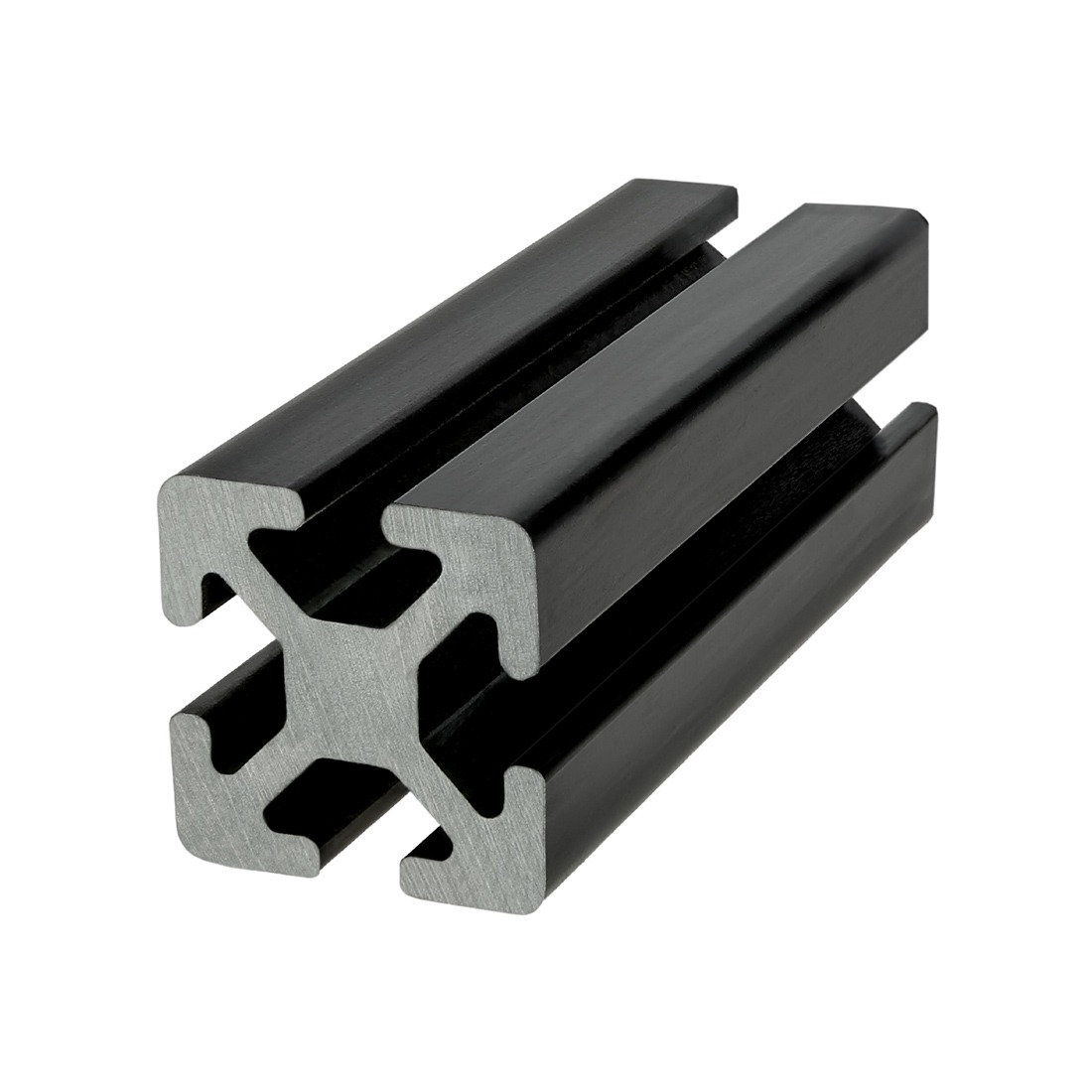
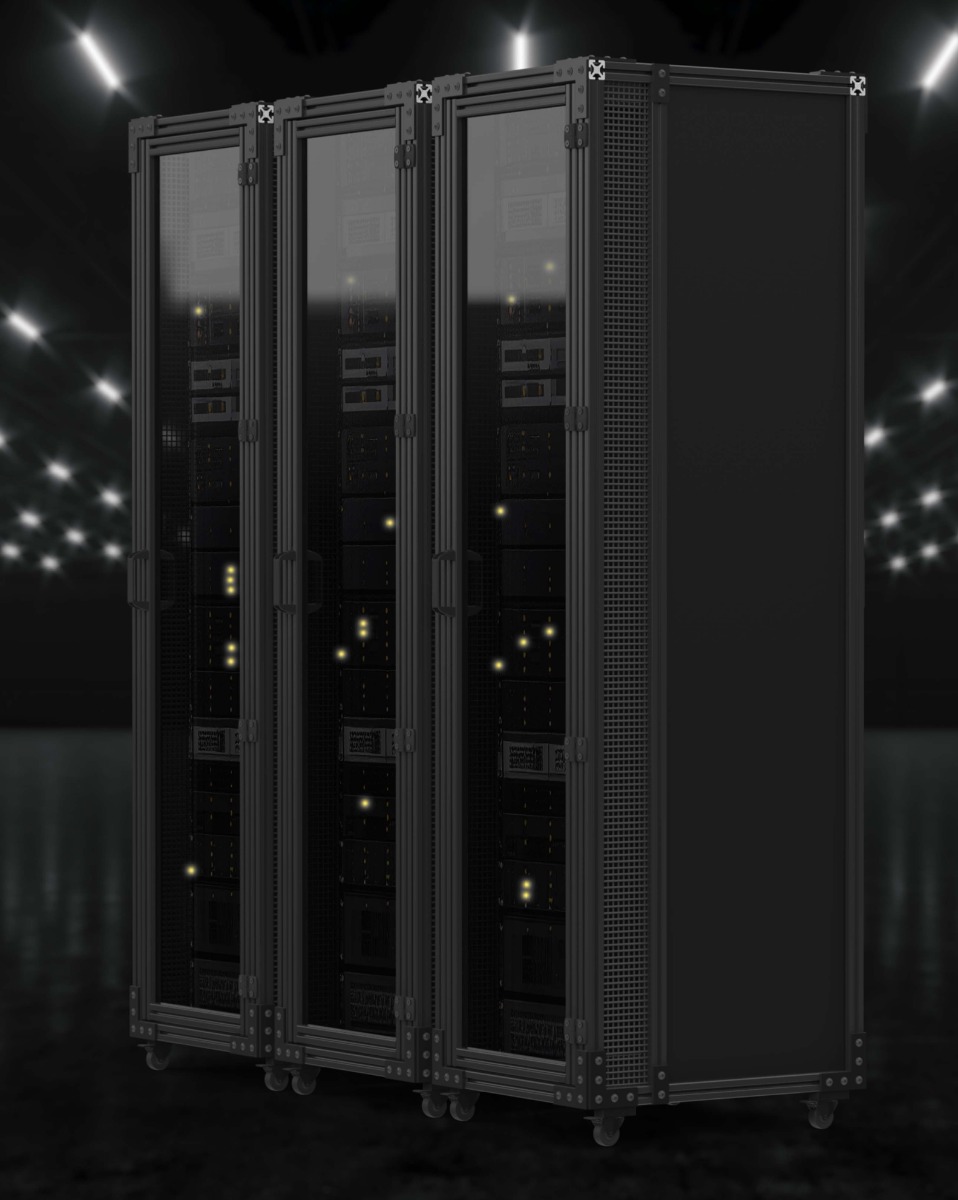
While our T-Slot Aluminum Profiles are a proven solution for general manufacturing environments, our Polyurethane FRP structural profiles might be a better framing and racking option in environments where corrosion resistance, electrical non-conductivity, and thermal non-conductivity are a priority.
As is the case with all 80/20 solutions, the goal is to offer customers the ultimate in choice and flexibility. Our FRP profiles are a non-metal alternative for those who feel aluminum profiles aren't the best fit for their environment.
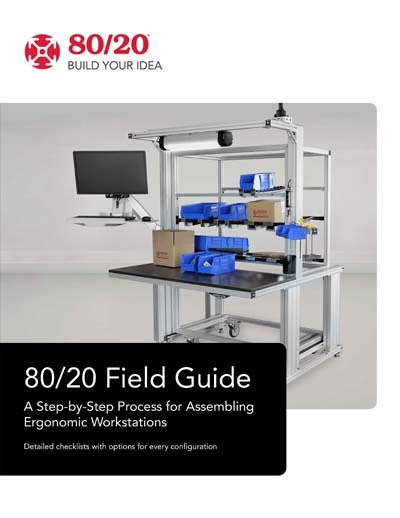
Learn More in the Ergonomic Workstations Field Guide
This guide outlines a 7-step workstation design process, from defining seated or standing use and task needs to selecting profiles, casters, storage, lighting, and safety features. It includes printable checklists for design reviews and improvement events, along with practical tips for choosing materials, surfaces, and components. Example layouts show stationary, ESD-compliant, and mobile ergonomic stations built with 80/20 systems. Download and get started now!
1. What Are FRP Structural Profiles?
FRP stands for Fiber Reinforced Polymer. The polymer 80/20 uses is Polyurethane, which binds the fiberglass together. Fiberglass is essentially fine strands of glass fibers. Made with 80% fiberglass and 20% polyurethane resin, this composition is what gives the profile its strength and durability.
Our 80/20 T-Slot Aluminum Profiles are extruded (pushed through a die). However, our FRP is pultruded (pulled through a die). Despite this, our FRP material can be pultruded into similar designs and shapes as our aluminum extruded profiles.
The 80/20 FRP material can be formed into channels, struts, and other structural shapes.
2. What Makes FRP Profiles Different from Traditional Metal Framing?
While our Polyurethane FRP framing solution has the look and feel of the T-Slot Aluminum Profiles, there are some essential differences to be aware of. These include our FRP material having strong corrosion resistance properties, alongside being electrically and thermally non-conductive.

Corrosion
Resistance
Buildings, offices, and manufacturing facilities close to the ocean typically deal with high humidity and moisture, not to mention salt-laden air. All three play a critical role in creating an environment where corrosion can take hold.
Polyurethane FRP profiles can be a useful framing solution in these environments or any coastal environment where equipment, machinery, hardware, or other critical components are exposed to harsh conditions.

Electrically
Non-Conductive
Data centers, equipment, and machinery enclosures must be protected against electrical interference or accidental contact. FRP profiles are electrically non-conductive and non-metallic, reducing the risk of signal interference in EMI/RFI-sensitive environments.
Note that electrically non-conductive is not the same as Electrostatic Discharge (ESD) safe. FRP framing doesn't conduct electricity, but ESD-safe materials go further — they safely dissipate static electricity rather than hold it.
For EMI and RFI-sensitive environments, FRP's non-metallic structure is a natural fit, as it simply does not interfere with electrical signals.
Thermally
Non-Conductive
As a thermally non-conductive material, our FRP framing profiles do not absorb, retain, or transfer heat as a metal would. This is especially important for data centers where servers and modems can generate high heat during extended use.
By using our FRP profiles for custom-sized cabinets, those cabinets will not transfer heat from one modem, server, or hardware to another. As such, our FRP structural profiles won’t become a secondary heat source as they don’t radiate heat as a metal frame or enclosure would, thereby helping to stabilize the environment.
3. Where Should FRP Profiles Be Used
Any manufacturing facility, business, facility, or company located in coastal environments or where wet and corrosive atmospheric conditions are a concern should consider using FRP profiles. This can include data centers, manufacturers with equipment and machinery in corrosive environments, or any outside structures needing to protect critical components, electronics, equipment, and machinery from demanding environments.
In these instances, FRP could offer some advantages and are worth evaluating. With Polyurethane FRP framing, companies can design and assemble their own data center cabinets to whatever-sized dimensions needed.
This results in a fully customizable and durable, electrically and thermally non-conductive cabinet with good corrosion resistance.
-
Electrically Non-Conductive: Protects servers, network switches, routers, firewalls, modems, and power units.
-
Thermally Non-Conductive: Minimizes the heat transfer between the equipment inside the cabinet and the actual FRP cabinet frame.
-
Corrosion Resistance: Ideal for data centers that are exposed to moisture and salt-laden air.
-
Fully Customizable: Design any-sized FRP cabinet and change or adjust as needed.
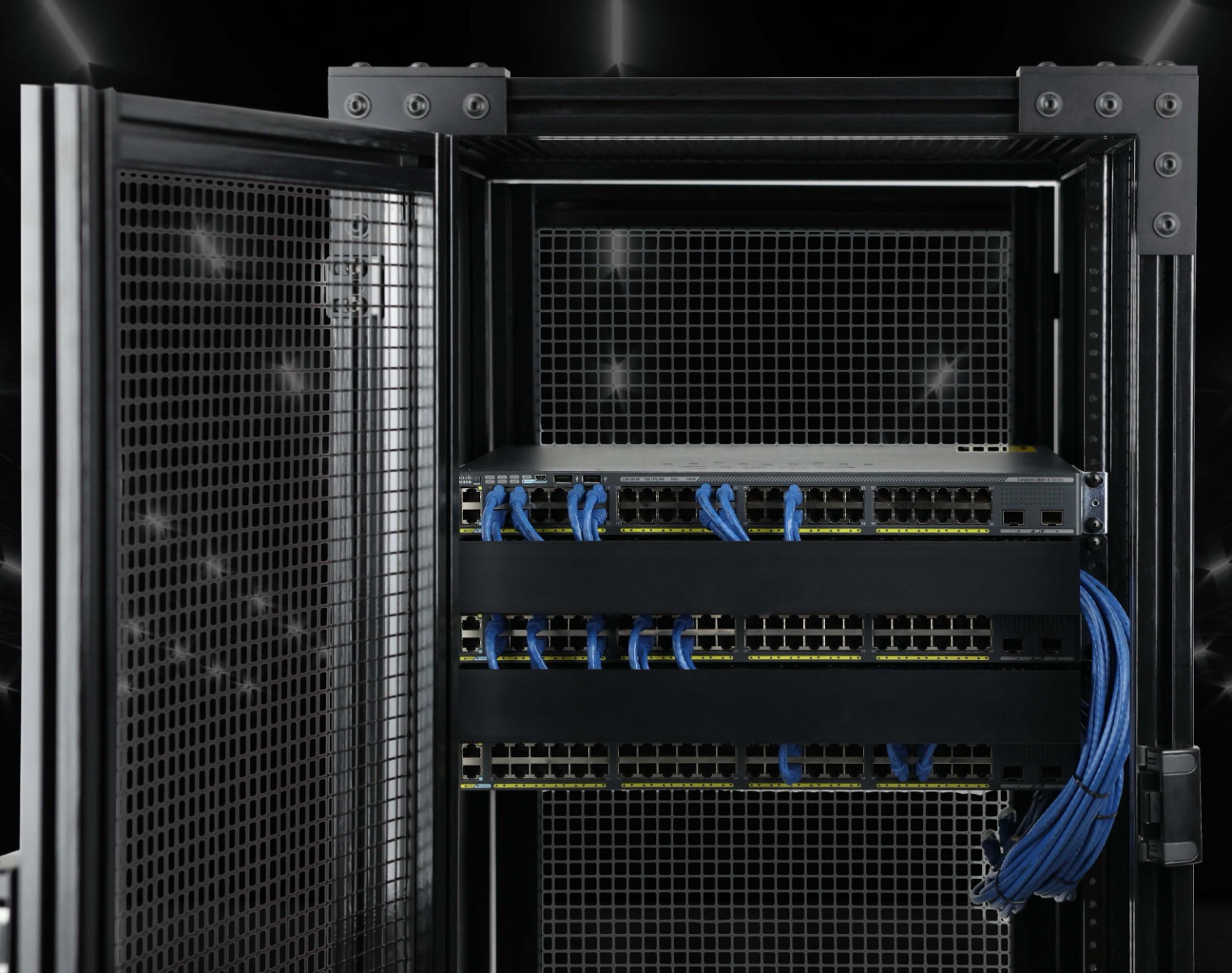
Another common application includes exterior electrical control panel enclosures. With FRP profiles, these enclosures can be custom-designed to whatever size or dimension is required. They can then be changed, extended, or increased in size as needed.
With FRP profiles, you can create whatever-sized cabinet layout is needed. The result is a durable, protective enclosure that is electrically non-conductive, thermally non-conductive, and has excellent corrosion resistance properties.
4. What Should You Evaluate Before Choosing FRP Framing?
FRP profiles are part of a long list of modular and scalable 80/20 material handling and structural solutions for companies and manufacturers. Deciding when and how to use FRP framing ultimately comes down to the following criteria.
-
The Environment
First, focus on the environment where you plan to install your FRP structure. If that environment makes your equipment or machinery susceptible to salt-laden air, humidity, water, or even chemical exposure, then FRP may be the right framing solution.
-
You Need an Electrically Non-Conductive Material
Within manufacturing facilities, equipment and machinery will often be closely positioned near control panels. These panels and enclosures have wires, cables, breakers, PLCs, and other electrically sensitive components, which can cause accidental electrical contact. Additional issues relate to equipment and machinery that is exposed to high levels of moisture, airborne particles, and contaminants.
If you’re installing your structure in an environment where protecting electrical systems is an absolute must, then FRP structural profiles could be a solution.
-
Thermal Insulation is Important
It’s common for machinery to generate heat. In most applications, that heat is dissipated by fans and other cooling elements. However, even with these additional cooling solutions, companies often need a framing material with strong thermal insulation properties. The data center is one such example, which means FRP profiles are a possible solution.
-
Fasteners and Hardware
If any of the previously mentioned conditions are present – and you’ve decided to make your frame or enclosure using Polyurethane FRP material – then you must ensure that the fasteners and hardware connecting your frame can withstand the same operating conditions. 80/20 provides numerous fasteners and hardware for such situations.
5. When FRP Profiles Are Not the Right Choice
80/20 ensures all customers have the best solutions for building whatever cabinets, workstations, and structures they need. Ultimately, however, there are obviously times when Polyurethane FRP framing is not ideal. In any environment where you are not concerned about electrical and thermal conductivity, then the 80/20 T-Slot Aluminum Profiles are likely your best option.
FRP structural profiles are applicable given the right environment. They are not a novelty but rather a must-have when structures need to withstand harsher environments.
-
FRP structural profiles are a new 80/20 framing option that could be a solution in environments where corrosion, electrical conductivity, or thermal conductivity are concerns.
-
FRP structural profiles may be a good solution for structures that are in challenging environments, such as those outside, near coastal areas, or within confined spaces where electrical conductivity is a constant concern.
-
80/20 FRP framing profiles are not ESD-safe and are not an ESD solution.
-
When it comes to assembling structures using FRP structural profiles, it’s the entire system that must be considered. This means ensuring fasteners and hardware can withstand the environment alongside the FRP profiles.
-
Their three main strengths of our Polyurethane FRP are corrosion resistance, electrical non-conductivity, and thermal non-conductivity.
Key Takeaways on FRP Profiles
-
FRP structural profiles are a new 80/20 framing option that could be a solution in environments where corrosion, electrical conductivity, or thermal conductivity are concerns.
-
80/20 FRP framing profiles are not ESD-safe and are not an ESD solution.
-
Their three main strengths of our Polyurethane FRP are corrosion resistance, electrical non-conductivity, and thermal non-conductivity.
-
FRP structural profiles may be a good solution for structures that are in challenging environments, such as those outside, near coastal areas, or within confined spaces where electrical conductivity is a constant concern.
-
When it comes to assembling structures using FRP structural profiles, it’s the entire system that must be considered. This means ensuring fasteners and hardware can withstand the environment alongside the FRP profiles.
FAQ: FRP Structural Profiles
What does FRP stand for?
FRP is an acronym that stands for Fiber Reinforced Polymer.
What are FRP structural profiles?
FRP are fiberglass-reinforced framing solutions that can be used to build cabinets, enclosures, and other support structures in environments where 80/20 T-Slot Aluminum profiles may not be a good solution.
How does FRP differ from aluminum framing?
FRP differs from 80/20 T-Slot Aluminum Profiles in that our Polyurethane FRP is a non-metal solution that is best suited to environments where corrosion, electrical, and thermal conductivity are concerns.
Are FRP profiles electrically conductive?
No, FRP structural profiles are not electrically conductive
Are FRP profiles ESD-safe?
No, FRP framing is not ESD-safe. Instead, they are an electrically non-conductive framing solution.
Where should FRP framing be used?
In environments where corrosion, electrical conductivity, and thermal conductivity are issues.
Can FRP structural profiles be used in data centers?
Yes, they are well-suited to data centers.
Do fasteners and hardware also need to match the environment?
Yes, the fasteners and hardware used to connect FRP profiles and built frames and structures must be able to match the environment.